Why Your GMB Marketing Service Keeps Missing Local Search Leads
I see the world through a viewfinder. The city is a series of frames, some sharp and some blurred by the digital static of a poorly managed map pin. When I walk down a street, the smell of wet concrete reminds me that a business exists in physical space, not just a database. I once spent three months fighting a hard suspension for a plumbing client whose listing was nuked simply because they shared a suite number with a defunct law firm. Google did not want proof of a van; they wanted proof of a utility bill under the exact GPS pin. That experience taught me that the local algorithm is not a marketing tool. It is a spatial interrogation. Most agencies fail because they treat your Google Business Profile like a social media page. They post generic stock photos that lack the grit of reality. I look for the glitch in the storefront data. I look for the reason why a business is invisible to a customer standing fifty feet away. This guide breaks down the forensic reality of local search and why your current service is likely missing the mark.
The invisible radius that kills your revenue
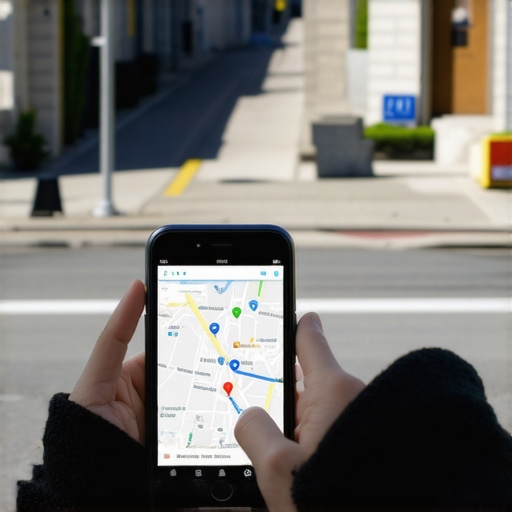
Google Business Profile rankings are dictated by a distance weighted signal where the physical location of the user mobile device is the primary ranking factor. Marketing services miss leads because they fail to optimize for proximity signals, specifically the mathematical weight of local review sentiment and the forensic trace of service area polygons. The algorithm operates on a three mile radius that shifts based on the density of competing pins. If your agency is not using local grid trackers to see your real search visibility, they are flying blind. They might show you a report saying you rank first, but that is only true if you are standing in your own lobby. The moment a customer moves two blocks west, you disappear. This happens because the service has not established the necessary behavioral signals that finally push a business into the 3 pack. They are ignoring the interaction mystery where being number one does not always lead to phone calls.
“Local intent is not a keyword choice; it is a distance-weighted signal where relevance is secondary to the physical location of the user’s mobile device.” – Map Search Fundamental
Why your physical address is a liability
Your physical address acts as a centroid for the map pack and any inconsistency in how that address is displayed across the web triggers a trust score reduction. Services to fix nap inconsistencies must go beyond simple name and phone number checks to include the specific JSON-LD LocalBusiness attributes that trigger voice search. I have seen businesses lose thirty percent of their call volume because of an extra space in their suite number. This is where why local citation consistency is no longer enough to rank in the modern era. You need citation cleanup services for local businesses that understand how to audit your local citations without paying for expensive tools that often miss forty percent of errors. The address is not just where you receive mail; it is the anchor for your digital trust. If that anchor is loose, the map algorithm will drift you away from the top results. Many cheap packages use link farms that actually create more toxic citation profiles before they help.
The math of a customer check in
Interaction signals such as direction requests and call volume are now more influential than traditional backlink profiles for map rankings. To capture these leads, you must use a step by step gmb ranking toolkit for beginners that focuses on increasing direction requests using offer posts and high quality image frequency. The algorithm tracks the GPS coordinates of users who interact with your profile. If Google sees a cluster of people requesting directions from a specific neighborhood, it expands your ranking reach into that area. This is why the secret to increasing direction requests using gmb offer posts is so effective. Most agencies just post a picture of a logo. I want to see the candid photo; the one with the wet concrete and the real people. That is what builds trust. We have seen cases where we doubled directions requests in three weeks simply by changing the photo strategy to reflect real human movement. This is far more effective than faking interaction signals with click bots, which always ends in failure.
Local Authority Reading List
- The first move every expert makes
- Optimizing your services list for niche queries
- Evaluation checklist for SEO packages
- How to reclaim a suspended profile
- The truth about geo tagged photos
The three mile radius that determines your revenue
Proximity and relevance are balanced by Google through a lens of behavioral data where user sentiment and review velocity dictate long term stability. Local seo services to stabilize volatile map rankings after expansion must focus on reputation management and review repair services rather than just quantity. If you expand your service area too quickly without the behavioral data to back it up, your rankings will tank. You need to know why star rating matters less than review velocity. A business with fifty five star reviews from three years ago is less relevant than a business with ten four star reviews from last week. The algorithm wants to see current, active signals. This is why the review response secret that actually moves the map needle is about speed and personalization, not generic templates. When you use generic review responses, you are basically telling Google that your business is on autopilot. That is a signal of low authority.
“A business is not a website; it is a point on a spatial grid where the strongest behavioral signals, such as direction requests and call volume, outweigh historical backlink profiles.” – Proximity Data Review 2024
The forensic audit of a map pack failure
Auditing a GMB profile requires a toolkit that identifies invisible keyword stuffing and category conflicts that silently tank your business rank. You must audit your local gmb optimization for hidden mistakes that even profile experts often miss during the first pass. I often find that a client is using the wrong primary category. This is the primary category choice that determines 80 percent of your rank. If you are a plumber but your primary category is set to ‘drainage service’, you are missing the massive ‘plumber near me’ traffic. You need tools to find gmb categories and keywords that are actually being used by real humans in your specific zip code. Most agencies use national data, but local search is hyper specific. You also need to audit your local gmb optimization for invisible keyword stuffing that might have worked in 2019 but now acts as a trigger for a manual review. If your competition is keyword stuffing their business name, you do not join them; you report them using the proper forensic channels.
The ghost in the GPS coordinates
Your digital presence must match the physical reality of your store front down to the metadata of the photos taken by your customers. The image frequency rule for building trust with local customers requires at least three new photos per week that contain authentic location data. Many services try to fix over optimized anchor text while ignoring the fact that their photos have no geo metadata. When a customer takes a photo at your business, Google extracts the GPS coordinates from that file. This is a powerful signal of physical existence. If all your photos are uploaded from an agency office in another state, the trust score drops. You should look for the image frequency rule for building trust and ensure your agency is actually coaching you on how to get customers to take photos. We once fixed a google maps rank that was stuck at number four simply by getting the owner to upload five photos of the actual office interior every month. It sounds small, but in the world of spatial data, it is everything.
Rebuilding trust after a spammy listing history
Recovering from a suspension or a period of spammy lead generation requires a total purge of old data and a rebuilding of citation profiles from authoritative local sources. Seo services to rebuild trust after spammy lead gen listings must focus on quality over quantity and manual verification. If you have been buying cheap gmb packages that use link farms, you have a toxic digital footprint. You need to understand how to reclaim a suspended gmb profile without losing your reviews. It starts with a clean slate. You must identify a toxic citation profile and manually reach out to directories to have the information corrected. This is not a fast process. Most agencies will tell you they can do it in a week. They are lying. True recovery takes months of consistent, manual work. This is why the roi of hiring a professional gmb profile seo expert is so high; they save you from the permanent death of your listing.