How to Identify a Toxic Citation Profile Before It Kills Your Rank
I am sitting in a small office that smells of peppermint and old paper, reviewing a case that still bothers me. Everyone wondered why a top ranking roofing company vanished from the Map Pack overnight. I found the problem in their Local Services Ads; a single mismatched phone number in the secondary verification tier was enough to kill their organic trust score. This company had spent years building a reputation, but a single bot generated citation on a defunct directory triggered a validation loop that the algorithm could not resolve. It was a classic Centroid Collapse. The physical proximity of their office no longer mattered because the data trust had evaporated. I have seen this a thousand times. A merchant tries to grow too fast, buys a cheap citation blast, and suddenly their GPS pin is drifting into the digital abyss. You cannot treat your business listing like a static yellow pages ad. It is a live proximity beacon. If the signal is noisy, the signal is dead.
The roofer who vanished overnight
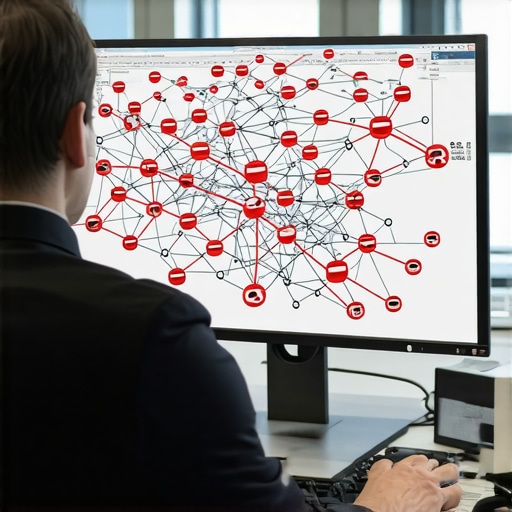
Toxic citation profiles consist of mismatched NAP data, duplicate Google Business Profiles, and automated directory listings that create algorithmic friction. When Google’s Vicinity update detects conflicting business addresses or virtual office footprints, it suppresses the Map Pack ranking to protect local search integrity and user experience. I remember the look on that roofer’s face. He thought he was doing everything right. He had the reviews. He had the photos. But beneath the surface, a toxic web of old data was pulling him under. He had used a service three years prior that promised to fix his citations but instead created a mess of fragmented entries. If you want to avoid this, you need to understand how to audit your google maps ranking service for quality work before the damage becomes permanent. The math of the local algorithm does not care about your intentions; it only cares about the mathematical consistency of your coordinate salience.
“Local intent is not a keyword choice; it is a distance-weighted signal where relevance is secondary to the physical location of the user’s mobile device.” – Map Search Fundamental
The three mile radius that determines your revenue
Proximity signals are the primary ranking factor for the local 3-pack, where user geolocation and business centroid distance dictate search visibility. Toxic citations interfere with this spatial logic by providing inconsistent GPS coordinates, causing Google to lose confidence in your physical storefront location or service area boundary. This is where the street photographer in me comes out. I see the glitches. I see the storefronts that claim to be in the city center but are actually operating out of a basement in the suburbs. Google sees it too. The algorithm is a logistics manager that hates wasted travel time. If your citations are messy, you are essentially telling the dispatch system that you are lost. This is why why proximity still kills your map visibility and how to fix it is the most important concept to master. You have to clean up the noise to let the signal through.
The ghost in the GPS coordinates
GPS coordinate salience refers to the mathematical verification of a business location through cross-referenced data points like utility bills, government registries, and crowdsourced user photos. A toxic profile often features mismatched latitude and longitude markers on secondary directories, which triggers a Google Business Profile suspension or invisible ranking penalty. I have spent months fighting hard suspensions for clients who were nuked because they shared a suite number with a defunct law firm. Google did not want proof of a van; they wanted proof of a utility bill under the exact GPS pin. When your data is fragmented, you are fighting a ghost. You might try to use how to use local grid trackers to find ranking blind spots 2 to see where you are falling off, but if the core address is in conflict, no amount of tracking will save you. The system needs certainty.
Local Authority Reading List
- The Address Conflict Error Hiding Your Business
- Why Your Citation Audit Is Missing 30 Percent Of Errors
- How To Fix An Address Conflict Hiding Your Profile
- Why Local Citation Consistency Is No Longer Enough
Why your physical address is a liability
Business address conflicts occur when multiple entities occupy the same digital space or when old NAP data persists after an address change. Google treats mismatched phone numbers and duplicate listings as fraud signals, leading to a loss in organic trust and Map Pack displacement. Many agencies will sell you a citation blast to a hundred dead directories, but those are exactly the toxic links that kill your rank. You need to understand the hidden danger of using citation automation tools. These tools often overwrite correct data with generic junk. They do not understand the nuance of a suite number or the difference between a main line and a tracking number. If you are struggling with a the address conflict error that is hiding your business from maps, you are essentially invisible to the very people standing a block away from your door.
“Merchants must maintain a high degree of data fidelity across all third-party aggregators to avoid the automatic triggering of protective suppression filters.” – GMB Quality Guidelines
The forensic trace of a service area polygon
Service Area Businesses must define their operational boundaries through verified polygons in the Google Business Profile dashboard to avoid proximity filtering. Toxic citation profiles for SABs often involve hidden addresses that still leak into public directories, causing verification loops and ranking stagnation. I once worked with a plumbing client whose listing was nuked simply because they shared a suite number with a defunct firm. We had to do a forensic audit of every single mention of that address on the web. It was not enough to fix the main profile. We had to kill the ghosts. This is a common issue with the how to fix the service area glitch tanking your visibility. The algorithm sees a discrepancy and defaults to the safest option, which is usually removing you from the search results entirely. You cannot afford to have junk data floating around the web.
The microscopic math of interaction signals
Interaction signals such as click through rates, direction requests, and dwell time act as behavioral verification of local business legitimacy. Google uses mobile device telemetry to confirm that searchers are actually visiting the physical location listed in your citations. This is the 2026 reality. It is not just about having your name on a list; it is about proving people actually go to that place. If your citations say you are at 123 Main St, but zero phones ever stay at 123 Main St for more than five minutes, Google knows you are a ghost. You need to focus on the interaction signals that finally move your map position. This is why the specific behavioral moves that signal google you are authority are becoming more important than a hundred low quality links. The algorithm is watching the feet, not just the clicks.
Advanced Local Recovery List
- How To Reclaim A Suspended GMB Profile
- How To Clean Up Messy Citations Without Manual Labor
- How To Verify Your GMB SEO Expert
- The First Move During A Crisis Audit
Why your business description is not the problem
Word choice in a GMB description has zero direct ranking weight, yet toxic profiles often focus on keyword stuffing this field instead of cleaning up NAP inconsistencies. Google prioritizes structured data and third party validation over self-authored marketing copy when determining local search relevance. I see this all the time. A business owner is panicked because they dropped to number four, so they spend all day editing their description. It is a waste of time. You should read why your google business profile description doesn’t help you rank and focus on the real issues. The real problem is usually a the category conflict that is silently tanking your business rank or a mismatch in the service list. You are fighting the wrong battle. The description is for the human; the citations are for the machine. If the machine is broken, the human will never see the description.
The forensic audit of user profiles
Review sentiment analysis and user profile verification are used by Google’s spam team to identify fake reviews and competitor attacks. A toxic profile often attracts suspicious review patterns from VPN users or newly created accounts, which triggers a manual review and potential profile suspension. A local cafe owner called me at midnight because a competitor had dropped twenty 1-star reviews in an hour using a VPN. We had to do a forensic audit of the user profiles to prove the patterns. It was exhausting. This is why knowing how to stop fake negative reviews from tanking your 3-pack spot is a survival skill. If you do not have a clean citation base, Google is less likely to believe you are the victim. A clean profile gives you the benefit of the doubt. A messy one makes you look like a spammer yourself.
The logic of a check in signal
Mobile check in signals provide first party evidence of location visits, which Google uses to validate citation data and reward popular businesses. Toxic profiles lack these organic interactions, making the business listing appear static and untrustworthy in the eyes of the local algorithm. You need to encourage real movement. Get people to use their phones at your shop. Use 7 simple tactics to boost google my business interactions today to start generating the data Google wants to see. If you are stuck just outside the top three, it is often because your interaction signals are flat. You can find the the tactical fix for businesses stuck outside the 3-pack 2 by looking at your user behavior data. The pin on the map is just the start; the path to the pin is what counts. Stop worrying about the national chains and start worrying about your local footprint. The peppermint in my office is gone now, but the paper trail of that roofer’s recovery is still here. It took six months to fix that one phone number mismatch. Do not let that be you.