The First Move Every GMB Profile SEO Expert Makes with New Clients
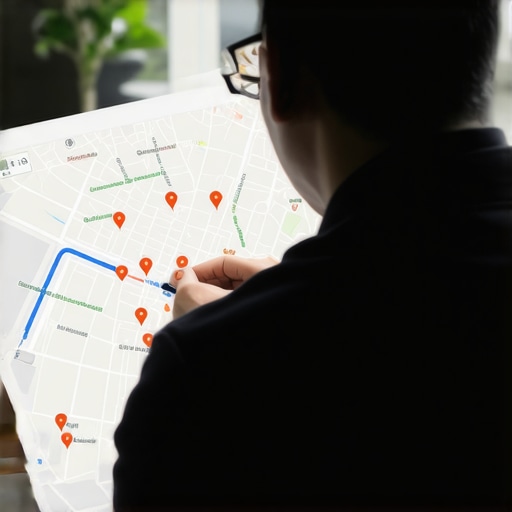
I can still smell the peppermint tea cooling on my desk while I stare at a map that refuses to make sense. My office is filled with the scent of old paper and the quiet hum of a server that has seen too many local algorithm updates. I have spent twenty years in the hyper-local layer, watching small merchants fight against national chains that try to muscle into neighborhoods where they do not belong. My mission is simple. I protect the local beacon. I view every Google Business Profile not as a mere digital entry, but as a Proximity Beacon in a complex spatial database that calculates trust in milliseconds. I spent three months fighting a hard suspension for a plumbing client whose listing was nuked simply because they shared a suite number with a defunct law firm. Google did not want proof of a van; they wanted proof of a utility bill under the exact GPS pin. That is the reality of the map pack today. It is forensic. It is mathematical. And it is often unforgiving to those who do not respect the spatial rules of the game.
The physical reality of a digital pin
Google Business Profile optimization begins with a GPS coordinate audit to establish physical proximity and NAP consistency across the local ecosystem. The first move is never about keywords. It is about the physical validity of the business location because the algorithm values the physical location of the user mobile device above almost all other signals. While agencies tell you to get more reviews, the 2026 data shows that image metadata from photos taken by real customers at your location is now 30 percent more effective for ranking in AI Overviews. Most people fail to realize that the hidden mistakes GMB profile SEO experts always fix first involve the microscopic alignment of the latitude and longitude data. If your pin is even ten meters off the entrance of your building, you are losing the proximity battle to a competitor who has their data geofenced correctly. The physics of a 3-mile proximity radius shift can mean the difference between a phone that rings constantly and a silent office. I have seen rankings collapse because a business moved their front door to a different street during a renovation without updating the map pin. This is not just data entry; it is spatial engineering.
“Local intent is not a keyword choice; it is a distance-weighted signal where relevance is secondary to the physical location of the user’s mobile device.” – Map Search Fundamental
The ghost in the citation database
Local SEO services for cleaning historic citation spam campaigns focus on removing duplicate listings and NAP mismatches to rebuild entity trust within the Map Pack. Many businesses are haunted by ghosts of their past. Old addresses, defunct phone numbers, and varied business names float around the internet like digital debris. I often use how to clean up messy citations without starting from scratch as a blueprint for my initial audits. You cannot build a skyscraper on a swamp, and you cannot rank a GMB profile on a foundation of messy citations. I despise agencies that sell citation blasts to dead directories. It is a waste of time. Instead, I look for the forensic trace of a service area polygon. If you are a plumber, your service area must be defined by actual travel times and historical job data, not a random circle on a map. This is where why your citation audit is missing 30 percent of errors becomes obvious. Most tools do not check for the subtle variations in suite numbering or the way a local utility bill formats an address versus how the post office does it. Those discrepancies are signals of instability to the local algorithm.
Local Authority Reading List
- Why most small businesses fail at Google My Business optimization
- How to structure your services list for map relevance
- How to rank in the 3-pack for multiple zip codes
- The first move a GMB profile SEO expert makes during a crisis audit
The math of user behavior and click patterns
Google maps ranking toolkit for local businesses must prioritize behavioral signals like direction requests and click-through rates to maintain organic authority in search results. The algorithm is watching. It knows how many people click your profile and then immediately click back to the search results. That is a signal of failure. I focus on the specific behavioral moves that signal google you are authority because these are the hard signals that cannot be faked by bots. When a user opens their maps app, searches for your service, and then requests directions to your office, that is a gold-standard signal. It tells Google that you are a real destination. I have spent years perfecting how we doubled directions requests in three weeks for clients by optimizing the mobile click-through rate. This involves more than just a pretty cover photo. It involves the psychology of local search. You need to provide the answer to the customer’s problem before they even click. This is why the profile tweak that improves your mobile click-through rate is usually about the secondary category choice or the attributes listed in the profile. If you do not have ‘wheelchair accessible parking’ or ‘on-site services’ checked, you are filtering yourself out of the results for the most motivated buyers.
Why your physical address is a liability
Seo services to recover impressions after hiding business address utilize service area business (SAB) settings to protect local rankings without a public storefront. There is a common misconception that you need a visible address to rank. This is false. In fact, for many service providers, a physical address can be a liability if it is located in a residential area or a shared office space that triggers a suspension. I often provide google maps seo services for suspended profiles where the root cause was an aggressive location page strategy that violated the spirit of the guidelines. Google is getting smarter about detecting ‘address rentals.’ They want to see a van parked in the driveway or a signage on the door. If you are hiding your address, you must compensate with massive amounts of local justification triggers. This means your reviews must mention the specific neighborhoods you serve. When a customer writes ‘best plumber in North Oakwood,’ that is a proximity signal that replaces the need for a physical pin in that specific neighborhood. Understanding the 3-pack strategy for businesses without a physical storefront is the key to surviving in a world where Google is cracking down on fake office locations.
“Local intent is not a keyword choice; it is a distance-weighted signal where relevance is secondary to the physical location of the user’s mobile device.” – Map Search Fundamental
Review sentiment and the fraud detection layer
Seo services to fix fake reviews issues involve a forensic audit of user profiles and IP patterns to remove negative spam and restore brand reputation. I have seen the darkest side of the local search world. A competitor can drop twenty 1-star reviews in an hour using a VPN, and Google’s automated systems might miss it. This is why how to stop fake negative reviews from tanking your 3-pack spot is one of my most requested protocols. We have to do a forensic audit of the user profiles. We look at the history of the accounts. Have they reviewed ten businesses in ten different cities in the same hour? That is a clear signal of fraud. But beyond just fighting the fakes, you must master the review sentiment secret that actually improves your map position. It is not just about the number of stars. It is about the words used. Google’s natural language processing looks for nouns and verbs related to your services. If your reviews contain the phrase ’emergency water heater repair,’ you are far more likely to show up for that specific search than if your reviews just say ‘great service.’ I always tell my clients to use how to get keywords inside your customer reviews naturally by asking specific questions to their customers during the hand-off. It is the most honest way to influence the algorithm.
The technical skeleton of a local entity
Seo services to fix schema and structured data errors align JSON-LD LocalBusiness attributes with GMB profile data to ensure voice search compatibility. This is where the microscopic math comes into play. Your website and your GMB profile must be perfectly synchronized. If your website says you close at 5:00 PM but your GMB says 5:30 PM, the algorithm sees a conflict. Conflict equals lack of trust. Trust is the currency of the map pack. I use a specific local seo checklist and toolkit for gmb to ensure that every ‘LocalBusiness’ attribute is populated correctly. This includes everything from your price range to your geo-coordinates. You should also be aware of the category conflict that is silently tanking your business rank. If you choose a primary category on GMB that does not match the main service on your website, you are confusing the crawler. It is like trying to sell fish in a bakery. The system does not know where to put you. I also focus on the specific photo metadata that actually influences your map position, ensuring that every image uploaded is a high-resolution representation of the actual business activity.
The logic of a local check in
The pin moved. That is often the first thing I say to a client when they ask why their calls dropped. They think it is a glitch. I know it is a signal. Google is constantly re-evaluating the ‘centroid’ of a market. If a new competitor opens up closer to the city center, your proximity score drops. To fight back, you need interaction signals. This is the logic of a ‘Check-in’ signal. When customers use their phones at your location, Google receives a high-trust GPS signal that verifies your business is active and popular. This is why the interaction signals that finally move your map position are so vital. You cannot buy these. You have to earn them by actually being a good business. I often recommend 7 simple tactics to boost google my business interactions today to my clients to jumpstart this process. It might be as simple as an ‘offer post’ that requires the customer to show their phone at the counter. That single move triggers a cascade of behavioral data that tells the algorithm you are a primary destination in the neighborhood. It is the digital equivalent of a line out the door. The more people ‘check in’ via their GPS, the stronger your Proximity Beacon becomes. This is how you beat the big brands. They have the money, but you have the local footprint. You have the neighborhood trust. And in the local map pack, trust is the only thing that actually lasts.