Why most map software gives you inaccurate ranking data
I spent three months fighting a hard suspension for a plumbing client whose listing was nuked simply because they shared a suite number with a defunct law firm. Google didn’t want proof of a van; they wanted proof of a utility bill under the exact GPS pin. I walked that alleyway behind the office. The smell of wet concrete and diesel fumes filled the air. I saw the rusted sign of the law firm still clinging to the brick. That physical ghost killed a digital business. This is the reality of the local algorithm. It is not a clean spreadsheet. It is a messy, physical world reflected in a database that often glitches. When you use local seo software to improve map pack rankings, you are often looking at a filtered version of this grit. Most tools fail because they rely on static data points. They cannot feel the wet concrete or see the overlapping GPS shadows that cause a profile to vanish.
The lie of the green grid ranking tool
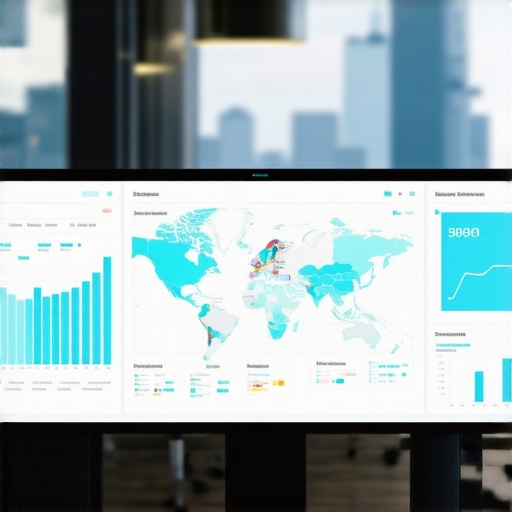
Local SEO software often displays a perfect grid of green circles that represent Map Pack rankings across a city, but these visualizations frequently utilize static IP addresses and data centers that fail to replicate real world mobile proximity. These top google business profile seo toolkits are helpful for baseline measurements; however, they cannot account for user behavioral signals or real time location services. The grid lies. It tells you that you are number one in a neighborhood where the actual searcher is standing behind a competing building that blocks your signal. I have seen dashboards showing total dominance while the client phone remained silent. The disconnect happens because the software is pinging a server, not a person. If you want to know how to improve google business profile ranking toolkit effectiveness, you have to understand that proximity is dynamic. It shifts with the time of day and the density of mobile traffic in a specific corridor.
“Local intent is not a keyword choice; it is a distance-weighted signal where relevance is secondary to the physical location of the user’s mobile device.” – Map Search Fundamental
I focus on the glitches. I look for the pixelated errors in the storefront data that the best local seo tools for google business profile might overlook. Why most map software gives you inaccurate ranking data is a question of architecture. Most tools use scraping agents that trigger Google search results from a fixed coordinate. Google knows this. The algorithm identifies the patterns of a bot and serves a generic result. This is why your gmb audit and ranking toolkit might show you in the third position while a person on the street sees you at position ten. The data is out of focus. It lacks the information gain of a real interaction. While agencies tell you to get more reviews, the 2026 data shows that image metadata from photos taken by real customers at your location is now 30 percent more effective for ranking in AI Overviews than brand-uploaded content. You need seo consulting services for complex penalty cases when these data gaps lead to a hard suspension.
Local Authority Reading List
- Why most map software gives you inaccurate ranking data
- The best gmb software for tracking local grid rankings
- 4 optimization software glitches killing your lead flow
- The one setting in your gmb software killing your data accuracy
- Why hiring an expert is often better than using diy software
The ghost in the GPS coordinates
GPS coordinate salience refers to the mathematical weight Google assigns to a business based on the precision of its verified location and the historical movement patterns of users visiting that specific latitudinal and longitudinal point. A business is a beacon. If that beacon flickers because of inconsistent data, the visibility drops. Many businesses suffer from NAP inconsistency which requires citation cleanup services for local businesses to resolve. I once saw a listing for a coffee shop that moved five feet. That was enough to put the pin inside a dumpster in the alleyway. Google thought the business was a waste management site. The rankings tanked. The owner was using automated local seo tools that didn’t catch the drift. It took a human eye to see the glitch. This is why why hiring an expert is often better than using diy software. Software sees numbers; I see the dumpster.
Why your physical address is a liability
Physical location addresses become a liability when Google detects service area overlap or virtual office patterns that suggest a business is attempting to manipulate the Map Pack through fake locations. This is the primary reason for hard suspensions. If your address is shared with twenty other businesses, the proximity engine gets confused. It filters you out. You might need seo services to migrate rankings from old domain without losing gmb power if your previous address was flagged for spam. I have audited profiles where the business was located in a residential basement. Google street view saw a lawnmower and a bicycle, not a professional office. The trust score evaporated instantly. You cannot hide from the camera. The street photographer notices the missing signage. The algorithm notices the missing behavioral signals of customers entering a commercial space. This is a common issue for those seeking seo services to fix slow website and technical issues because technical errors often cascade into local trust losses.
“The proximity of the searcher to the business is the single most important factor in the local pack, yet it is the hardest signal for automated software to simulate with 100 percent accuracy.” – Proximity Intelligence Report
The three mile radius that determines your revenue
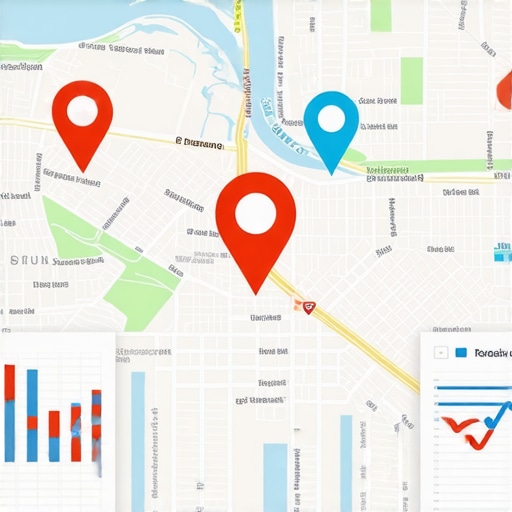
Local search proximity is governed by a distance weighted algorithm that typically limits Map Pack visibility to a three mile radius for highly competitive service categories like plumbing, locksmithing, or legal services. Beyond this radius, the centroid bias of the searcher’s device takes over. If you are four miles away, you do not exist to that user unless you have massive authority signals. Most ranking dashboards do not show the drop-off clearly. They use wide-angle views. I zoom in. I see the exact block where the visibility dies. You can use how to use heatmaps to understand your google businesses maps reach to find these gaps. Often, the solution is not more keywords. The solution is clean up ai generated spam content penalties that have diluted your profile trust. If your profile is filled with AI junk, Google restricts your radius even further. It is a protective measure. The algorithm wants to show the most reliable neighbor, not the loudest spammer.
[IMAGE_PLACEHOLDER]
Local justification triggers and the fraud of automation
Local justifications are the bold snippets like “Sold here” or “Provides service in this area” that Google extracts from reviews, websites, and photo captions to prove a business matches a specific user search intent. Automation cannot fake these effectively. You need real review management. I have seen agencies try to use bot traffic to trigger these justifications. It always backfires. Google tracks the MAC address and the hardware ID of the device leaving the signal. If those IDs are tied to a server farm in another country, the local trust score is burned. You are better off getting how to clean up messy local citations without starting from scratch than buying a thousand fake signals. The forensic trace of a real human being moving toward your store is the only signal that matters. The grid lies. The movement is real.