Tools to Monitor Map Pack Rank Flux Without the High Cost
The digital sidewalk has a very distinct scent. It smells like wet concrete, ozone from passing utility vans, and the cold reality of a storefront that exists only as an unresolved data conflict in a distant server room. As a street photographer who transition into local search strategy, I have spent decades capturing the glitches in physical cityscapes and the corresponding errors on mobile maps. Local listings are spatial beacons. They flicker, they dim, and occasionally they get completely blotted out by competing signals or aggressive database changes.
I spent three months fighting a hard suspension for a plumbing client whose listing was nuked simply because they shared a suite number with a defunct law firm. Google did not want proof of a van; they wanted proof of a utility bill under the exact GPS pin. That experience taught me that the map pack is not a friendly directory. It is a hostile, shifting grid of latitude and longitude coordinates where a tiny discrepancy in a database can erase a family enterprise in a single afternoon. If you rely on digital traffic, you must monitor this grid with extreme precision.
Understanding how your business ranks in different neighborhoods requires tools that can simulate searches from specific coordinates. When you use typical search engines at your desk, you see a personalized result based on your office connection. To see what a real customer sees, you need to track your position across a dense geographic matrix without draining your marketing budget on bloated corporate software.
The local grid is a dynamic playground of proximity
To track and improve GMB rankings without overspending, you must use location-spoofing utilities that simulate mobile search positions down to the street corner. These tools intercept the geographic signals sent to search engines, showing your true positioning across a grid of target neighborhoods. By observing these coordinate shifts, you can identify where your local authority begins to fade.
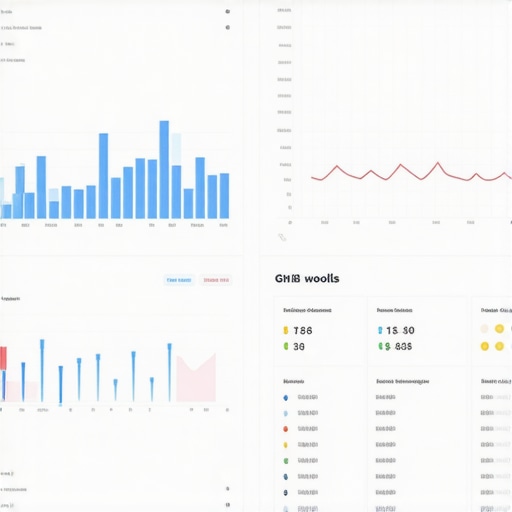
Most business owners do not realize how rapidly their visibility drops once a searcher walks a few blocks away from their physical office. The map algorithm calculates relevance based on real-time distance. If you are not monitoring this volatility, you are essentially flying blind. For businesses looking to diagnose why they are disappearing from neighboring zip codes, utilizing a pro-level toolkit for tracking local ranking volatility is the first step toward reclaiming those lost search coordinates.
“Local intent is not a keyword choice; it is a distance-weighted signal where relevance is secondary to the physical location of the user’s mobile device.” – Map Search Fundamental
We often see companies experience sudden drops in areas where they used to dominate. This is rarely a random event. More often, it is the result of database updates, competitor adjustments, or hidden technical errors on your own digital properties. Identifying these shifts before they impact your phone lines requires consistent, low-cost monitoring protocols.
Why physical address modifications break your local authority
Moving a business address or service area triggers immediate algorithmic evaluation and often causes temporary search invisibility. When you relocate, your legacy citations across the web begin to conflict with your new coordinates, prompting the system to lower your trust score. To resolve this, you must run systematic cleanup campaigns to align your name, address, and phone data.
When you shift locations, Google looks for consistency across major databases to verify that you are still the same trusted entity. If your old address remains active on secondary directories, the algorithm faces an identity crisis. This is where specialized local seo services to fix ranking loss after moving city or service area become necessary. The system needs to see a clean break from your old location and a perfectly consolidated profile at your new address.
Many agencies will tell you to purchase massive new link packages to fix this. That is a mistake. Adding more links to an inconsistent profile only amplifies the confusion. Instead, focusing your efforts on updating your old listings and removing duplicate profiles will yield much faster results. Correcting these foundations is always more cost-effective than trying to overpower bad data with new spam.
The hidden hazards of legacy spam and automated cleanup failures
Automated citation cleanups often miss the deep web listings that continue to feed bad data to search engines for years. The search algorithm crawls obscure regional directories to cross-reference your business information, meaning old black-hat footprints can quietly drag down your modern rankings. A manual, forensic review of your citation ecosystem is the only way to ensure complete data hygiene.
Years ago, standard practice involved blasting your business info to hundreds of low-quality link directories. Today, those old digital footprints act as anchors, weighing down your modern map performance. If you have inherited an old domain or hired questionable optimization firms in the past, you may need seo services to clean legacy black hat local seo footprints to restore your algorithmic standing.
This is especially true if your site has been subjected to modern AI-generated content spam. When low-grade automated content is detected, search engines apply broad filters that can limit your map pack exposure. If your site has suffered from these issues, you will want to look into seo services to clean up ai generated spam content penalties to salvage your organic authority and keep your listing visible.
Diagnostic toolkits that protect your local lead volume
Tracking lead leakage requires tools that monitor your profile links for technical blockages like broken redirects and 404 errors. When a mobile user clicks the website button on your map listing and hits a broken page, you lose the lead and your engagement metrics suffer. Affordable tracking tools should always include landing page uptime monitoring to protect your traffic funnel.
Many local business owners overlook their website health, thinking the map profile operates completely independently. In reality, your website organic power is the engine that drives your map placement. If your site is suffering from technical issues, your map pack visibility will quickly plummet. Using a comprehensive toolkit to increase local leads from google maps allows you to catch these site errors before they destroy your search rankings.
For instance, if your website suffers a security breach or gets infected with malware, search engines will quickly restrict your map features to protect users. If your rankings suddenly drop to zero, you need to execute seo audit and penalty recovery services immediately to identify if malware, manual actions, or algorithmic filters are blocking your business from the map view.
A tactical framework for maintaining map pack dominance
Constructing a resilient local footprint relies on consistent data verification and rapid response to competitor spam tactics. You must monitor your reviews for coordinated negative attacks, clean up duplicate listings that dilute your local signals, and ensure your schema markup is clean. A healthy local strategy does not require expensive monthly retainers, just disciplined maintenance of your digital assets.
The competition on the map is fierce. Unscrupulous competitors may try to crowd the map pack by keyword-stuffing their business names or leaving fake negative reviews on your profile. Utilizing a google maps ranking toolkit for local businesses gives you the ability to monitor these shifts and take action when competitors violate search guidelines.
If your profile does get suspended due to automated filters or suspicious competitor reporting, do not panic. Understanding the restoration path is critical. Engaging google business profile recovery services can help you navigate the reinstatement process with Google, ensuring you provide the exact legal and physical documentation required to get your map listing restored and ranking again.
Ultimately, keeping your business visible on local maps is about maintaining a clean, honest, and highly accurate digital presence. When you use the right lightweight monitoring tools, you can easily spot ranking fluctuations, clean up messy citation data, and protect your local lead generation engine without spending a fortune on enterprise software suites.