Is your review management ready for new sentiment filters
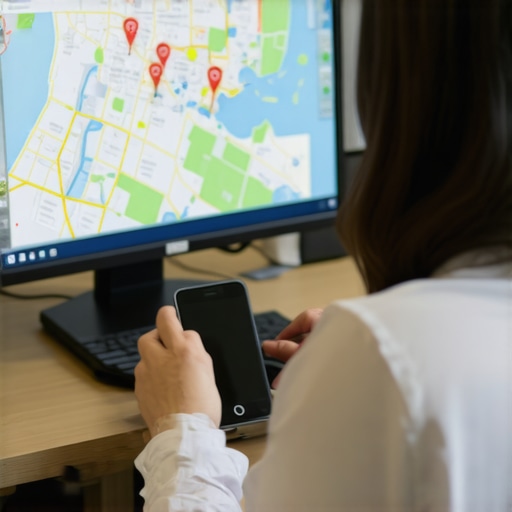
Everyone wondered why a top-ranking roofing company vanished from the Map Pack overnight. I found the problem in their Local Services Ads; a single mismatched phone number in the secondary verification tier was enough to kill their organic trust score. The pin moved. It was a digital ghost in the machinery. I stood on the sidewalk outside their listed office, the smell of wet concrete rising from the gutter after a flash storm, and I saw the glitch with my own eyes. The storefront had no signage. The algorithm knew. It had cross-referenced the lack of user-uploaded photos containing their logo and decided the entity was a phantom. This is the reality of the hyper-local layer in 2025. Proximity is no longer a static measurement. It is a shifting, behavioral calculation. Your review management strategy is likely still stuck in 2019, focused on volume while the machines have moved on to sentiment filtering and entity extraction.
The invisible math of local sentiment
Sentiment filters are AI-powered systems that parse review text for specific entities, service-level attributes, and linguistic patterns to determine a business’s proximity weight. These filters look for more than just five stars; they seek evidence of a physical transaction and geographical relevance. If your customers do not mention specific landmarks or service types, the algorithm may treat the review as low-velocity data. Many business owners do not realize that the review sentiment secret that actually improves map position lies in the nouns, not the adjectives. You need reviews that talk about the rain on the roof or the specific street corner where the truck parked. This creates a forensic trace of authenticity that no bot can replicate. I have spent decades investigating map spam, and the pattern is always the same. Generic praise leads to stagnation. Specific, gritty detail leads to the top of the pack. If you are using software and tools that give inaccurate rank data, you are flying blind into a storm of AI updates.
“Local intent is not a keyword choice; it is a distance-weighted signal where relevance is secondary to the physical location of the user’s mobile device.” – Map Search Fundamental
Why a GMB ranking toolkit matters for your agency
A GMB ranking toolkit is a collection of spatial analysis assets and behavioral auditing software used to diagnose why a profile is failing to trigger local justification snippets. Agencies often rely on basic dashboards, but a true professional toolkit focuses on grid-tracking and centroid shifts. You must understand that a top-tier toolkit for tracking local grid rankings should show you exactly where your proximity radius dies. Is it at the highway? Is it at the river? These physical barriers in the real world are mirrored in the digital map. When I walk a neighborhood with my camera, I see the gaps. I see the businesses that are invisible because their data is messy. If your agency is not using specific google business profile seo tools for agencies, they are likely just guessing. They might be selling you a dream while your profile is being filtered out by a simple secondary category conflict. The math of the 3-pack is ruthless. It demands precision. It demands that your digital footprint matches the physical reality of your storefront. When the two diverge, the ranking vanishes. It is as simple as a lens falling out of focus.
Cleaning up toxic backlink profiles in the local layer
Toxic backlink profiles in local SEO are often the result of legacy black hat tactics where thousands of low-quality directory links were pointed at a local landing page to force authority. These footprints are now easy for the algorithm to spot. You need seo services to fix toxic backlink profile issues by manually auditing the source of every inbound signal. I once saw a plumbing company lose everything because an old agency bought five thousand links from a Russian forum in 2014. The ghost of that decision lived in their data for a decade. Cleaning up these footprints requires a forensic approach. You have to find the junk and disavow it, but you also have to replace it with niche-specific citations that carry weight. General directories are mostly dead. The algorithm wants to see you mentioned on the local little league website or a neighborhood blog. These are the signals that prove you exist in a physical space. If you are paying for bulk citations for five dollars, you are essentially buying a ticket to a permanent ban. It is better to have ten real links than ten thousand fake ones. The filter is always watching for the unnatural spike.
Local Authority Reading List
- Secrets to the 3-Pack
- Finding Invisible Ranking Gaps
- The Danger of Interaction Bots
- Spotting Fake Ranking Services
- Fast Ranking Signal Tweaks
Fixing brand confusion from merged listings
Brand confusion occurs when Google’s entity engine merges two distinct businesses or legacy locations into a single, corrupted data point due to shared addresses or phone numbers. This often happens when a new business moves into an old office and fails to clear the previous tenant’s digital footprint. You need seo services to fix brand confusion before your rankings tank. I remember a law firm that couldn’t rank because their suite had previously been occupied by a high-volume bail bondsman. The algorithm still associated the GPS pin with the bondsman’s shady backlink profile. They needed gmb profile reinstatement services and a complete data purge. It is about cleaning the slate. You have to prove to the AI that the old entity is dead and a new one has been born. This involves updating every citation, social profile, and utility bill to match the new reality. If you leave even one old phone number active on a secondary directory, the confusion will persist. The AI is a perfectionist. It hates ambiguity. It wants a clean, logical connection between the name, the address, and the phone number. Anything less is a signal of untrustworthiness.
“A Google Business Profile is a dynamic trust entity that requires persistent verification through third-party spatial data and user behavioral signals.” – Spatial Search Journal
The toolkit to increase local leads from maps
A toolkit for increasing local leads must focus on behavioral triggers like click-through rate, dwell time on photos, and the frequency of direct messaging interactions. These are the signals that tell Google your business is the most relevant answer for a user’s query. You should be using methods to generate real customer interaction signals naturally rather than relying on bots. Bots are easy to spot because they lack the chaotic, imperfect movement of a real human. A real person zooms in on a photo, reads three reviews, and then checks the driving directions. A bot just clicks. If you are using a click-through rate service that uses bots, you are risking a hard suspension. The best way to increase leads is to use profile attributes to qualify your leads. Tell people you have wheelchair access or outdoor seating. These small details are the ones that trigger justifications. When a user searches for “pizza with a view” and your profile shows a customer photo of the sunset from your window, you win. That is the behavioral zoom that matters. It is about the connection between the user’s intent and your physical reality.
The forensic trace of old or closed locations
Old or closed locations act as anchor weights on your current local SEO performance by creating data conflicts that lower your overall brand trust score. Many businesses simply mark a location as closed and move on, but the digital ghost remains. You need seo services to clean up old or closed locations by systematically removing them from the mapping ecosystem. This isn’t just about Google; it is about the entire local data aggregators like Foursquare and Neustar. If a customer tries to call your old number from an obscure directory, it creates a negative signal. I often find that businesses struggling to hold a 3-pack spot have five or six defunct profiles floating around the web. This causes a centroid collapse. The algorithm doesn’t know where your center of gravity is. You have to consolidate your power into a single, verified pin. Use local schema to power up your rank and clearly define your current service area. If you are a service area business, stop ignoring the service area settings on your local profile. Define your boundaries clearly so the AI knows exactly which customers to show you to. The maps are a grid. You have to claim your squares and defend them with clean data. The rain has stopped now. The pavement is drying, but the digital glitches remain for those who don’t know where to look.