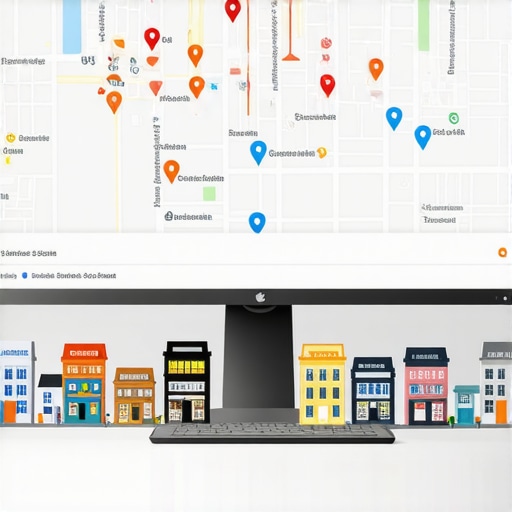
The exact tools we use for multi-location keyword research
The exact tools we use for multi-location keyword research
I spent three months fighting a hard suspension for a plumbing client whose listing was nuked simply because they shared a suite number with a defunct law firm. Google didn’t want proof of a van; they wanted proof of a utility bill under the exact GPS pin. That summer smelled like peppermint and old paper files as I sat in my office, staring at coordinate data until my eyes burned. It was a brutal reminder that in the world of local search, the physical reality of a brick and mortar shop is the only thing that matters to the algorithm. National chains try to spoof this reality with virtual offices, but they eventually fail because they lack the localized behavioral signals that only a true neighbor can provide. When you manage fifty or a hundred locations, you are not just doing SEO; you are managing a fleet of proximity beacons across a digital map that is constantly shifting.
The reinstatement war that changed my outlook
Multi location keyword research requires tools that track proximity based ranking drops across specific GPS coordinates to ensure local trust signals remain intact. Our process involves using the software we trust for grid based ranking reports to see exactly where a listing loses visibility. We look for the point where a business pin vanishes because of a competitor’s proximity filter. This forensic approach was born from that plumbing case, where a single mismatched suite number caused a catastrophic loss of authority that took months to repair. You cannot simply guess which keywords matter when you are dealing with multi-unit performance. You need the tracking multi unit performance without confusion protocols to keep your data clean.
The microscopic math of coordinate salience
Proximity signals are calculated through latitudinal and longitudinal precision where the searcher’s physical distance from the business centroid determines the visibility of the Map Pack. While many agencies focus on high volume terms, we look at the interaction data. If a customer takes a photo at your shop, the metadata in that image contains a timestamp and a GPS tag. Google uses this to verify that you are actually where you say you are. This is why we provide restoring local trust signals when your profile is flagged as a core service for businesses that have moved. Moving a shop even one block can trigger a filter if the old citation data is still floating around. Use cleaning up outdated directory listings that use your old phone number to scrub the web before you announce a new spot.
“Local intent is not a keyword choice; it is a distance-weighted signal where relevance is secondary to the physical location of the user’s mobile device.” – Map Search Fundamental
The three mile radius that determines your revenue
Mapping software reveals profitable service areas by analyzing where your competitors are weak and where customer demand for specific local services is highest. We use how to use map software to find profitable service areas to guide our expansion strategies. It is not enough to just pick a city. You have to pick the right street corner. If you are a franchise, scaling local search for franchises without losing quality is the only way to survive. We often see businesses fail because they ignore the impact of incorrect zip codes on your local map position, which can lead to your pin showing up in the middle of a lake or a park instead of your storefront.
The forensic trace of service area polygons
Service area businesses must define their reach through precise polygons in the GMB dashboard to avoid overlapping with secondary locations and causing a self-filter. If you have two locations with overlapping service areas, Google may hide one of them. This is what we call a proximity based ranking drop. We offer local seo services to recover from proximity based ranking drop for this exact reason. You must also be careful when the correct way to update your service area for better reach so you do not accidentally flag your account for quality issues. Our finding the right gmb keywords for service area businesses guide explains how to target the suburbs where your trucks actually go.
Why your physical address is a liability
A physical address becomes a ranking liability when it is associated with previous spammy listings or when the NAP data is inconsistent across major directories. I have seen businesses lose everything because they moved into a suite that was previously occupied by a lead generation scam. Google remembers the history of a building. We provide seo services to remove google manual action for businesses that have inherited a bad reputation from a past tenant. You need a clear path to fixing your local search visibility that starts with a full audit of your historical citations. Use how to scrub years of bad citation data to ensure your foundation is solid before you start any new campaigns.
The software features that actually help small map listings
The best toolkit to improve local search rankings includes grid tracking, sentiment analysis of reviews, and real time monitoring of competitor map spam edits. We rely on our go to toolkit for cracking the map pack to keep our clients ahead of the curve. If you see a sudden drop, you need to know if it is an algorithm glitch or a manual attack. We use how to identify if your map drop is just an algorithm glitch to diagnose the problem quickly. For multi location businesses, essential software for managing multiple gmb profiles is required to keep your hours and descriptions consistent. One wrong phone number can lead to why your business name and address must be perfectly consistent being a lesson you learn the hard way.
“Local justification triggers occur when Google identifies a specific match between a user’s query and the content found in reviews, posts, or website snippets linked to the profile.” – Geographic Relevance Standards
The truth about ranking for keywords in the map pack
Ranking in the map pack depends on the velocity of local interactions and the relevance of your primary category choice rather than just keyword density. If you pick the wrong category, you will never rank, no matter how many links you build. We use picking your gmb categories without guesswork to find the most profitable niche for our clients. If you have recently changed your category and lost traffic, we provide how to recover your map rank after a primary category change support. Remember that the truth about ranking for keywords in the map pack is that behavior beats blocks of text every time. Encourage your customers to mention your city in their reviews to build those local signals naturally.
A strategy for rebuilding trust after a local search penalty
Rebuilding trust after a penalty requires a systematic cleanup of all conflicting data points and a focus on gathering authentic first party reviews from verified customers. If your listing was hijacked or flagged, we use the strategy for rebuilding trust after a local search penalty to get you back on top. This includes cleaning up fake reviews that are tanking your trust and fixing any why broken links in your google posts hurt your local rank issues. If you have moved, local seo services to fix ranking loss after moving city or service area can help stabilize your position. Do not let why legacy seo tactics are getting local businesses suspended destroy your hard work. Stick to the modern rules of proximity and behavior to keep your local search engine running smoothly. In my office, the old paper files remind me that while the technology changes, the need for a business to be a trusted part of the neighborhood never goes away.