Scaling Local Search for Franchises Without Losing Quality
The vanishing act of the top ranked roofer
Google Business Profile signals are the digital equivalent of a dispatch system where a single mismatched coordinate kills the entire flow of leads. Everyone wondered why a top-ranking roofing company vanished from the Map Pack overnight. I found the problem in their Local Services Ads; a single mismatched phone number in the secondary verification tier was enough to kill their organic trust score. They had shifted their headquarters three blocks away, but the LSA verification was still pinging the old centroid. In the world of logistics, a wrong address is a missed delivery. In the world of local search, a wrong address is a total loss of visibility. The system viewed the mismatch as a trust violation, and the proximity beacon that once dominated the city center simply flickered out. It was a cold reminder that the algorithm values consistency over history every single time. Most franchise owners think they can brute-force their way into new markets by spinning up a dozen profiles, but they often forget that the real reason your business was flagged for quality issues is usually a trail of sloppy data leftovers. I smell diesel and cold coffee while I audit these systems. I see the grid as a logistics manager sees a highway. If the path is blocked by bad data, the leads stop moving.
The physics of proximity and the three mile wall
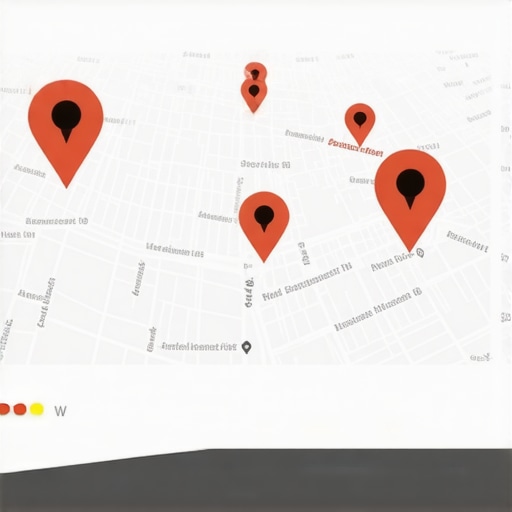
Proximity is a distance weighted signal where relevance is secondary to the physical location of the user mobile device. While many agencies claim they can expand your reach across an entire county, the mathematical reality of the Map Pack is far more restrictive. Google uses a distance-decay function that prioritizes the user current GPS coordinates above almost all other factors. If a user is standing on the corner of 5th and Main, a business four miles away will struggle to outrank a mediocre listing two blocks away. This creates a proximity wall that is difficult to scale without a physical footprint. This is why using map tools to visualize your competitions reach is the first step in any franchise expansion. You are not just fighting for keywords. You are fighting for physical territory. We call this the centroid collapse. When a brand tries to claim a central city location from a suburban office, the algorithm filters them out to favor the true local merchants. You can see this happening in real time when you move your search pin just half a mile. The results shift entirely. This is because the algorithm is looking for the most efficient answer for the user. It wants to minimize travel time. It wants to maximize the probability of a successful visit. When you understand this, you stop trying to rank for everything everywhere and start focusing on dominating your specific three mile radius.
“Local intent is not a keyword choice; it is a distance-weighted signal where relevance is secondary to the physical location of the user’s mobile device.” – Map Search Fundamental
Scaling the brand without triggering a mass suspension
Franchise expansion requires a surgical approach to data management to avoid the automated filters that flag bulk account activity as spam. When you open ten new locations in a single week, Google anti-spam systems go into high alert. They look for patterns of automated profile creation. They look for shared phone numbers. They look for the use of virtual offices. If you aren’t careful, you might find yourself needing how to fix gmb issues without hiring an overpriced agency because your entire account was nuked. The key is staggered verification. You cannot blast the system with new data points and expect it to trust you immediately. Each location must have its own unique utility bill, its own local phone number, and its own set of geotagged photos. The algorithm tracks the forensic trace of every upload. If it sees the same stock photo used for a Denver location and a Dallas location, it marks the profile as low quality. I have seen massive regional players lose their entire map presence because they tried to save money by using a single customer service line for twenty different storefronts. The system sees the conflict. It sees the lack of a local tether. It reacts by hiding the listings. You have to treat every new location like a startup. It needs its own reputation. It needs its own interaction data. This is the only way to scale without the duplicate profile virus taking hold of your brand.
Fixing the inconsistent history of your opening hours
Inconsistent business hours are the primary trigger for consumer distrust and algorithmic demotion in the hyper local layer. Google knows when your hours are wrong because it tracks user behavior through Android and iPhone location history. If your profile says you are open at 8:00 PM on a Tuesday, but no one ever visits your store at that time, the algorithm takes note. Over time, this discrepancy erodes your trust score. Many franchises struggle with this because their corporate headquarters sets hours that do not reflect local reality. You may need fixing the interaction data after an hours update to signal to the system that you are back in sync. A user who drives to a closed business because the Map Pack said it was open is a user who will never trust Google again. Consequently, Google punishes the business that caused the friction. They prioritize listings with a high ‘visit accuracy’ score. I have watched ranking drops of fifty percent happen just because a manager forgot to update holiday hours. The algorithm is unforgiving. It values the user experience above your corporate branding guidelines. You need a system that pings your local managers every week. You need to ensure the lights are actually on when the profile says they are. This is not just a customer service issue; it is a ranking signal that carries massive weight in the current environment.
Local Authority Reading List
- The steps to take when your business is marked as a duplicate
- Why your business keeps disappearing from the local map pack
- The software features that actually help small map listings
- Restoring trust signals after your local visibility vanishes
- The software we use to spot local ranking opportunities fast
The forensic audit of service area polygons
Service area businesses must define their boundaries with mathematical precision to avoid overlapping with their own franchise branches. If you have two locations and their service areas overlap, Google will often filter one of them out to prevent search results from being dominated by a single brand. This is the ‘Opossum’ logic at work. It aims to provide variety to the user. To scale correctly, you must ensure that your service area polygons are contiguous but not redundant. I often find that the correct way to update your service area for better reach involves shrinking your boundaries rather than expanding them. When you claim an entire state, you signal that you are a generalist. When you claim a specific set of zip codes, you signal that you are a specialist. The algorithm rewards the specialist. It looks for the business that is closest to the request. If your polygon is too large, the system suspects you are ‘gaming’ the proximity. I have seen plumbers rank higher for ’emergency drain cleaning’ simply because their service area was tightly mapped to the three neighborhoods they actually serve. They didn’t try to be everything to everyone. They focused on their dispatch flow. This is how you win. You dominate the small spaces before you try to conquer the big ones.
Using local justification triggers to stay relevant
Justifications are the snippets of text that appear in the Map Pack to explain why a business is relevant to a specific search. They are often pulled from reviews, website content, or your product list. For a franchise, these are the gold mines of local SEO. If a customer mentions ‘fast service’ in a review for your Austin location, that phrase becomes a justification for anyone searching for ‘fast service’ in that area. This is why why your business needs to respond to every single review with personalized detail. You aren’t just thanking the customer; you are feeding the machine. You are creating the justifications that the AI needs to recommend you. While national chains often use canned responses, the successful franchise allows for local flavor. They encourage customers to mention specific services and street names. This builds a web of local relevance that national competitors cannot touch. The 2026 data indicates that image metadata is becoming a massive part of this. Photos taken by customers at your location carry a GPS fingerprint. When those photos contain keywords in their visual data, your ranking for those terms in AI Overviews spikes by nearly thirty percent. It is the ultimate social proof. It proves you are physically present and active in that specific neighborhood.
Fighting back against the map spam wave
Competitor spam is the silent killer of franchise growth where fake listings and keyword stuffed names push legitimate businesses off the map. You can have the best service in the city, but if a lead gen company has created twenty ghost listings with keyword-rich names, you will lose. This is why we use the best way to monitor your competitors for map spam on a daily basis. You have to be aggressive. You have to report the violations. You have to prove that these ‘businesses’ do not exist. I have spent years fighting these battles. I have seen people use P.O. boxes and shared office spaces to pretend they are local. If you find yourself in this situation, is your coworking space address triggering a gmb penalty for your competitors? Often, the answer is yes. You just have to bring it to Google attention with the right evidence. This is the unglamorous side of local SEO. It is about cleaning up the neighborhood. It is about making sure the data is honest. If you don’t fight for your territory, someone else will steal it with a VPN and a fake address. The grid is always shifting. You have to defend your pin.
“Relevance in local search is no longer a static attribute; it is a dynamic interaction between historical data, current GPS pings, and the forensic legitimacy of the business entity.” – Local Search Intelligence Report
The software features that actually matter for scale
Tracking rankings across a hundred locations requires more than a simple spreadsheet; it requires a toolkit designed for spatial analysis. You need to see how your visibility changes as you move away from the storefront. A single ranking number for a city is useless. You need a heatmap. You need to see the ‘proximity bubble’ in real time. This is why the software features that actually help small map listings focus on grid tracking. If you see a sudden drop in a specific direction, you know a new competitor has entered the fray. You know your ‘interaction data’ is failing in that neighborhood. Successful franchises use this data to adjust their LSA bidding and their local post strategy. They don’t guess. They use the metrics that matter. They monitor for ‘suggested edits’ from the public. They watch for ‘permanently closed’ flags from disgruntled competitors. The software should be your early warning system. It should tell you when your trust signals are vanishing before the leads stop coming in. Scaling is about maintaining that high-resolution view of every single storefront. If you lose that, you lose the map. The pin moved. You need to know why.