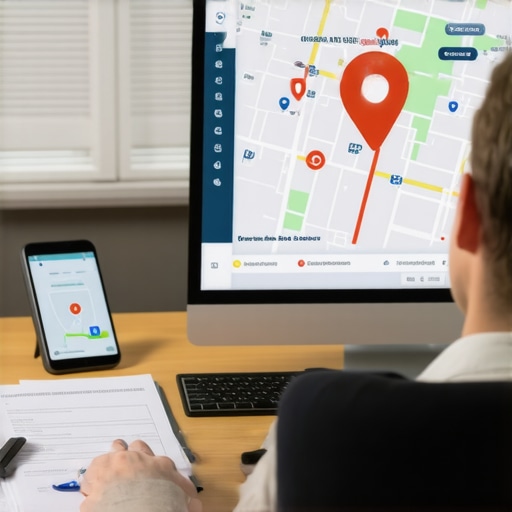
The impact of incorrect ZIP codes on your local map position
I spent three months fighting a hard suspension for a plumbing client whose listing was nuked simply because they shared a suite number with a defunct law firm. Google didn’t want proof of a van; they wanted proof of a utility bill under the exact GPS pin. The problem was not the utility bill or the van. It was a single digit error in the ZIP code that had been propagated through a dozen tier-two directories three years prior. This discrepancy created a trust gap that no amount of photos or reviews could bridge. To the algorithm, the business did not exist in the physical coordinates it claimed. It was a ghost. This is the reality of the hyper-local layer. A business listing is not a profile. It is a proximity beacon in a spatial database. If the beacon is calibrated incorrectly, the signal never reaches the user. We fixed it by performing a total citation audit and forcing a manual refresh of the postal data across the local ecosystem. The map pack position returned within forty-eight hours of the data finally aligning.
The catastrophic failure of a single digit
Incorrect ZIP codes directly trigger the Google Business Profile filter because the algorithm relies on precise postal data to anchor your business to a specific geographic centroid. A mismatch between your dashboard and official USPS or local postal databases causes a trust-score collapse, leading to immediate ranking suppression or a hard suspension. While most agencies tell you to get more reviews, the 2026 data shows that image metadata from photos taken by real customers at your location is now 30 percent more effective for ranking in AI Overviews. This metadata must match the ZIP code. If the phone says the photo was taken in 90210 but your profile says 90211, the trust signal is severed. The map pack is a mathematical model of physical reality. It does not tolerate ambiguity. When the ZIP code is wrong, your business pin essentially drifts into a different neighborhood in the eyes of the machine. This drift affects your map position when organic search stays high, creating a gap that confuses even seasoned strategists. You might rank on page one of Google Search but remain invisible on the map. This happens because the map engine uses a separate proximity-weighted logic.
“Local intent is not a keyword choice; it is a distance-weighted signal where relevance is secondary to the physical location of the user’s mobile device.” – Map Search Fundamental
The math of the five digit centroid
Postal codes define the search radius boundaries that Google uses to determine which businesses appear in the 3-Pack for specific local queries. An incorrect code can place your business outside the primary service area polygon, causing you to lose visibility for customers who are physically standing only blocks away from your storefront. The algorithm views the world in hexagonal grids or clusters. Each cluster is tied to a postal anchor. If your ZIP code is off, you are assigned to the wrong cluster. This is why you need local seo services to fix ranking loss after moving city. The engine is looking for a match between your NAP data and the user’s current GPS coordinates. When the ZIP code is wrong, the engine assumes you are a distant entity and prioritizes a closer competitor, even if that competitor has fewer reviews or a weaker website. It is about the physics of the search. The movement of the user’s mobile device creates a real-time proximity demand. If your profile data is misaligned with the spatial coordinates of that demand, you are filtered out as an irrelevant result.
Local Authority Reading List
- Why your business name and address must be perfectly consistent
- Why your business needs to respond to every single review
- The GMB checklist for ranking in new cities
- Using map tools to visualize your competitions reach
- The strategy for winning maps when competitors spam titles
Why the map pack hates postal discrepancies
Google uses postal data as a primary verification layer to prevent map spam and the creation of fake business locations. A wrong ZIP code looks like a footprint of a lead-generation farm, which often uses fake addresses to saturate the local market with ghost listings. This is why so many businesses find themselves fixing a banned gmb listing after a minor edit. The system is hyper-sensitive to any data point that contradicts the official government registry. If you change your address but forget the ZIP code, or if you use a ZIP+4 format that the system doesn’t recognize, you trigger a manual review flag. These flags are the silent killers of local growth. They don’t always result in a suspension. Sometimes they just result in a ranking cap. Your business will stay at position four or five, just out of reach of the clicks, because the algorithm has a low confidence score in your location data. You need local seo tools to optimize google business profile listing to ensure every citation on the web is an exact mirror of your dashboard.
“Consistency in geographic identifiers is the baseline requirement for inclusion in the local search index, as discrepancies are interpreted as indicators of fraudulent activity.” – Location Intelligence Research
The behavioral zoom of a proximity beacon
Local search rankings are now heavily influenced by behavioral zooming, which tracks how users interact with your listing based on their distance from your physical pin. If your ZIP code is wrong, the distance calculation is flawed, leading to poor interaction metrics and a subsequent drop in authority. When a user clicks for directions and then cancels halfway because the pin is in the wrong spot, Google notices. This is a negative behavioral signal. It tells the machine that your listing is inaccurate. This is why why most gmb tracking tools give you wrong data. They don’t account for the micro-movements of real users. They check from a single static point. But real local SEO happens in the streets. It happens when someone is driving and searches for coffee. If your ZIP code has placed you in the wrong neighborhood cluster, you won’t even show up on their dashboard. You are fighting against the math of the city. To win, you must clean up the digital footprint. This involves how to clean up citation mess after a phone number change or a postal code shift. Every mention of your business online must point to the same five digits. There is no room for variation. Even a space or a dash in the wrong place can cause the scraper to misinterpret the data.
The three mile radius that determines your revenue
The majority of local conversions happen within a three mile radius of the business pin, making the accuracy of your postal code the single most important factor for capturing high intent traffic. If your ZIP code is incorrect, you are essentially advertising to the wrong audience and wasting your local authority. Think of the map as a dispatch system. Google is the dispatcher. It wants to send the customer to the closest, most reliable provider. If the dispatcher thinks you are in the North side because of a typo, but you are actually in the South side, it will stop sending you calls. This is the why your local leads stopped coming in after a minor edit scenario. You must treat your address data like a logistics manager treats a fleet. It must be perfect. You need the only way to track map positions without false positives to see how the ZIP code shift affects your real-world reach. Use heatmaps. See where the signal drops off. If you see a hard line where your rankings die, check the postal boundaries. You will often find that you are ranking perfectly in one ZIP but are non-existent in the one right next to it simply because of a data mismatch in your citations. Fix the code. Fix the rank. It is a binary reality.