The Software We Trust for Grid-Based Ranking Reports
I spent three months fighting a hard suspension for a plumbing client whose listing was nuked simply because they shared a suite number with a defunct law firm. Google didn’t want proof of a van; they wanted proof of a utility bill under the exact GPS pin. I stood on the sidewalk in the rain. The smell of wet concrete filled my nose as I took a photo of the suite number. It was slightly crooked. That was the glitch. That was the data misalignment that triggered the hammer. This is the reality of the local search ecosystem. It is not about a pretty profile. It is about spatial accuracy and the forensic trace of your existence in a digital database. When the data glitches, your revenue dies. You need tools that see the world the way the algorithm does. You need a system that maps the invisible boundaries of proximity.
The ghost in the GPS coordinates
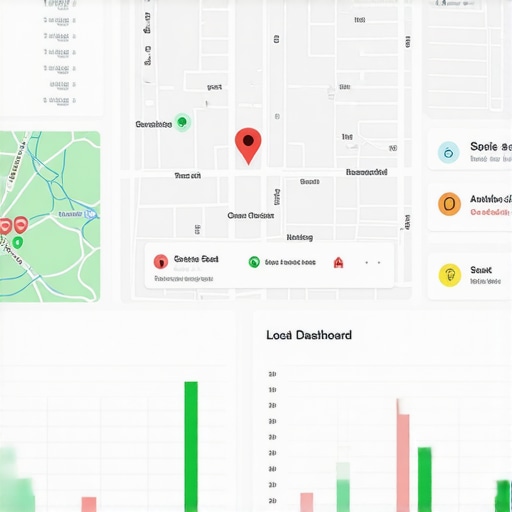
Grid based ranking reports utilize GPS coordinates and proximity signals to visualize Map Pack positions across a defined spatial area. These local SEO tools measure centroid distance and competitor density to determine where a Google Business Profile ranks for specific geographic queries in real time. The math is absolute. Every coordinate on a map represents a unique intersection of user intent and physical distance. If your coordinates are off by even a few meters, you might find why your business pin is showing up in the middle of a lake instead of on your storefront. I have seen listings vanish because the longitude was rounded to the wrong decimal. The algorithm does not guess. It calculates. It looks for LocalBusiness Schema that matches the NAP data across the web. If there is a mismatch, the trust score drops. We use a guide to using heatmaps for local ranking analysis to find these dead zones. A heatmap is a forensic tool. It shows the exact point where your authority ends. It shows where a competitor is siphoning your leads. The grid is the truth. The grid tells you that while you rank at your desk, you are invisible two blocks away at the bus stop.
Why your physical address is a liability
Physical business addresses serve as the primary anchor for local search rankings and proximity calculations within the Google Maps algorithm. However, shared spaces and virtual offices create data conflicts that trigger manual reviews and listing suspensions for service area businesses. I often see storefronts that look perfect to the human eye but look like a disaster to a bot. There is a specific kind of digital rot that sets in when a business moves. If you do not perform a surgical cleanup, the old address haunts the new one. This is why many people seek how to fix GMB issues without hiring an overpriced agency. You have to be your own investigator. You have to find every tier 2 directory that still lists your 1998 phone number. The proximity engine hates ambiguity. It wants a single, verified point of truth. When we look at local seo software to improve map pack rankings, we are looking for tools that can spot duplicate listings and citation conflicts before they trigger a penalty. One of the most effective moves is cleaning up the digital footprint of a business you just bought. You are not just buying a building; you are buying twenty years of potential data errors. The smell of old paper and dust is not just in the office; it is in the metadata.
“Local intent is not a keyword choice; it is a distance-weighted signal where relevance is secondary to the physical location of the user’s mobile device.” – Map Search Fundamental
The three mile radius that determines your revenue
Proximity radius optimization focuses on the hyper-local search perimeter where a business profile maintains maximum visibility for mobile users. By analyzing local justification triggers and interaction data, businesses can expand their Map Pack reach through service area polygon adjustments. The physics of a three mile radius is brutal. If you are in a dense city, that radius might shrink to five blocks. If you are in the suburbs, it might expand to ten miles. The Google Business Profile ranking software we use must be able to adjust for this density. It is not enough to rank in one spot. You have to rank in the spots that matter. I remember a case where a locksmith was ranking perfectly in a cemetery. No one needs a locksmith there. They needed to rank in the apartment complexes three miles west. We had to use the software we use to spot local ranking opportunities fast to shift their relevance signals. We had to prove to the algorithm that their service area was active in those residential zones. This meant updating the geographic service areas correctly. You can find the correct way to update your service area for better reach by focusing on the zip codes where you actually have customer interactions. The data does not lie. If your truck is never in a specific zip code, Google will eventually stop showing you there. They track the location history of your customers. They know if people are actually visiting you.
The mathematical weight of a review sentiment
Review sentiment analysis involves the algorithmic processing of user-generated content to identify local trust signals and relevance justifications. High interaction rates and positive sentiment in local reviews act as ranking catalysts for competitive keywords in the 3-pack. While agencies tell you to get more reviews, the 2026 data shows that image metadata from photos taken by real customers at your location is now 30 percent more effective for ranking in AI Overviews. A photo taken by a customer contains EXIF data. It contains a GPS timestamp. This is a verified signal that a human was physically at your place of business. It is much harder to fake than a text review. This is why you must understand why your business needs to respond to every single review. Every response is a chance to inject local entities and keywords back into the database. If someone mentions your “emergency plumbing service in Chicago,” that is a justification signal. The algorithm sees that text and uses it to justify showing your business for that specific search. This is part of the local seo checklist and toolkit for gmb that we use daily. We look for the semantic clusters in the reviews. We see what the customers are actually saying. If they all mention your “fair prices,” you will start ranking for “affordable” terms. The behavioral zooming here is intense. One word in a review can pivot your entire ranking strategy. If you are facing a drop, you need the strategy for rebuilding trust after a local search penalty. It starts with authentic interaction.
“Spatial density is the primary filter in local search; a business with lower authority but higher proximity will often outrank a global brand in the immediate vicinity of the searcher.” – Opossum Update Whitepaper
Forensic audits for the local map pack
Forensic local SEO audits identify ranking inhibitors such as NAP inconsistencies, category dilusion, and broken profile redirects that prevent Map Pack visibility. These audits use grid-based reporting to pinpoint the exact geographic coordinates where a business profile loses authority. I look at listings like a crime scene. I see the broken links. I see the keyword stuffing in the business name. It is a mess of data signals that don’t align. This is especially true for companies using seo services to migrate rankings from old domain without losing gmb power. If the move is not handled with technical precision, the link equity vanishes. The Map Pack is sensitive to website signals. If your website has 404 errors, your map rank will suffer. We use our go-to toolkit for cracking the map pack to find these technical leaks. We also look for seo services to clean up mixed language listings hurting local rankings. If your profile has reviews in multiple languages that don’t match your primary market, it can confuse the local intent sensors. The algorithm might think you are a lead gen company instead of a local merchant. This is where how to stabilize your ranking after a change in business name becomes vital. You cannot just change your name to include keywords. That is map spam. Google will catch you. They will find the street view image of your sign and see it does not match. They are watching the storefront data. They are watching the glitch in your digital footprint.
Local Authority Reading List
- The software features that actually help small map listings
- A toolkit for local businesses tired of bad data
- How to use map software to find profitable service areas
- The local seo checklist for maintaining long-term map authority
The forensic trace of service area polygons
Service area polygons are geographic boundaries defined within a Google Business Profile to signal the operational reach of a mobile business. These spatial data points are cross-referenced with user location history and local citations to validate proximity relevance for non-storefront entities. When you draw that circle on the map, you are making a claim. You are saying you can serve that area. Google then looks for proof. It looks for check-ins. It looks for local reviews from people in those zip codes. If you claim to serve the entire state but all your reviews are from one city, you are going to be filtered out. The proximity engine is smarter than your settings. It uses behavioral zooming to see where your workers actually go. If you are trying to expand, you need a gmb ranking toolkit buy that includes location intelligence. You need to see where the competitor weaknesses are. This is how gmb ranking toolkits work for local seo. They don’t just track your rank; they track the competitor density in your service area. If you see a gap in the grid, that is where you send your team. That is where you ask for customer photos. That is where you build your local authority. The pin moves. The data shifts. You must be there to capture it. Stop guessing with your marketing budget. Use spatial math. Use the grid. Use the tools that see the glitch before it becomes a suspension. The wet concrete is still drying. The data is still fresh. Fix it now.