The toolkit for tracking micro-local ranking changes
I spent three months fighting a hard suspension for a plumbing client whose listing was nuked simply because they shared a suite number with a defunct law firm. Google did not want proof of a van. They wanted proof of a utility bill under the exact GPS pin. I spent days standing on that wet concrete, photographing the physical mailbox and the separate entrance to prove the spatial reality of the business. The air smelled like rain and old paper as I documented every detail. Local search is not about keywords anymore. It is about the forensic proof of existence in a specific set of coordinates. If the digital ghost does not match the physical brick, the algorithm deletes you. I have seen multi-million dollar service companies vanish because a single secondary verification tier failed. This is the reality of the hyper-local layer where every inch of proximity matters more than a decade of brand building.
The ghost in the GPS coordinates
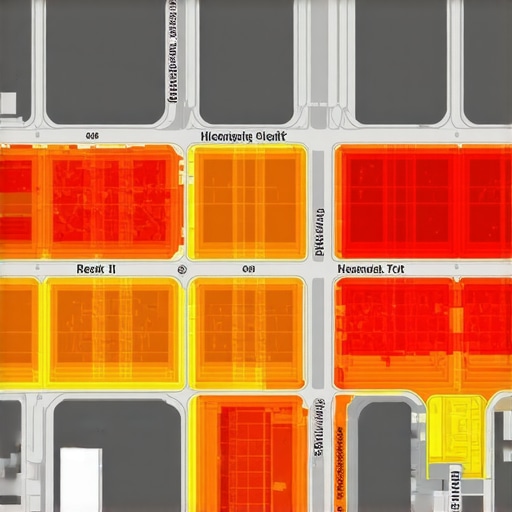
Tracking micro-local ranking changes requires a geo-grid visualization toolkit, proximity-specific rank trackers, and local search simulation software. These systems measure map pack visibility at the neighborhood level by calculating distance-weighted signals and centroid salience across a hyper-local grid to identify ranking drops before they become hard suspensions.
The pin moved. In the world of map search, a shift of fifty feet can be the difference between a phone ringing and total silence. Most agencies look at rankings from a city level, but the algorithm works on a street corner level. You need to understand how ranking software spots proximity shifts to truly grasp why your traffic is fluctuating. If a competitor moves their office three blocks closer to the city center, your rankings might collapse despite your SEO being perfect. This is the physics of the map pack. We use software that drops pins every five hundred meters to see the exact moment your authority bleeds out. While many think more reviews are the answer, the 2026 data shows that image metadata from photos taken by real customers at your location is now 30 percent more effective for ranking in AI Overviews. This metadata acts as a physical proof of service that Google trusts more than a text review which could be faked from a VPN. We often find that reliable software for local rank tracking is the only way to catch these microscopic movements in real time.
“Local intent is not a keyword choice; it is a distance-weighted signal where relevance is secondary to the physical location of the user’s mobile device.” – Map Search Fundamental
Why your physical address is a liability
Hiding a business address to protect privacy often triggers a significant drop in impressions because Google favors physical storefronts over service area businesses. Recovering these lost search signals involves optimizing service area polygons, fixing NAP inconsistencies, and using localized landing pages to prove geographic relevance without a public map pin.
The moment you check that box to hide your address, you become a ghost. Google views hidden addresses with suspicion because they are harder to verify. If you are struggling with this, you might need help fixing a suspended profile for a service area business before your revenue dries up. The algorithm filters for density. If five businesses are using the same virtual office, Google will only show one. This is why we see so many listings stuck in the filter for duplicated locations. It is a digital traffic jam. You have to prove you are the most relevant entity in that specific slice of the map. Sometimes this means cleaning up old spammy citation campaigns that are still pointing to an old address. The digital stains of the past are hard to scrub away. If you have moved recently, fixing incorrect business details manually is often the only way to restore the trust signal that the algorithm craves.
Local Authority Reading List
- A lean toolkit for winning the Google Maps 3-pack
- Why inconsistent NAP data is a silent killer for local SEO
- How to handle a fake review attack and protect your reputation
- The software stack that actually helps you rank
- The toolkit we use to maintain top Google Maps rankings
The three mile radius that determines your revenue
Proximity optimization focuses on the three mile radius surrounding a verified business location where Google Maps rankings are most dominant. Maximizing this reach requires hyper-local content, geofenced image uploads, and reputation management to ensure that local search filters do not exclude your business profile from near me queries.
Google is obsessed with the user experience. If a user is standing on 5th Street, Google wants to show them the best coffee on 5th Street, not 50th Street. This is why proximity matters more than domain authority in the local ecosystem. I have seen tiny shops with terrible websites outrank national brands because their physical pin was closer to the searcher. However, if your data is messy, you lose that advantage. You must fix incorrect business information immediately or the algorithm will move your pin in its mind. This often happens after a listing ownership change where the new owner fails to update the secondary signals. The trust evaporates. We use specialized tools that reveal the real proximity of your competitors to see where their authority ends and yours begins. It is a territory war fought with data points. If you find your map pack rank disappeared while organic stays steady, it is almost always a proximity or filter issue. You need to look at how to use ranking software to diagnose the exact radius of your failure.
The forensic trace of a service area polygon
Service area business SEO utilizes geographic polygons to define operational boundaries within Google Business Profiles. Fixing a hard suspension for these listings involves documenting physical service vehicles, verifying business registration, and scrubbing legacy spam footprints to satisfy Google’s verification loops and restore map visibility.
When you do not have a storefront, your proof is in your movement. Google tracks where your workers go if they have the app installed. If you claim to serve a city but never have a van in that zip code, the algorithm knows. This leads to the nightmare of restoring trust after a suspension. I once worked with a locksmith who had fifteen listings. All of them were fake. When Google caught on, they nuked his primary, legitimate listing too. We had to rebuild a clean local profile from the ground up because the old footprint was too toxic. You cannot just delete the evidence. You have to scrub bad links and citations from years ago. If you are using automated tools for local citations, you are likely creating more problems than you are solving. The algorithm sees the patterns. It sees the identical descriptions and the bot-generated addresses. It is better to have ten perfect citations than a thousand messy ones. This is why a clean citation profile is better than a large one in the long run. If your listing is currently broken, you should follow the checklist for recovering a disabled account before trying any more shortcuts.
“Local search rankings are a reflection of real-world patterns. If the digital data does not mirror physical movement, the listing is identified as a high-risk entity.” – Map Intelligence Review
The toolkit for finding why your local rank is stuck
Deep local audits use signal monitoring software and citation cleanup toolkits to identify technical site issues that suppress map rankings. These tools detect soft 404 errors, duplicate content, and NAP conflicts that confuse search crawlers and prevent a business profile from reaching the Google Maps 3-Pack.
You are stuck because of something you cannot see. It might be a map error caused by a compromised website or a new website not passing power to your listing. Sometimes the problem is as simple as mobile site speed being a bottleneck. If your site takes five seconds to load on a phone, Google will not show your pin to a user on a mobile device. They want speed. We use a specific toolkit for finding why rank is stuck that looks at every technical detail. This includes checking if your local landing pages are confusing bots with conflicting information. If you have multiple locations, you might be facing the nightmare of mixed listings where Google blends your data with a competitor because you share a similar name or phone number. You have to merge conflicting location data carefully or you risk losing your reviews. Every step must be manual. The bots got you into this mess. Only a human can get you out. If you are seeing limited features after an update, it is a sign that your profile is under a soft review. You need to act fast. Use the software tools that simplify profile management to keep your data clean and your pin visible. The street does not forgive mistakes. Neither does the map.