How to scrub bad links and citations from previous SEO work
Scrubbing Toxic Citations and Reviving Your Local Search Authority
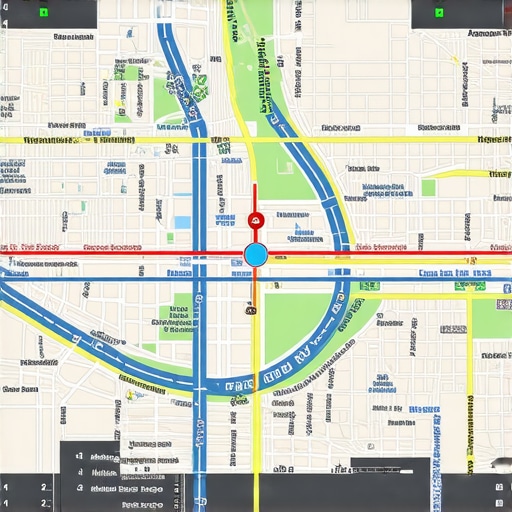
The air in the office smells like cold coffee and laser toner. My eyes are fixed on a logistics map of a three mile radius in suburban Chicago. I see the glitches. I see the phantom pins. Most business owners think of their Google Business Profile as a digital business card, but I see it as a high-precision dispatch system. When that system fails, it is usually because someone, at some point, polluted the data stream with low-grade citations and toxic links. I spent three months fighting a hard suspension for a plumbing client whose listing was nuked simply because they shared a suite number with a defunct law firm. Google did not want proof of a van; they wanted proof of a utility bill under the exact GPS pin to verify the beacon was real. This is the reality of the hyper-local layer. It is forensic. It is mathematical. It is unforgiving.
The ghost in the GPS coordinates
Scrubbing bad links means identifying and removing inconsistent NAP data and low-quality backlinks that confuse the local algorithm. You must use forensic audit tools to track every digital footprint left by previous agencies to restore ranking trust. The process begins with a total data lockdown. Every inconsistent address and every mismatched phone number acts like a signal jammer. If your business moved three years ago but your old address still exists on twenty directory sites, Google sees two separate entities. This creates a conflict in the spatial database. You must understand the truth about cleaning up old spammy citation campaigns before you can even think about new growth. These ghosts in the machine pull your ranking authority toward a location where you no longer exist. It is a waste of digital fuel. We do not just edit listings; we hunt them down and terminate them. The algorithm values certainty over volume. A clean profile with fifty accurate citations will outrank a messy profile with five hundred every single time.
“Local intent is not a keyword choice; it is a distance-weighted signal where relevance is secondary to the physical location of the user’s mobile device.” – Map Search Fundamental
The three mile radius that determines your revenue
Your proximity beacon has a finite range. Inside that circle, your business is a king. Outside of it, you are a ghost. When a previous agency buys thousands of cheap links from foreign domains, they are essentially telling the algorithm that your local plumbing shop is globally relevant. This is a lie. Google knows it is a lie. This mismatch triggers a trust score drop. You need backlink audits to scrub toxic links and refocus your authority back onto your actual service area. The physics of a three mile proximity radius shift is brutal. If the algorithm detects spam, it shrinks your visibility circle. You might still rank in your own parking lot, but you disappear two blocks away. This is the spatial penalty. It is silent, but it is deadly for your lead flow.
Why your physical address is a liability
Physical addresses become liabilities when they are associated with multiple defunct businesses or shared suite numbers. Google views these clusters as high-risk spam indicators, requiring a clean citation profile and verified utility bills to differentiate your beacon from the noise. I have seen businesses disappear because their landlord rented the neighboring suite to a lead-gen farm. The proximity of the two pins was so close that Google flagged the entire building as a spam hub. To survive, you must prove your unique identity. This often involves proving your business identity to google after a ban using video verification and real-time document audits. We look at the logistics of the storefront. We look at the signage. We look at the way the GPS coordinates align with the actual curb cut of the property. If your NAP data is messy, your address is not an asset; it is a target for the spam team. You need to know fixing incorrect business information is the only way to rebuild that foundational trust.
The local authority reading list
- How to audit citation building services before you buy
- The toolkit we use to maintain top google maps rankings
- How to scrub spam signals and rebuild trust with the map algorithm
- Cleaning up a messy gmb footprint left by a bad agency
- How to identify which local listings are hurting your map rank
The logic of the proximity beacon
Proximity is a distance-weighted signal calculated by the user’s GPS position relative to your business centroid. When bad citations exist, they create phantom locations that dilute this signal, effectively pushing your business out of the Map Pack for local users. The math of GPS coordinate salience is complex. Every time a customer takes a photo at your location and uploads it to their review, they are providing a high-trust coordinate signal. This is why the hidden signal in customer photos is so powerful. It confirms the physical reality of your business. Conversely, when a previous SEO provider uses keyword-stuffed business names, they are polluting the entity definition. You must use services to normalize rankings after keyword stuffed business name edits to bring your profile back into compliance. If you do not, you are just waiting for a manual action. The algorithm does not care about your marketing goals; it cares about the accuracy of its map. If you lie about your name or your location, you are a threat to their product quality. They will remove you. My job is to make sure you are the most verified, most consistent, and most logical choice for the algorithm to display.
“Proximity remains the strongest ranking factor in the local pack, often overriding organic signals if the physical distance between the searcher and the business exceeds the calculated service area.” – Vicinity Algorithm Analysis
The forensic trace of a service area polygon
Service area polygons define where your business operates without a physical storefront. If these polygons overlap with high-spam zones or include mismatched data from previous campaigns, the profile will suffer from a lack of local justification triggers. Many agencies set up service areas that are too large. They try to cover the entire state. This is a mistake. It dilutes your local relevance. When we scrub a profile, we often shrink the service area to the regions where the business actually has real customer data and reviews. This increases the density of your local signals. We look for gmb category errors that might have been introduced by automated tools. We also check for inconsistent language data that could be confusing the local indexing. A service area business is a specialized logistics challenge. It requires perfect synchronization between your website, your profile, and your third-party citations. If one of these is out of sync, the whole engine stalls. You need the toolkit to keep your local rank from dropping during this cleanup phase. We monitor the grid rankings in real-time. We watch the pin movement. We see the competitors who use map pack spam to report competitors who are cheating. It is a constant battle for the top three spots.
Forensic review cleanup and reputation repair
Review sentiment analysis is now a core part of the local algorithm, where mathematical weights are assigned to specific keywords and user location history. Cleaning up review spam requires a forensic audit of user profiles to prove malicious patterns to Google. If a competitor hit you with twenty 1-star reviews from a VPN, you cannot just hope they go away. You have to use the right way to handle review spam by documenting the lack of transaction evidence and the suspicious metadata of the accounts. I have seen cafes nearly go under because of a single weekend of review extortion. We had to prove that the users were never at the physical GPS coordinates of the shop. Google has this data. They know where the phones were. Our job is to trigger the audit that makes them look at it. This is why the review cleanup method is about more than just deleting text; it is about restoring the integrity of your proximity beacon. When the spam is gone, the trust returns. The algorithm starts to favor your profile again because the noise has been removed. It is about clarity. It is about truth. It is about making sure the digital map matches the real world. That is the only way to win in the current local ecosystem.