The Truth About How Often You Should Post to Your GMB Profile
The Reality of Google Business Profile Post Frequency
The concrete outside my window is still wet from the morning rain. I notice the reflection of a neon sign in a puddle; it is slightly distorted, much like the data most business owners see when they open their local dashboards. Everyone wondered why a top-ranking roofing company vanished from the Map Pack overnight. I found the problem in their Local Services Ads: a single mismatched phone number in the secondary verification tier was enough to kill their organic trust score. This company was posting daily updates, thinking the volume would save them. It did not. They were shouting into a void while their foundational GPS signals were bleeding out. My job is to see these glitches before they become catastrophes. Posting is not a magic wand; it is a heartbeat. If you over-compress that heartbeat, the algorithm treats you like a spam bot. If the heart stops, the proximity beacon fades into the gray noise of the fourth page.
The myth of the daily update
A Google Business Profile post should be published once every seven to ten days to maintain a fresh interaction signal without triggering spam filters. While daily posting is allowed, it rarely provides a ranking lift and can often lead to engagement dilution or algorithmic suppression if content becomes repetitive. Many agencies push daily schedules because they use automated tools to justify their fees. I have seen countless profiles where the owner is overpaying for GMB posts that provide zero actual value to the user. The algorithm cares about the quality of the interaction. When a user clicks your post, that is a signal. When they ignore ten posts in a row, you are teaching Google that your content is irrelevant. This is why interaction signals stop turning into customers. You are cluttering the mobile interface with noise. A strategic, weekly post with a high-quality, original photo is worth more than thirty stock images with recycled captions. The machine sees the lack of unique metadata. It notices the patterns of automation.
The physics of a three mile radius
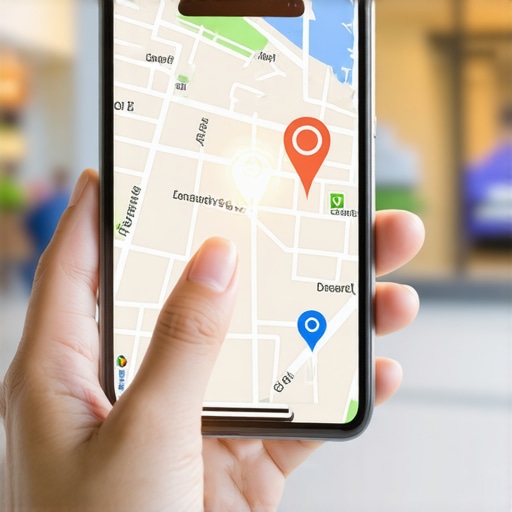
Proximity is a mathematical weight that determines which businesses appear in the local 3-pack based on the user’s current GPS coordinates. While posting frequency affects freshness, it cannot override the physical distance between the searcher and the business centroid unless other authority signals are exceptionally high. You have to understand that Google Maps is a dispatch system. It wants to minimize the travel time for the user. I often talk to owners who are frustrated because they cannot rank in the 3-pack for a neighboring city despite posting every single day. They are fighting physics. The map treats your physical address as a liability if you are too far from the search intent. We have seen instances where proximity still kills map visibility even for established brands. If you are stuck, you need to look at how your service areas are defined. You cannot post your way out of a bad location. You must instead prove that you are the most relevant entity within that specific spatial slice. This involves using local grid trackers to see where your signal drops off. It is about forensic mapping, not just social media marketing. The map is a grid of trust.
“Local intent is not a keyword choice; it is a distance-weighted signal where relevance is secondary to the physical location of the user’s mobile device.” – Map Search Fundamental
Why your photos are the real metadata
Photos uploaded to a Google Business Profile carry embedded metadata and visual AI signals that confirm the physical reality of a business location. Real, customer-uploaded images are prioritized over professional shots because they verify the authenticity of the storefront and the services being provided in real-time. I see the glitches in the photo tab all the time. A business uses a stock photo of a plumber, but the AI recognizes the background is a studio in another country. This is why business photos are being rejected more frequently now. The algorithm is looking for specific photo metadata that confirms you are where you say you are. If you want to move the needle, stop worrying about the text in your posts. Focus on geotagging your photos correctly, though doing it manually is often better than using suspicious third-party tools. I have watched profiles jump from the fourth spot to the first just by replacing three stock images with candid shots of their team working on a local street. The sensory data of a real location is the strongest link you have to the map.
Local Authority Reading List
- The simple checklist for GMB profile optimization
- How to spot a local SEO agency using click bots
- Why automated GMB tools are often a waste of money
- How to structure your services list for map relevance
Interaction signals vs static content
Interaction signals refer to user actions like click-to-call, direction requests, and message inquiries that tell Google a profile is valuable to searchers. Posting frequently is only useful if it drives these specific actions, as static views without engagement do not improve map rankings. The machine is watching the flow of traffic. If you post a deal and ten people click the call button, your authority rises. If you post a generic update and nobody clicks, you are just adding to the noise. This is the interaction signal that tells Google you are a local leader. Many businesses fail because they use automation for their GMB posts, which often strips away the human element that encourages clicks. You need to understand why your click-through rate is dropping even if your rank seems stable. Rank is a vanity metric; direction requests are revenue. I have spent years auditing profiles where the owner thought they were winning because they were in the 3-pack, but their phone calls had dropped because their profile looked like a robot managed it. People want to see the human behind the counter. They want to see the grease on the wrench or the steam from the coffee cup.
“Google’s proximity filter acts as a spatial gatekeeper, prioritizing the density of local signals over the historical authority of the domain.” – Location Intelligence Report 2024
The danger of automated frequency
Automated posting tools often use recycled IP addresses and generic footprints that can lead to profile suspensions or the filtering of legitimate updates. Google’s spam detection systems are increasingly sensitive to high-frequency posting patterns that lack unique geographic or behavioral markers. I once had to recover a suspended profile for a client who was using a cheap service that posted three times a day. Google flagged them for deceptive practices because the posts were coming from a server in a different time zone. You have to verify your SEO expert is not using these shortcuts. It is far better to have a stagnant profile for a week than one that is being pumped full of junk data. If you are buying cheap GMB packages, you are essentially paying someone to put a target on your back. The map is built on trust. When you use tools that simulate popularity, you are breaking the core agreement of the platform. I prefer the slow, steady approach. One real post. One real review. One real photo. That is how you build a beacon that lasts. The street does not lie, and neither does the map.
The forensic trace of a service area
Service area businesses must define their boundaries using specific zip codes or city names to ensure their proximity beacon covers the correct geographic territory. Misconfiguring these areas or overlapping with other businesses can lead to a service area glitch that suppresses visibility in key markets. If you are a plumber or an electrician, your profile behaves differently than a retail shop. You do not have a physical storefront for customers to visit, so you rely entirely on your service area structure. I have seen cases where a service area glitch caused a company to disappear from a town only five miles away. They were posting updates about that town, but their settings were restricted. You must optimize your services list to reflect the actual work you do in those areas. Do not just list a city; prove you are active there. Mention local landmarks in your reviews. Ask customers to mention the neighborhood. This creates a spatial relevance that no post frequency can mimic. The map is a database of proof. If you cannot prove you were there, you do not exist in the 3-pack. It is as simple and as brutal as that. The pin must be earned.