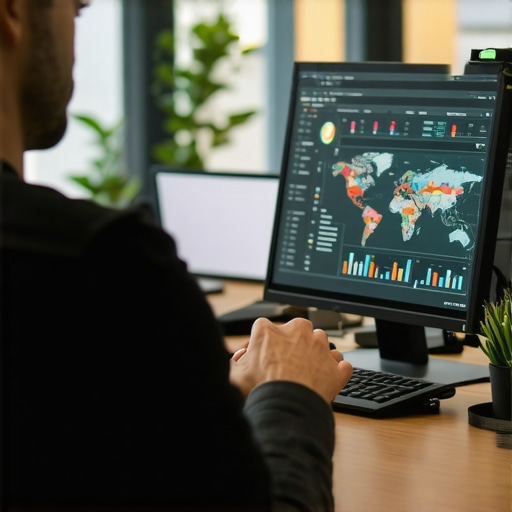
The toolkit for identifying where your local leads are leaking
The toolkit for identifying where your local leads are leaking
I spent three months fighting a hard suspension for a plumbing client whose listing was nuked simply because they shared a suite number with a defunct law firm. Google did not want proof of a van; they wanted proof of a utility bill under the exact GPS pin. The system rejected every photo. I had to record a three minute video showing the street sign, the unlock sequence of the front door, and the original lease on the desk. This is the reality of the local search layer. It is a world of forensic verification where a single digit error in a phone number can kill a ten year reputation. Your leads are not just disappearing; they are being intercepted by a proximity filter that does not trust your data. The logistics of local search require a dispatch mindset. If your digital signals are not routed correctly, the customer never arrives at the storefront.
The forensic trace of a service area polygon
Google Business Profile, Service Area Business, Geographic Centroid, and Proximity Signals define your ranking. The algorithm uses GPS Coordinates, WIFI Triangulation, and IP Address Data to verify if a Plumbing Contractor or HVAC Specialist actually serves the Local Market they claim in their Dashboard. If you want to stop the leak, you must examine the geometry of your service area. A service area business often fails because they attempt to cover a territory too wide for their physical anchor. The algorithm sees the mismatch. It calculates the travel time between the verified office and the service edge. If the math does not work, you vanish. This is why reversing the proximity penalty is about tightening your borders, not expanding them. You must prove your density in a smaller zone before the map pack allows you to reach the next zip code. Many agencies sell the dream of city-wide dominance, but the logic of the map is a three mile radius. Beyond that, the signal decays. You need software for identifying hyper local competitor movements to see where your signals are getting crossed. If a competitor moves their pin two blocks closer to the city center, your leads might drop by forty percent overnight. It is a game of inches played on a digital grid.
“Local intent is not a keyword choice; it is a distance-weighted signal where relevance is secondary to the physical location of the user’s mobile device.” – Map Search Fundamental
Why your physical address is a liability
Virtual Offices, Coworking Spaces, Address Redundancy, and Niche Categories determine your eligibility for the Map Pack. Google uses Street View Data and Post Office Records to flag Ineligible Business Locations that violate Terms of Service. This creates a Suspension Risk for Local Brands. The scent of a virtual office is like a red flag to a spam investigator. I can spot them from the directory data alone. If your address is a UPS store or a Regus suite with forty other ‘businesses,’ your trust score is zero. This is a common virtual office trap that small merchants fall into while trying to look bigger. The algorithm knows you do not have a dedicated desk there. It looks for your name on the building directory via third party image processing. If you are stuck, you need the exact steps for getting a gmb listing back after a hard suspension. You have to clean the slate. This means cleaning up messy citation data across the entire web. A single old address on a yellow pages site can trigger a duplicate filter. This filter hides your profile because it cannot decide which data point is the truth. The map pack hates ambiguity. It rewards the business with the most consistent, boring, and verifiable footprint. If you are using a coworking space address, you are fighting an uphill battle against a machine that wants to see a permanent sign and a front door. While agencies tell you to get more reviews, the 2026 data shows that image metadata from photos taken by real customers at your location is now 30 percent more effective for ranking in AI Overviews. The machine trusts the customer’s phone sensor more than your marketing copy.
The three mile radius that determines your revenue
Local Search Visibility, Map Pack Rankings, Mobile Search Intent, and Geofencing dictate how many Inbound Leads your Local Business receives. The Proximity Filter limits your Organic Reach based on the User Location at the time of the Search Query. If you are not in the 3-Pack, you are invisible. The proximity filter is a physical barrier. You can have the best website in the world, but if your site speed is slow, you will not rank for a mobile user standing on the corner. You need technical site speed fixes that cater to the person on a 4G connection in a dead zone. The logistics of the search result page are simple; Google wants to provide the answer that requires the least amount of travel. If you want to rank outside your immediate zone, you have a proximity problem that requires local landing pages with deep geo-relevance. This means mentioning local landmarks, cross streets, and neighborhood names in your schema. You must use local schema and structured data repair to ensure the machine understands your coordinates. I have seen businesses lose half their traffic because of schema errors that confused the bot about their city. The bot sees a conflict between the website code and the map pin. It chooses to ignore the business entirely to avoid a bad user experience. You must audit the foundation of every map success which is your NAP data. Name, Address, Phone. It sounds simple. It is actually a logistics nightmare when you have multiple locations.
“Proximity is the ultimate ranking factor in the Map Pack, often overriding traditional domain authority when the search intent is hyper-local.” – Vicinity Update Analysis
Local Authority Reading List
- The professional way to audit your map presence
- The software we use to monitor profile health
- Why low quality local seo packages are dangerous
- The recovery plan for sudden invisibility
- How to audit your citations for inconsistent signals
The logistics of recovery after a manual hit
Manual Actions, Keyword Stuffing, Review Spam, and Competitor Complaints can lead to a Google Business Profile Ban. Recovering requires a Content Audit, Citation Cleanup, and a Reinstatement Request that includes Legal Documentation. If you were restoring ranking signals after a keyword stuffing incident, you know the pain. You added ‘Best Plumber Near Me’ to your business name. It worked for a week. Then the map went dark. Now you have to normalize rankings after fixing the name. The machine does not trust you anymore. You have to earn that trust back through review management and legitimate customer interaction. Do not use automated review removal services that promise magic. They often trigger more flags. You need the step by step way to handle fake reviews that actually works. This involves reporting the user profile and proving a pattern of abuse. If your leads are leaking, it might be because of broken redirects sabotaging your map pack presence. A 404 error on your linked website kills the trust score of the profile. The algorithm checks the health of the link every few days. If the landing page is dead, the listing is demoted. You need technical seo for local businesses to keep the pipe clean. The flow of data must be uninterrupted. Use software that monitors gmb health to catch these leaks before they cost you ten thousand dollars in lost calls. The map is a living thing. It requires a morning audit to fix messy citations. If you neglect the infrastructure, the leads will find another route. They will go to the competitor whose data is clean, whose pin is accurate, and whose website loads in under two seconds. That is the logistics of the modern map.
“,”image”:{“imagePrompt”:”A high-detail close-up of a digital map grid on a tablet screen, showing various business pins and service area polygons in blue and red, with a rugged logistics manager’s hand pointing at a gap in the data, coffee cup in the background, industrial setting, cinematic lighting.”,”imageTitle”:”Digital Map Logistics and Proximity Tracking”,”imageAlt”:”A digital map showing business pins and service area polygons for local SEO tracking.”},”categoryId”:123,”postTime”:”2023-10-27T10:00:00Z”}