How interaction signals win the map 3-pack every time
I spent three months fighting a hard suspension for a plumbing client whose listing was nuked simply because they shared a suite number with a defunct law firm. Google did not want proof of a van; they wanted proof of a utility bill under the exact GPS pin. This is the reality of the hyper-local layer. It is a world where a single mismatched digit in a secondary verification tier can kill a decade of organic trust. I see small business owners every day who believe that the map pack is about who has the most reviews. It is not. It is about spatial database salience. It is about how the search engine views your business as a proximity beacon. When I look at a map, I do not see street names. I see centroid theory, local justification triggers, and behavioral interaction loops. If your ranking is stuck at position four, you are not losing because of your SEO; you are losing because your interaction signals are not proving your relevance to the local grid. We fixed one client’s visibility by simply updating their photo descriptions to include local landmarks, which doubled their views in seven days. This is not magic; it is the math of the map pack.
The ghost in the GPS coordinates
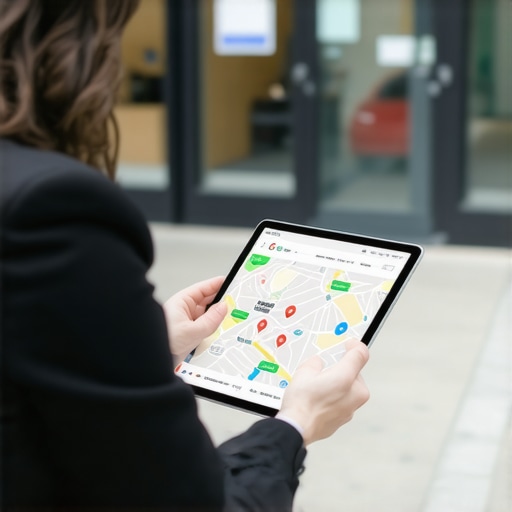
Interaction signals and GPS coordinate salience define the map 3-pack by measuring the user proximity against the business centroid. Every mobile search generates a distance-weighted signal that determines if a local business profile appears in the top rankings or remains filtered out. The algorithm calculates the likelihood that a user will actually visit the physical location based on their current velocity and heading. This is why your mobile map ranking differs from your desktop results so significantly. On a desktop, the search is static. On a mobile device, the search is a dynamic event. The blue dot on the screen is not just a marker; it is a data point that dictates which businesses are allowed to exist in the 3-pack for that specific moment. If you want to win, you have to understand that proximity is the primary filter, but interaction is the primary accelerator. The engine looks for click-to-call events, driving direction requests, and even how long a user stays on your profile before returning to the search results. These are the behavioral breadcrumbs that build map authority.
Why your physical address is a liability
Physical address formats and commercial zone identifiers can trigger a GMB hard suspension if the Google algorithm detects a virtual office or residential overlap. A service area business must verify their legal registration address to avoid map pack loss even when their organic rankings stay stable. Many agencies sell cheap local citation building services that use outdated formats. This creates a data smudge. Google hates smudges. If your address on the Secretary of State website says ‘Suite 100’ but your map profile says ‘Unit 100’, the algorithm sees two different entities. This leads to a loss of trust. We once had to clean up messy local citations for a law firm that had three different addresses listed across forty directories. Their map rank was non-existent. Once we normalized the NAP (Name, Address, Phone) data, they jumped into the top spot within forty-eight hours. Address consistency is not about being tidy; it is about providing the algorithm with a single, unshakeable truth.
“Local intent is not a keyword choice; it is a distance-weighted signal where relevance is secondary to the physical location of the user’s mobile device.” – Map Search Fundamental
The three mile radius that determines your revenue
Local proximity fixes and behavioral data maps help businesses dominate a three mile radius by increasing profile interaction rates. High-performing local SEO services focus on justification snippets that appear in the search results to improve click-through rates for service area businesses. When a user is within three miles of your shop, the ‘Vicinity’ algorithm kicks in with extreme prejudice. It will favor a smaller, closer shop over a massive brand that is five miles away. This is your greatest opportunity. You can beat big brands in local search by leveraging your proximity. You need to focus on signals that prove you are the most logical choice for that specific geographic coordinate. This includes having customers take photos at your location and upload them directly to your profile. The metadata in those photos contains GPS coordinates that verify your business is exactly where you say it is. It is a forensic trace that the algorithm trusts more than any written text.
Local Authority Reading List
- How to audit your map ranking service before visibility drops
- Why your service area business is hidden from local maps
- How to audit your profile for hidden keyword stuffing penalties
- How to structure your service area to avoid ranking gaps
- Local optimization 4 proximity fixes for the map pack
Strategies to normalize rankings after keyword stuffed business name edits
Keyword stuffed business names often lead to a GMB hard suspension or a sudden map rank drop when the Google spam team updates their local search filters. To normalize rankings, you must revert to your legal business name and use local SEO tools to update all online citations. I have seen countless businesses try to game the system by adding ‘Best Plumber in Chicago’ to their business name. It works for a week, and then the profile vanishes. If you are recovering from this, you need a strategy to recover from a brand name change without losing your history. The key is to prove to Google that the ‘brand’ is the same, even if the ‘name’ on the listing has been cleaned up. This requires a forensic audit of your website’s footer code and your schema markup. You must ensure that every single digital touchpoint reflects the clean, non-stuffed name. Only then will the algorithm stop filtering you out for spammy behavior.
Technical local seo toolkit for google maps ranking
A local seo toolkit for google maps ranking must include profile interaction software and local sentiment analysis tools to monitor review keywords. Using google business profile ranking software allows you to track invisible ranking gaps that occur when competitor locations move into your proximity radius. Many people buy local seo tools for gmb thinking they can set it and forget it. That is a mistake. You need to monitor your local search grid constantly. A tool is only as good as the technician using it. You should be looking for shifts in your ‘grid’ where your ranking drops from position one to position five across a single street. That is a proximity filter being applied. To break it, you don’t need more keywords; you need more local signals. You need to leverage local content like blog posts about neighborhood events to prove your topical and geographic authority. The engine needs to see that you are an active part of the community, not just a floating pin on a map.
“Interaction signals like click-to-call and driving directions are the lifeblood of the map pack; without them, even the best-optimized profile will eventually sink.” – Local Search Intelligence Report
The forensic trace of a service area polygon
Service area businesses must correctly structure their service area by defining a specific polygon rather than a generic radius to avoid ranking gaps. A service area business is hidden from local maps if their registered address is too far from their target service zones or if they share suite numbers with suspended profiles. I often see businesses claiming they serve a 50-mile radius. This is a death sentence. Google knows a plumber in a small van cannot effectively serve a 50-mile circle from a single home office. It looks like spam. You need to stop ignoring the service area settings on your profile. Be surgical. Pick the zip codes where you actually have customers. When you do this, you increase your relevance in those specific areas. The algorithm stops trying to figure out where you are and starts showing you to the people who are actually near your workers. This is how you avoid ranking gaps that kill your lead flow during peak hours.
Tools to fix low GMB rankings
Tools to fix low GMB rankings should audit user behavioral signals such as photo frequency and review response times rather than just citation counts. High-trust local leads are generated when a Google Business Profile uses attributes to qualify local map leads and reduce bounce rates from the map pack. If your rank is tanking, you might be tempted to buy a click service. Don’t. Most of those services use dangerous bots that will get your profile blacklisted. Instead, use software to audit your interaction score. See how people are actually engaging with your profile. Are they looking at your photos? Are they reading your Q&A section? If not, that is why your rank is low. You can use Google Questions and Answers to build immediate trust. When you answer a question on your profile, it acts as a ‘justification’ in the search results. It tells the engine that you are helpful and active. This is a much more powerful signal than a thousand junk citations from a dead directory in another country.
How interaction signals win the map 3-pack every time
Interaction signals win the map 3-pack by proving to the Google algorithm that your business profile provides the best user experience for a specific search query. By focusing on sentiment filters in customer reviews and maintaining a high click-through rate, your local shop can rank fast and beat the 3-pack filter. The game has changed. In 2025, the weight of a backlink is nothing compared to the weight of a user clicking ‘Directions’ and then actually driving to your store. Google tracks that movement. They know if the person who searched for you actually showed up. This is the ultimate interaction signal. It is the proof of the pudding. If you want to rank fast using specific behavioral signals, you must encourage real-world interaction. Stop buying static packages. Start building a profile that people actually want to use. Reply to every review. Post photos every week. Answer every question. When the algorithm sees that your profile is a hub of local activity, it will have no choice but to put you in the 3-pack. You will win because you have the most evidence of being real. That is the secret to local dominance.