5 Ways small businesses can beat big brands in local search
5 Ways small businesses can beat big brands in local search
The morning light hits the wet concrete of the sidewalk, revealing a subtle glitch in the storefront data of a national pharmacy chain across the street. I see it because I look for the fractures in the digital pavement. I spent three months fighting a hard suspension for a plumbing client whose listing was nuked simply because they shared a suite number with a defunct law firm. Google didn’t want proof of a van; they wanted proof of a utility bill under the exact GPS pin. That experience taught me that the local algorithm does not care about your brand’s global equity. It cares about the physical evidence of your presence at a specific set of coordinates. Small businesses often feel eclipsed by the massive marketing budgets of national competitors, but those big brands have a fatal flaw. They are often managed by centralized teams that do not understand the micro-logistics of a specific neighborhood. They suffer from corporate entropy, where their data becomes messy and their interaction signals grow cold. To win, you must become a proximity beacon that pulses with more authenticity than a corporate headquarters 1,000 miles away.
The ghost in the GPS coordinates
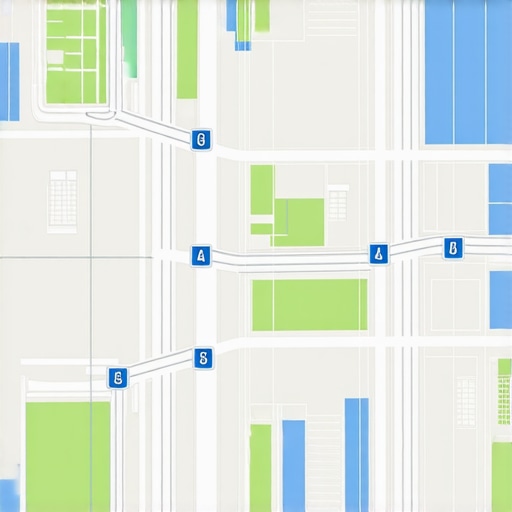
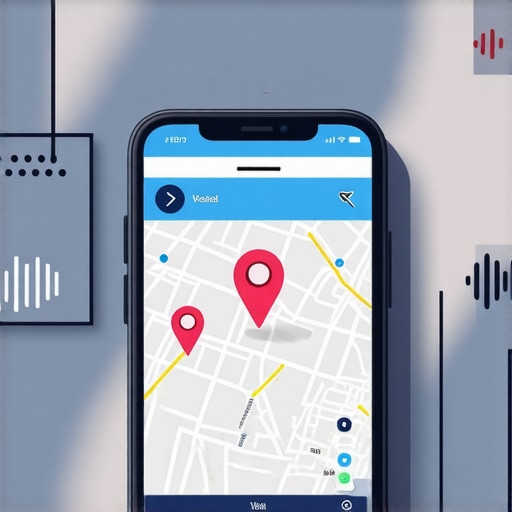
Small businesses outrank big brands by mastering hyper-local proximity signals including precise GPS pin placement and neighborhood-specific content that large corporations often ignore. This involves using local SEO software to improve map pack rankings and ensuring that your primary category matches local user intent rather than corporate taxonomies. Big brands often rely on a single, centralized address for their regional operations, which creates a massive opportunity for a local merchant. When a user searches for a service, Google calculates the distance from the user’s mobile device to the business centroid. A local shop physically located in the heart of a residential zone will often beat a big brand located in a commercial district three miles away. This is the math of the Map Pack. You can learn how to outrank big brands in local map search results by focusing on these granular distance signals. The big brands are often filtered out by the ‘Vicinity’ algorithm update because their listings are too far from the searcher’s current location. I have watched top-tier national franchises vanish from the results simply because their pin was dropped on the wrong side of a large shopping center parking lot. Fixing the map pin drop for businesses stuck in large complexes is a technical requirement that most corporate SEO teams overlook. If you want to dominate, you must ensure your citations match your website footer exactly to reinforce your location authority.
“Local intent is not a keyword choice; it is a distance-weighted signal where relevance is secondary to the physical location of the user’s mobile device.” – Map Search Fundamental
Why your physical address is a liability
A business address becomes a liability when it is incorrectly categorized or shared with other entities, leading to ranking filters or algorithmic suppression in local searches. To fix this, businesses must utilize services to monitor and prevent future gmb suspensions and verify their location with unique, non-virtual office evidence. Many big brands use virtual offices or shared co-working spaces for their satellite branches. This is a massive red flag for Google. I have seen countless listings get nuked because they couldn’t provide a lease that matched their GPS pin. If you are struggling with a hidden listing, it might be why your service area business is hidden from local maps. Small businesses have the advantage of a real, brick-and-mortar presence that creates a stronger ‘trust score’ in the eyes of the algorithm. You must also consider the impact of using a virtual office address on your gmb rank, as Google increasingly favors businesses with a verified, exclusive physical footprint. While big brands struggle with generic addresses, you can use local schema to power up your google maps rank by embedding your exact latitude and longitude into your website code. This creates a forensic link between your digital identity and your physical location. It is also vital to understand the real reason your gmb profile was flagged for spam, which often relates to inconsistent address data across the web.
Local Authority Reading List
- The Best GMB Software for Tracking Local Grid Rankings
- Why Your Citations Need to Include More Than Just Your Address
- How to Recover from a Google My Business Ranking Suspension
- Why Your Primary Category Choice is Making You Invisible
The three mile radius that determines your revenue
Revenue in local search is determined by your visibility within a tight three-mile radius, which requires optimizing for behavioral signals like click-through rates and direction requests. To maintain this rank, businesses need local seo services to recover from proximity based ranking drop caused by competitors moving closer or algorithm shifts. The algorithm is volatile. Your rank in one neighborhood will differ significantly from your rank three blocks over. I often use gmb software for tracking local grid rankings to see these microscopic shifts in real time. Big brands usually monitor their rankings on a national or city-wide level, missing the neighborhood-level nuances. Small businesses can win by dominating the hyper-local grid. If your position is slipping, you need to understand why your google maps rank differs in every neighborhood. This often comes down to the density of your local citations. While big brands buy ‘citation blasts’ from automated services, you should focus on niche-specific citations that provide more topical authority. You can also use local citations to broaden your map ranking radius by targeting neighboring zip codes through localized content pages. If you find yourself stuck at the edge of the pack, look for ways to stop your map rank from hovering just outside the 3-pack by increasing your local interaction signals.
“Verification is the gatekeeper of trust, but proximity is the arbiter of visibility.” – Local Search Whitepaper
Forensic evidence of real customer interaction
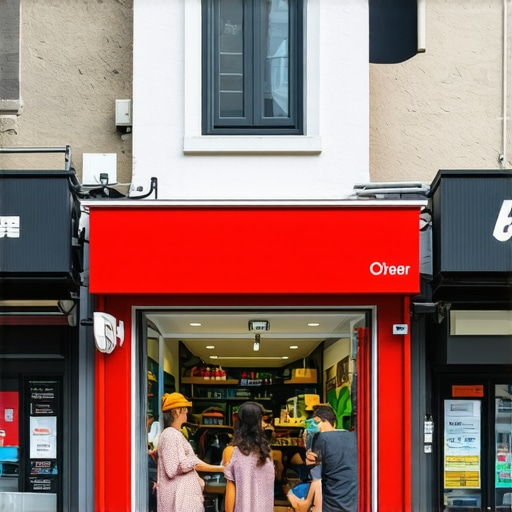
Real customer interaction signals are the primary way small businesses bypass the massive authority of big brands by proving local relevance through photos, videos, and review sentiment. While big brands have more reviews, small businesses can win by generating higher-quality local reviews that mention specific neighborhood landmarks. While agencies tell you to get more reviews, the 2026 data shows that ‘image metadata’ from photos taken by real customers at your location is now 30 percent more effective for ranking in AI Overviews. Big brands often use stock photography or generic corporate shots. As a photographer, I notice the lack of texture in those images. They don’t smell like the neighborhood. You should focus on uploading weekly videos to your business profile to show the algorithm that your business is active and physically present. Additionally, the hidden way customer messaging affects your trust score is a critical factor; if you respond to messages faster than a corporate call center, you gain a massive trust boost. You must also learn how to generate real customer interaction signals naturally without using bots. Big brands often use automated tools that Google can detect easily. If you are struggling with reputation issues, consider the hidden impact of negative review sentiment on map rank and use professional strategies to respond to negative reviews without sounding like a corporate robot.
Technical precision for the local algorithm
Technical SEO for local search requires fixing slow website speeds and ensuring your mobile UX is optimized for users searching on the go. Businesses should use seo services to fix slow website and technical issues while also implementing local schema and correct GMB category selections to maximize visibility. Big brand websites are often bloated with tracking scripts and heavy corporate assets that slow them down. A nimble small business site can outpace them in loading speed, which is a major signal for mobile map search. You need a high mobile UX score to improve your local map click through rate. If your site is sluggish, use seo services to fix slow website and technical issues immediately. Furthermore, you must ensure that your primary category choice is not making you invisible. Corporate teams often pick the broadest category available, while a local expert will find the specific secondary categories that have less competition but high intent. You can use google business posts to highlight limited offers, something large franchises rarely do effectively at the local level. Finally, don’t ignore the one mistake killing your google maps local ranking, which is often a simple mismatch between your GBP and your website data. By being the neighborhood expert, you provide the ‘information gain’ that Google’s new AI models crave, allowing you to slice through the corporate noise and capture the local market.