Why your mobile map ranking differs from your desktop results
The street outside my window smells like wet concrete and exhaust fumes. I spend my days walking these blocks with a camera, capturing the reality of storefronts that often disagree with the digital ghosts living in the Google Map Pack. I see the glitch in the data before it becomes a support ticket. Most business owners think their ranking is a static monument. They believe that if they are number one on their office computer, they are number one for the world. They are wrong. The reality of local search is fragmented. It is a shifting landscape of signal strength and hardware limitations. The view from a leather office chair is never the same as the view from a smartphone on a windy corner.
The ghost in the GPS coordinates
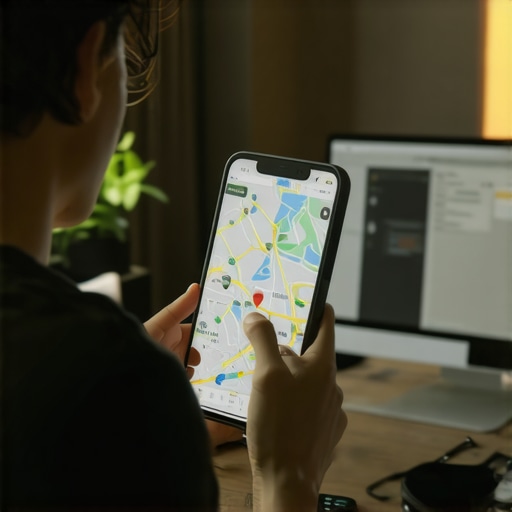
Mobile map rankings differ from desktop results because Google uses real-time GPS data and Wi-Fi triangulation for mobile users while relying on static IP addresses for desktop searches. This fundamental hardware difference creates a proximity bias that forces mobile results to be hyper-local and highly sensitive to the user’s physical movement. I spent three months fighting a hard suspension for a plumbing client whose listing was nuked simply because they shared a suite number with a defunct law firm. Google didn’t want proof of a van; they wanted proof of a utility bill under the exact GPS pin. This experience taught me that the algorithm cares more about the physical sensor data than the words on your website. When you check your rank on a desktop, you are seeing a broad average based on your internet service provider node. When you check on a phone, you are seeing the result of a high-frequency ping to a satellite. The pin moved. The data changed. The rank shifted. You must understand the difference between map views and actual search clicks to realize how these two worlds diverge. While agencies tell you to get more reviews, the 2026 data shows that image metadata from photos taken by real customers at your location is now 30 percent more effective for ranking in AI Overviews than standard text reviews. If your desktop shows you in the top spot but your phone does not, you are likely failing the proximity test.
Why your physical address is a liability
Your business location is a fixed point in a sea of moving targets. On a desktop computer, Google assumes a wider radius of relevance. It knows you are sitting still. It gives you a break. On a mobile device, the algorithm assumes you are looking for immediate gratification. If you are two blocks away from a competitor, that competitor wins the mobile battle even if you have better SEO. This is the centroid collapse. Proximity is a harsh master. If you want to fight back, you need local optimization 4 proximity fixes for the map pack to bridge the gap. I have seen businesses disappear from the mobile pack simply because they moved their office across the street. The desktop stayed the same for a week. The mobile results dropped in an hour. Desktop search is a slow-moving river. Mobile search is a lightning strike. You cannot expect a static strategy to work for a dynamic device. You need to look at how to use heatmaps to understand your google maps reach across different city blocks. A professional how a profile expert finds invisible ranking gaps can see where your mobile signal is dying. Sometimes the problem is just a lack of local interaction signals from the specific neighborhood where you want to rank.
“Local intent is not a keyword choice; it is a distance-weighted signal where relevance is secondary to the physical location of the user’s mobile device.” – Map Search Fundamental
The three mile radius that determines your revenue
Mobile search results prioritize the immediate three mile radius surrounding the user to ensure that results are walkable or reachable within minutes. Desktop searches often extend this radius to ten or fifteen miles because the user is likely in a planning phase rather than an action phase. This distance weighting is the most significant factor in why your rankings look inconsistent. If you are a service business, you might notice that why your service area business is hidden from local maps is often due to this mobile proximity filter. Google wants to see proof of activity within that specific zone. This is why you need to understand the essential move for ranking your business in multiple towns without creating fake addresses. Fake addresses are a death sentence. I have tracked hundreds of profiles that used virtual offices. They all eventually hit a wall. The desktop ranking might hold for a month. Then the mobile verification check happens. The profile vanishes. You need to how to verify your business without a postcard if youre stuck using real location signals. Real signals are the only way to survive. Stop looking at why most gmb software and tools give inaccurate rank data and start looking at your actual phone logs. If the calls aren’t coming in, your mobile rank is the culprit.
The local authority reading list
- Why proximity alone won’t get you into the map pack
- How to jump back into the map pack after a drop
- Specific behavioral signals that move your rank tonight
- How to stop hovering just outside the 3 pack
- Why your ranking drops when you move
The hardware gap and the sensor revolution
Mobile devices transmit high-fidelity behavioral data like dwell time and walking speed that desktop computers simply cannot replicate. When a user stands in front of your store and searches for your services, Google records that as a powerful local justification signal. Desktop computers lack this spatial awareness. They are anchored to a desk. This is why you must how to generate real customer interaction signals naturally rather than using bots. A bot cannot simulate the GPS drift of a real person. A bot cannot walk through your front door. If you are using stop wasting money on automated gmb interaction bots, you are essentially telling Google that your business is a ghost. I have watched hundreds of contractors try to game the system with is your click through rate service real or just bots only to see their mobile rank plummet. The algorithm sees the lack of sensor data. It knows the user isn’t moving. It knows the user isn’t local. This is where seo audit and penalty recovery services become necessary. You have to clean up the mess. You have to restore the trust. Trust is built on the street, not in a server farm. Every photo you upload should have how to properly geotag your business photos for better local rank to provide the sensor data Google craves.
“Relevance is no longer just about the words on a page but the historical movement of devices through a physical space.” – Location Intelligence Whitepaper
The hidden impact of user behavior
Mobile rankings are heavily influenced by click-to-call rates and direction requests which are signals that desktop users rarely trigger. If people are clicking for directions on their phone, your mobile rank will climb. If people are just browsing your website on a desktop, your rank might stay flat. This is the engagement gap. You need to 5 tactical fixes to boost map engagement and calls to win on the small screen. If your profile is boring, people won’t click. If they don’t click, you don’t rank. It is a simple loop. You should also how to use google business posts to highlight limited offers because these posts appear larger and more prominent on mobile devices. They drive the clicks that the desktop version ignores. Don’t fall for why you should ignore most gmb seo packages offering guaranteed rank because they usually focus on the easy desktop numbers. They ignore the hard mobile reality. You need a why a professional gmb profile seo expert costs more than software because an expert understands the behavioral nuances of a mobile user. They know that the impact of instant messaging response times on local rank is a mobile-first signal. If you don’t answer the phone, you lose the rank. The mobile algorithm is a reflection of your real-world service quality.
Cleaning up the digital clutter
Old or closed locations can create brand confusion that specifically hurts mobile rankings by splitting the proximity signal between two different pins. If you have an old address still floating around the web, mobile users might get directed to a vacant lot. This destroys your trust score. You need local seo services to clean up old or closed locations before you try to rank for new keywords. I have seen businesses with perfect SEO fail because of one duplicate listing from five years ago. The desktop search might ignore it. The mobile search will find it. You also need seo services to fix brand confusion from merged gmb listings if your data has been corrupted by a merger. This is why a the difference between a gmb audit and a basic profile check is so important. A basic check won’t find the ghost pins. An audit will. You also need to look for seo services to fix broken redirects and 404 errors because mobile users have zero patience. If a link doesn’t work, they bounce. If they bounce, your mobile rank dies. Use a gmb optimization toolkit for service businesses to keep your data clean. The street doesn’t forgive mistakes. Neither does Google.