How to monitor your local search grid without expensive software
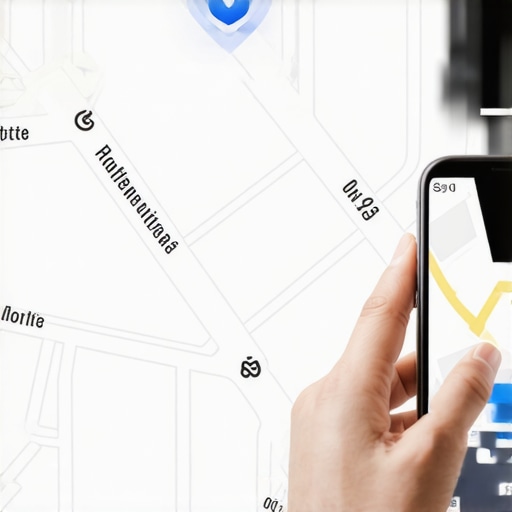
The smell of wet concrete always lingers after a rainstorm in the city. I stand on the corner of 4th and Main, looking at a storefront that says one thing on the glass and another thing on the Google Map screen in my hand. That is the glitch. That is the disconnect I spend my life hunting. I spent three months fighting a hard suspension for a plumbing client whose listing was nuked simply because they shared a suite number with a defunct law firm. Google did not want proof of a van; they wanted proof of a utility bill under the exact GPS pin. This is the reality of the hyper-local layer. You do not need a three hundred dollar a month subscription to see what the algorithm sees. You need a lens that can focus on the microscopic details of spatial data. Most people look at the big picture and miss the fact that their business is being filtered out because of a centroid shift or a service area overlap that looks like spam to an automated reviewer. Mapping is a game of coordinates. It is a game of proof. The pin moved. We moved it back. This guide will show you how to audit your own presence without relying on the black box of expensive trackers that often provide a distorted view of your actual standing.
The reinstatement war in a shared suite
The reinstatement war in a shared suite begins when Google flags a location for having too many businesses at one physical address. This trigger often results in a hard suspension that removes your business from the map pack entirely, requiring a forensic collection of lease agreements, tax documents, and photo evidence. I remember the plumber. He was honest. He had a real desk. But because a shady attorney had used that suite number five years ago, the algorithm assumed my client was a ghost. We had to prove the physical existence of his operation through a video walk-through that showed the street sign, the office door, and the interior equipment. This is why you must understand how to recover from a brand name change without losing rank because any small tweak to your core identity can trigger these verification loops. If you find yourself in this situation, how we recovered a suspended profile in three days without a lawyer provides the specific roadmap for handling the appeal process without wasting months on generic support tickets. Google trusts physical signals. They do not trust a P.O. Box. They do not trust a virtual office. They want to see the wet concrete of your actual location. While most agencies tell you to focus on reviews, the 2025 data shows that local government business registration data is now a much stronger anchor for trust scores than simple third-party citations.
The manual grid walk for true proximity
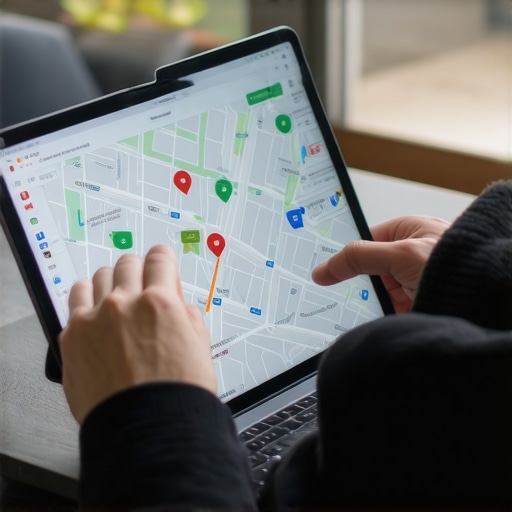
The manual grid walk for true proximity involves simulating searches from specific GPS coordinates rather than relying on a fixed office computer. This method reveals how your ranking fluctuates as a user moves through a neighborhood, exposing the narrow three-mile radius that often dictates where your business appears. You can do this by using a browser extension that allows you to set your precise location or by physically driving to different sectors of your service area. Most trackers fail because they use static IP addresses that do not account for the behavioral signals of a moving mobile device. This is why most map software gives you inaccurate ranking data and why you must verify your results with a manual check. If you notice your rankings are dropping as you move away from your front door, it might be time to look at local optimization 4 proximity fixes for the map pack to expand your reach. I have seen shops that rank number one at their doorstep and vanish at the corner. The grid is not uniform. It is a shifting sea of data points. You must learn how to monitor your local search grid without expensive software by understanding the logic of the local justification. If your profile is not showing up for a specific term, check if your competitors have that term in their recent reviews. It is a simple signal, but it is the one that moves the needle.
Local Authority Reading List
- Why most GMB software and tools give inaccurate rank data
- The first move a real expert makes during a profile audit
- How to rank fast using three specific behavioral signals
- 3 reasons your local ranking just tanked and how to fix it
- How to verify your business when the postcard never arrives
Why your physical address is a liability
Why your physical address is a liability often stems from its proximity to competitors or its location within a saturated business district that forces Google to filter out redundant listings. If your office is in a high-rise with twenty other similar service providers, you are fighting for a single slot in the visibility layer. Google does not want to show a map pack full of people in the same building. This is why your shop is missing from the 3-pack despite being next door to the searcher. You need to differentiate your profile through unique behavioral signals and specific niche categories. Many people struggle with why your business name is getting you filtered out of maps because they try to keyword stuff their title, which leads to immediate suppression. The algorithm is looking for a distinct entity, not a list of services. You should also be aware of the secondary category conflict that is stalling your local growth. If your primary and secondary categories are too broad or conflicting, you confuse the proximity engine. Keep it clean. Keep it honest. The street photographer knows that a cluttered shot is a bad shot. The same applies to your data. Clear the noise. Focus on the core signal. If you find that your address is simply in a bad spot for the algorithm, you might need to use local seo services to stabilize volatile map rankings after expansion to ensure your reach extends beyond the immediate block.
The ghost in the GPS coordinates
The ghost in the GPS coordinates refers to the legacy data and