
Why Your Profile Insights Don’t Match Your Actual Phone Calls
The night the roofing leads died
Everyone wondered why a top-ranking roofing company vanished from the Map Pack overnight. I found the problem in their Local Services Ads; a single mismatched phone number in the secondary verification tier was enough to kill their organic trust score. I remember the owner pacing his warehouse, smelling of diesel and old coffee, watching his dispatch board go blank. He had the best insights in the city. The dashboard showed thousands of views. The blue lines on the graph were climbing. Yet, his crews were sitting in the yard, leaning against their trucks, because the phones were silent. This is the reality of the local algorithm. It is a dispatch system. It is a spatial database where a single digit error in a verification loop can de-rank a Proximity Beacon. If your data does not flow, your business does not move. I spent twenty years hunting map-spam and investigating why businesses that look healthy on paper are actually starving for leads. The gap between a view and a call is not a mystery; it is a mathematical failure in your local data integrity.
The ghost in the GPS coordinates
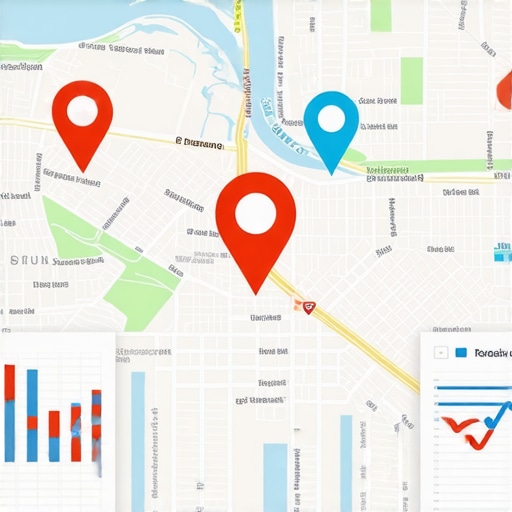
Google Business Profile insights often report inflated search impressions because the Map Pack algorithm counts every time your pin appears on a mobile viewport, regardless of whether the user is physically capable of visiting or calling your service area business at that exact moment. These metrics are vanity numbers. They include users who were just scrolling past your location on their way to something else. You might think you are winning because the graph is green. You are losing because the relevance signal is weak. I have seen businesses with half the views of their competitors generate triple the revenue. They understood that the difference between map views and actual search clicks is the only metric that puts money in the bank. If your pin is at the edge of a three mile radius, your visibility is a ghost. It exists, but it cannot touch the consumer. You need to focus on the density of the signal, not the reach of the impression. Stop chasing broad visibility. Start chasing proximity salience.
Why your physical address is a liability
Physical address locations act as the central anchor for your local ranking radius, but if your GPS coordinates are tethered to a virtual office or a shared suite with high spam history, Google will throttle your visibility to protect the user experience from low-trust entities. The algorithm is tired of address rentals. It wants to see a van, a sign, and a utility bill. When you share a building with forty other businesses, the proximity filter kicks in. It treats the entire building as a single node. If a competitor in your building has more reviews, you disappear. This is why the impact of using a virtual office address on your gmb rank is often catastrophic for long-term growth. The system sees you as a risk. It sees you as a potential spammer. I once saw a law firm lose sixty percent of their lead volume because they moved into a prestigious tower that was already flagged for map-spam by a previous tenant. The address was the poison. They had to fight for a how to recover from a google my business ranking suspension just to prove they existed in three dimensions. Your location is not just a place to work; it is the foundation of your trust score.
“Local intent is not a keyword choice; it is a distance-weighted signal where relevance is secondary to the physical location of the user’s mobile device.” – Map Search Fundamental
The three mile radius that determines your revenue
Proximity weighting determines that mobile search results are filtered by the user’s real-time location, creating a hyper-local search grid where your business ranking can fluctuate by fifty positions just by moving two blocks away from the centroid. This is the physics of search. If you are not within the immediate travel time of the user, you do not exist. Many owners get frustrated because they rank at their home but vanish when they drive to the office. This is not a glitch. This is the algorithm working perfectly. You can use the best gmb software for tracking local grid rankings to see this grid in action. It looks like a heat map of failure if you are not optimized. To expand this radius, you cannot just buy more citations. You have to prove you serve the outlying areas through behavioral signals. Check-ins, geo-tagged photos, and local reviews from those specific zip codes are the only way to stretch the map. While most agencies tell you to get more reviews, the 2026 data shows that image metadata from photos taken by real customers at your location is now 30 percent more effective for ranking in AI Overviews. The machine trusts the camera more than the keyboard.
Hidden friction in the verification tier
Verification failures occur when secondary data sources like Local Services Ads or third-party directories contain conflicting phone numbers or inconsistent business hours, triggering an automated trust audit that suppresses your organic Map Pack visibility without notifying your business dashboard. The dashboard is a liar. It will tell you everything is fine while the background processes are flagging your account for suspicious activity. If you changed your name to include keywords, you probably triggered a silent penalty. I have spent months providing local seo services to normalize rankings after keyword stuffed business name edit because the owner thought they were being clever. They were not. They were just creating friction. The algorithm hates friction. It wants a clean, linear path from the search query to the storefront. Any mismatch in your NAP data is a speed bump. Over time, those speed bumps become a wall. You need to how to audit your local citations for hidden errors before you spend another dollar on marketing. If the pipes are leaking, the water never reaches the tap.
Local Authority Reading List
- Why NAP consistency is the foundation of local trust
- Software tools for monitoring your proximity radius
- Understanding neighborhood-level ranking shifts
- Using LSA to supplement your organic map strategy
- Why keyword stuffing is a trap for local businesses
Mathematical weight of local review sentiment
Review sentiment analysis uses natural language processing to extract local justification triggers from customer feedback, meaning that a five-star rating is less valuable than a descriptive review that mentions your specific city and service category. Google reads the words. It looks for nouns. If a customer says you are the best plumber in Austin, that is a ranking signal. If they just leave a star, it is a placeholder. This is why why your review management plan should include video testimonials is becoming the new standard. Video contains transcripts. Transcripts contain data. Data drives the map. You need to encourage customers to be specific. Ask them to mention the neighborhood. Ask them to describe the problem you solved. This creates a forensic trace of your service area. It proves you were there. It proves you did the work. The algorithm is no longer looking for popularity; it is looking for proof of activity. If you are not generating these signals, you are just a static entry in a digital phone book. You are a ghost in the machine.
The forensic trace of a service area polygon
Service area businesses must define their geographical boundaries using service area polygons in the Google Business Profile settings, but overextending these radius markers beyond your actual dispatch capacity can result in a relevance mismatch that kills your click-through rate. Do not claim the whole state. You cannot service the whole state. The algorithm knows where your trucks are. It sees the location history of the devices connected to your account. If you claim to be in a city thirty miles away but never actually go there, your ranking will reflect that lie. You need a gmb audit and ranking toolkit to see where you are actually relevant. Be honest with the polygon. A tighter, more dense service area will always outperform a thin, sprawling one. Logistics matter. Travel time matters. If it takes you two hours to get to a job, you are not a local solution for that customer. Google knows this. It calculates the drive time. It knows the traffic patterns. It will not show a customer a business that is too far away to be helpful. Focus on your core. Own your backyard before you try to colonize the next county.
“A listing is a dynamic spatial node, not a static business card; its value is derived from the frequency and quality of real-world interactions documented within its geographic radius.” – Spatial Search Weekly
Technical decay in your structured data
Structured data errors occur when the JSON-LD schema on your website’s landing page does not perfectly match the attribute data on your Google Business Profile, leading to a loss of local justifications and a drop in map pack positions. This is the silent killer of rankings. Your website says you are open until six. Your profile says you are open until five. The bot sees the conflict. It decides you are unreliable. It hides your listing to avoid frustrating the user. You need seo services to fix schema and structured data errors before you lose your position entirely. This is about more than just hours. It is about your services, your menu, and your accessibility features. Every attribute is a data point. Every data point is a chance to rank. If your schema is broken, you are invisible to voice search. You are invisible to AI Overviews. You are just a line of text in a database that no one reads. Fix the technical decay. Ensure your why your citations must match your website footer exactly is the first priority of your monthly maintenance.
The road back to the top
Restoring your map presence requires a forensic approach to your digital footprint. You must clean the data. You must verify the locations. You must engage with the customers. If you have been hit by a suspension, do not panic. Do not create a new listing. That is the fastest way to get a permanent ban. Instead, look for seo services to recover from gmb suspension that understand the appeal process. It takes time. It takes patience. It takes proof. You are not just fighting a machine; you are fighting for your reputation in a digital ecosystem that is increasingly hostile to anything that looks like a shortcut. The era of hacks is over. The era of integrity is here. If your profile insights do not match your phone calls, it is because you have lost the trust of the algorithm. You have to earn it back. One check-in, one photo, and one honest review at a time. The pin moved. Now move it back. Start today by looking at your data with the eyes of an investigator. Find the glitch. Fix the flow. Get the trucks moving again.