The Hidden Danger of Keyword Stuffing Your Business Name
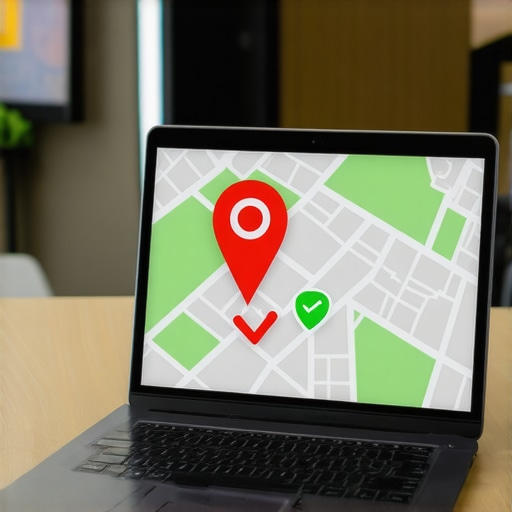
The smell of wet concrete always reminds me of the day the maps went dark. I was standing outside a client storefront in a rainy industrial park, watching a digital glitch manifest in real time. Their listing, which had lived at the top of the local pack for three years, simply ceased to exist because they added three words to their business name. Keyword stuffing your business name creates a high risk of hard suspension because it violates the Google Business Profile terms of service regarding name consistency. Local SEO services often see businesses lose 100 percent of their traffic overnight when they try to manipulate the algorithm with descriptors like Best City Plumbing or Top Rated Law Firm. This practice triggers a manual review or an algorithmic filter that identifies the mismatch between the legal entity name and the digital display. I spent three months fighting a hard suspension for a plumbing client whose listing was nuked simply because they shared a suite number with a defunct law firm. Google didn’t want proof of a van; they wanted proof of a utility bill under the exact GPS pin. They were desperate for google business profile recovery service after fake address suspension help. The algorithm was not looking for keywords. It was looking for a physical reality that matched the tax records. We had to scrub every mention of the extra keywords and submit a photo of the physical signage on the brick and mortar building before the pin reappeared. The street level view never lies; even when the data layer tries to hide the truth. This is the microscopic reality of the local algorithm. A check in signal is a mathematical weight of local review sentiment. The physics of a 3 mile proximity radius shift can destroy a business. The forensic trace of a service area polygon is what matters. The specific JSON-LD LocalBusiness attributes that trigger voice search are the real keys to the engine.
The plumbing van that vanished in a digital storm
The reinstatement process for a suspended GMB listing requires a verification loop involving utility bills, business licenses, and permanent on-site signage. Suspension recovery is a technical battle where the merchant must prove their physical existence to a skeptical spatial database. Google Business Profile triggers these flags when it detects keyword manipulation in titles or mismatched suite numbers.
“Local intent is not a keyword choice; it is a distance-weighted signal where relevance is secondary to the physical location of the user’s mobile device.” – Map Search Fundamental
This case taught me that the one mistake killing your google maps local ranking is often the desire to appear bigger than the physical footprint allows. When you stuff keywords, you are telling the engine that your brand name is a query. Google hates this. It creates a glitch in the proximity beacon. If you are looking for the truth about keywords in gmb business titles, you must understand that the algorithm is designed to protect the user from spam. The street photographer sees the storefront as it is. The algorithm sees the data as a signal of trust.
Why your physical address acts as a liability
A business address can become a liability if it is located in a high-density spam zone or a coworking space. Virtual office detection is a primary filter used by the map algorithm to prune fake listings from the results. Local SEO tools now use GPS coordinate salience to determine if a business truly operates from the claimed location. This is why many seek seo services to fix gmb issues caused by virtual office or coworking space. The engine calculates the distance from the centroid of a city. If your pin is at a Regus or a WeWork, you are already fighting a losing battle. The proximity math is unforgiving. If you are too far from the user, you do not exist. This is the logic of why proximity still beats everything in google maps. The algorithm treats every business as a beacon. If that beacon is flickering from a shared suite, the signal is weak.
The math of proximity and the three mile radius
The three mile radius represents the primary service area where a local business has the highest probability of appearing in the Map Pack. Proximity signals are weighted more heavily than reviews or backlinks for most hyper-local queries. Map ranking stability depends on the density of competing businesses within this specific geographic zone. You cannot outrun the map. If you are a plumber in one town, you will rarely show up in the pack for the next town over unless the competition is zero. This is where gmb seo hacks 2025 that bypass traditional proximity limits come into play. You must build local justifications. These are the snippets of text from your reviews or website that Google pulls into the listing. They prove you serve the area.
How to find your real categories and hidden keywords
Identifying the correct primary and secondary categories is the single most important technical setting within a Google Business Profile. Category selection dictates which search queries will trigger your listing and how you are compared to local competitors. GMB ranking tools allow agencies to scrape the specific category IDs used by the top three ranking businesses. You need tools to find gmb categories and keywords to stay competitive. Most businesses choose the wrong primary category. They pick something broad when they should be specific. This causes a ghosting effect. If you need to fix ghosting issues in your google maps local ranking, start with your categories.
Fixing the visibility gap after a category shift
A drop in visibility after changing categories occurs because Google must re-index the business entity against a new set of local competitors. Ranking recovery after a category change involves updating all local citations and website schema to reflect the new service focus. Local SEO experts focus on behavioral signals to regain trust during this transition period. Many businesses require seo services to recover gmb visibility after category change. It is not an instant process. The algorithm needs to see new reviews with keywords related to the new category. It needs to see customer photos of the new services. This is why your photos are the most overlooked part of gmb seo. They provide the visual proof the AI needs.
Local Authority Reading List
- Why GMB Software Tools Cant Replace Manual Audits
- The Best GMB Software Tools for Real Time Rank Tracking
- How Local SEO for Small Businesses Can Beat National Chains
- Why Some GMB SEO Packages Ignore Local Citation Consistency
- Why Your Google Maps Local Ranking Depends on Review Recency
The forensic trace of a service area polygon
A service area polygon defines the geographic boundaries where a mobile business provides services at the customer location. Service area businesses do not display a physical address on Google Maps but rely on these defined zones to trigger local relevance. Google Business Profile optimization for these businesses requires precise county and zip code targeting. If you move your business, you might need seo services to fix gmb ranking loss after address change. The polygon shifts. The proximity beacon is recalibrated. This is a common issue for service area businesses. You must update your service area in the dashboard to match your actual travel capacity.
“Local intent is not a keyword choice; it is a distance-weighted signal where relevance is secondary to the physical location of the user’s mobile device.” – Map Search Fundamental
Soft 404s and the duplicate content trap
Soft 404 errors on local landing pages occur when a page is technically live but contains no unique value or local information. Duplicate content issues across multiple location pages can cause Google to filter your listings from the search results. Technical SEO audits for local businesses must prioritize fixing these thin content signals. You may need services to fix soft 404 and duplicate content issues. If your Chicago page looks exactly like your New York page, the algorithm will ignore both. You need local flavor. Use a local seo checklist and toolkit for gmb to ensure every page is unique.
The multi location toolkit for regional growth
Managing multi location businesses requires a centralized dashboard to maintain NAP consistency across all digital storefronts. Local SEO toolkits for larger brands must include automated review monitoring and bulk posting capabilities. Enterprise local search strategy focuses on creating a unique proximity signal for every individual store or office. You need a local seo toolkit for multi location businesses to stay sane. If you are managing 50 locations, you cannot do it manually. You need gmb ranking tools for agencies that can track rankings at the zip code level.
Voice search and the JSON-LD architecture
Voice search optimization for local businesses relies on structured data that explicitly defines the business name, address, phone number, and opening hours. JSON-LD schema acts as the primary data bridge between a website and the Google Knowledge Graph. Answer engine optimization requires this data to be flawlessly formatted to win snippets. If you want to optimize your gmb profile for voice search leads, your schema must be perfect. It is the language the machine speaks. The street photographer sees the sign. The machine sees the code.
The step by step toolkit for new listings
Starting a new GMB listing requires a specific sequence of verification, optimization, and citation building to establish initial authority. The beginner toolkit focuses on securing the primary category, uploading high resolution photos, and generating the first five local reviews. Ranking momentum is built by maintaining a consistent daily activity signal on the profile. For those just starting, a step by step gmb ranking toolkit for beginners is essential. Do not skip the small things. Do not chase backlinks before your map pin is stable. Focus on the foundation. The rain on the pavement is real. The digital storefront must be just as real. The logic of a check in signal is a math problem. The forensic trace of a service area is a map problem. The hidden danger of keyword stuffing is a trust problem. Fix the trust, and the ranking will follow.