3 Reasons your local ranking just tanked and how to fix it
The ghost in the GPS coordinates
I sit in my office, the scent of old paper and peppermint lozenges thick in the air, watching the digital storefronts of our town’s heritage businesses disappear behind a fog of algorithmic nonsense. It breaks my heart to see a hardware store that has been on Main Street for fifty years lose its position to a ghost kitchen or a ‘lead gen’ site run by someone three time zones away. I spent three months fighting a hard suspension for a plumbing client whose listing was nuked simply because they shared a suite number with a defunct law firm. Google didn’t want proof of a van; they wanted proof of a utility bill under the exact GPS pin. That is the world we live in now. Your local ranking is not a trophy; it is a temporary lease on digital real estate that can be evicted by a single mismatched data point or a cluster of fake reviews from a competitor. If you woke up to see your Map Pack presence evaporated, you are likely a victim of one of three specific failures in proximity, behavior, or data integrity.
The proximity radius shift that killed your reach
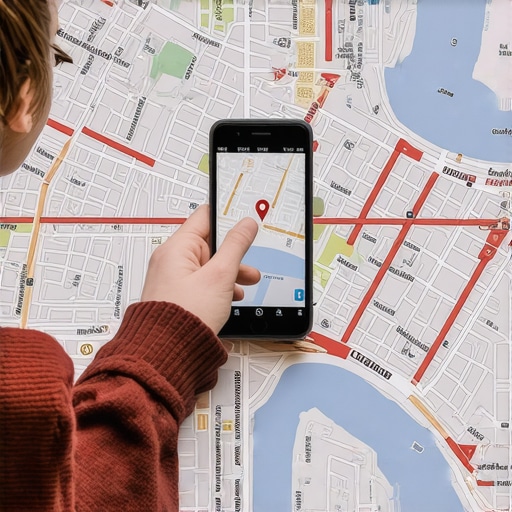
Proximity signals determine your visibility based on the user device location, GPS coordinate salience, and service area polygons that define where your business actually operates. When the Vicinity update or subsequent AI-driven refreshes occur, Google often tightens the ‘centroid’ of a city. This means if your shop is located four miles from the town center, you might have ranked yesterday, but today you are filtered out because the algorithm decided the ‘local’ radius for your category just shrank to two miles. You have to understand that proximity is the one factor you cannot fake. If you are struggling, you need to look at local optimization 4 proximity fixes for the map pack to see how to expand that invisible boundary. Many owners think that adding more keywords to their description will help, but I have seen a thousand times why your business description doesn’t actually affect rankings in the way you hope. The math of the map is about the physical distance between the searcher’s phone and your registered front door. If that distance is too great, you are invisible unless your relevance and prominence scores are high enough to override the distance penalty. This is why why proximity alone wont get you into the competitive map pack anymore; you need a layer of behavioral trust to push through the proximity filter.
“Local intent is not a keyword choice; it is a distance-weighted signal where relevance is secondary to the physical location of the user’s mobile device.” – Map Search Fundamental
The behavioral signal breach and interaction gaps
Engagement signals include click-through rates, driving direction requests, click-to-call volume, and message response times that tell Google if users actually find your business useful. If your calls have dropped, it might be because your competitors are generating more ‘natural’ interaction signals. I have caught agencies using bots to fake these clicks, and let me tell you, it is a disaster waiting to happen. You can usually how to tell if your click service is using dangerous bots by looking for spikes in traffic from non-local IP addresses. Google tracks the movement of the user. If a ‘user’ clicks for directions but their phone GPS never actually moves toward your store, Google knows it is a fake signal. This is why faking interaction signals with a bot service will backfire and lead to a permanent shadowban. Instead, you should focus on the specific behavioral signals that move your map position tonight, like getting real customers to upload photos while they are physically standing at your place of business. These geotagged images carry more weight than any backlink because they prove physical presence. If you are seeing a sudden drop, you should also check the hidden way customer messaging affects your trust score. If you have the ‘Chat’ feature enabled but you take six hours to reply, Google will demote you in favor of a business that replies in six minutes. Speed is a ranking factor in the local ecosystem. I have seen rankings jump just by improving response times on the mobile app.
Local Authority Reading List
- 5 tactical fixes to boost map engagement and calls
- The impact of local justification snippets on your profile CTR
- How to use google questions and answers to build immediate trust
- The hidden keywords in your reviews that move your map rank
The citation decay and data integrity crisis
Data consistency refers to the NAP (Name, Address, Phone) alignment across the local search ecosystem, including primary data aggregators and niche directories. If you changed your phone number recently or moved suites, and you did not update every single obscure directory out there, your trust score is leaking. Google looks for a consensus. If 80 percent of the web says you are at Suite A and 20 percent says you are at Suite B, Google gets confused and hides your pin to avoid a bad user experience. This is why your citations must match your website footer exactly. I have seen ‘expert’ agencies sell the truth about buying bulk citations for five dollars, and it is usually a list of dead links that do nothing but clutter your profile with junk data. You need to how to clean up messy local citations without starting from scratch. Use a tool to find the ‘core’ citations that actually matter. If you are an attorney, a link from the local Bar Association is worth more than a hundred links from generic ‘business list’ sites. I always tell my local merchants that quality beats quantity every time. Also, keep an eye on your categories. I have seen businesses lose everything because of a the secondary category conflict that is stalling your local growth. If your primary category is ‘Plumber’ but your secondary is ‘General Contractor,’ you might be diluting your relevance for plumbing searches. Google wants to see a specialist, not a jack of all trades who is trying to rank for everything.
“Relevance is the engine, but trust is the fuel. If your data is inconsistent, the engine will never start.” – Opossum Algorithm Study
The dark side of competitor spam and fake addresses
Spam fighting involves identifying fake business listings, keyword-stuffed titles, and lead generation traps that push legitimate local shops out of the Google Map Pack. If you have been ranking in the top three for years and suddenly you are at position seven, look at the businesses above you. Do they have their city name stuffed into their business title? Are they using a UPS Store address? You need to know how to handle a competitor who is using fake locations. I spend a good portion of my week acting as a digital bounty hunter, reporting these fake profiles to the Google team. You can how to remove spam competitors from the 3-pack naturally by using the ‘Suggest an Edit’ feature and providing photographic proof that the business does not exist at that location. Some competitors also use why buying five star reviews is a speedrun to permanent ban. If you see a competitor get fifty reviews in one night, they are likely using a click farm. Do not be tempted to do the same. If you need a recovery strategy, look for seo services to recover positions after local algorithm shake up that focus on white-hat tactics and profile health rather than ‘quick fixes.’ A real expert will start with a the difference between a gmb audit and a basic profile check to see exactly where the leakage is happening. It might be a technical error in your LocalBusiness Schema or a duplicate profile you didn’t know existed. Cleaning up services to fix duplicate google business profiles is one of the fastest ways to regain your authority. One business, one pin, one set of data. That is the rule of the local square. When you have multiple listings for the same location, Google splits the trust between them, and you end up ranking for nothing.