The software we use to monitor Google Business Profile health
The software we use to monitor Google Business Profile health
The city smells like wet concrete after a summer storm. I stand across the street from a local cafe, looking at a storefront that looks perfect in person but is currently invisible in the digital world. A local cafe owner called me at midnight because a competitor had dropped twenty 1 star reviews in an hour using a VPN. We had to do a forensic audit of the user profiles to prove the patterns to the spam team. It was not just about the text; it was about the metadata. The digital grain of those reviews did not match the physical reality of the shop. This is the reality of the hyper local layer. A business listing is not a profile. It is a proximity beacon in a spatial database. Most business owners think the map is static. It is not. It is a shifting ocean of coordinate salience and behavioral signals. When we look at the software that monitors health, we are not just looking at green or red dots. We are looking for the glitches in the storefront data that suggest a filter is suppressing a legitimate business.
The forensic trace of a service area polygon
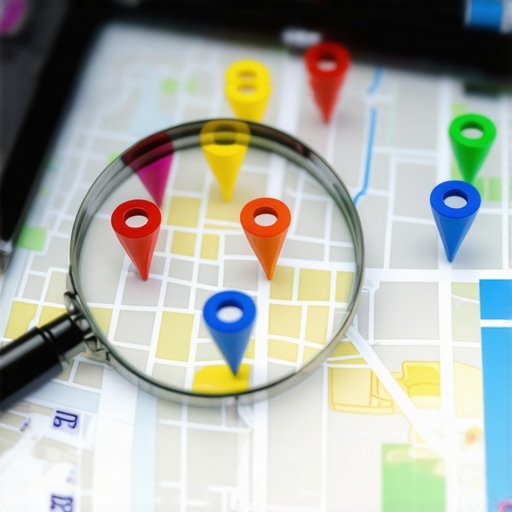
Google Business Profile health monitoring requires tracking service area polygons, GPS coordinate salience, and NAP consistency to ensure Map Pack visibility. The algorithm treats the physical location as a primary anchor, but the service area is a mathematical probability of relevance. If you have been struggling with visibility, you might be trapped in a proximity loop. I have seen countless businesses lose their status because they failed to understand how their service boundaries overlapped with a competitor. This is where why we focus on proximity recovery for urban service businesses becomes a vital part of the strategy. You cannot just guess where your leads are coming from. You need to see the heat maps. You need to see where the pin drops and where the signal fades. The software must track these movements daily. A tiny shift in the centroid can mean the difference between ten calls a day and zero calls a month.
“Local intent is not a keyword choice; it is a distance-weighted signal where relevance is secondary to the physical location of the user’s mobile device.” – Map Search Fundamental
The ghost in the GPS coordinates
GPS coordinate salience and local justification triggers are the primary metrics measured by a GMB ranking toolkit to identify keyword stuffing. Every time a user opens Maps, a thousand calculations happen in a millisecond. The algorithm looks at the distance from the user, the historical click through rate, and the relevance of the reviews. If your profile is stuck, it might be due to a duplicate filter. You can learn how to verify if your gmb profile is stuck in the duplicate filter to see if the system is hiding your listing because it thinks you are a ghost of a previous business. I remember a plumber who shared a suite number with a defunct law firm. Google nuked them. They wanted a utility bill under the exact GPS pin. They did not care about the van or the tools. They wanted the data to match the physical dirt. That is why we use professional grade tools to scrub the legacy data before it causes a suspension.
Why your physical address is a liability
Physical business addresses and verified office locations are often flagged as virtual office traps by local SEO services when cleaning up mismatched address data. The days of using a UPS box or a shared coworking space without a dedicated office are over. Google is hunting for these. If you are caught, you need a recovery plan. Often, the first step is why virtual offices are getting local businesses banned and how to pivot to a service area model instead. The software we use flags these issues before the manual reviewer does. We look for the red flags in the citation trail. If a directory from 2012 still has your old address, it creates a trust gap. Google sees that gap as a reason to lower your rank. It is a logistics problem. The flow of data must be as clean as the flow of traffic on a highway.
The three mile radius that determines your revenue
Proximity radius shifts and behavioral zooming are analyzed by tools to track gmb rankings to optimize local services ads and organic map results. Most agencies sell you a national strategy for a local problem. That is a waste of money. You need to know what is happening within three miles of your door. If a competitor starts stuffing their name with keywords, you need to know immediately. You can use the professional way to report spammy map listings and win to clear the field. I despise the keyword stuffers. They treat the map like a playground, but it is a marketplace. The software we use provides the evidence needed to win those reports. It captures the history. It shows the pattern of abuse. It is the street photographer’s evidence against the digital vandal. We want the real merchants to win.
The mathematical weight of local review sentiment
Review sentiment analysis and reputation management services use NLP algorithms to repair brand trust scores and remove fake 1 star reviews. It is not just about the stars. It is about the words. When a customer mentions a specific service like water heater repair, Google connects that to your profile. This is why the reality of using ai for local review responses is a dangerous game. If the AI sounds like a robot, the trust score drops. You need human sentiment. You need the smell of the paper and the ink of a real conversation. Our software monitors the velocity of these reviews. A sudden spike is a red flag for spam. A sudden drop means your staff stopped asking. Both are health indicators that require immediate attention. We use these signals to guide the business back to the top of the pack.
Why automated review removal services often fail local brands
Manual review cleanup and forensic profile auditing outperform automated reputation tools when handling review extortion cases and VPN spam. The bots cannot see the nuance. They do not know that the person leaving the review is a disgruntled former employee or a competitor from three towns away. You need to understand why automated review removal services often fail local brands before you spend a dime on them. You need a strategist who knows how to talk to the support team. You need someone who can show the GPS overlap. If the reviewer has never been within fifty miles of your shop, that is a data point. The software we use aggregates this location data. It builds a case that Google cannot ignore. It is about the math of the mobile device.
The specific way to appeal a GMB suspension and win
GMB reinstatement services and hard suspension appeals require utility bill verification and GPS pin alignment to restore local search visibility. If your profile goes dark, do not panic. Do not create a new one. That makes it worse. You are effectively creating a duplicate. Instead, you should follow the specific way to appeal a gmb suspension and win. You need to gather your evidence. Photos of your signage. Photos of your tools. A video walk through of the office. Our software keeps a backup of your profile data so we can restore it exactly as it was. We track the changes that led to the suspension. Often it is a simple category change that triggered a bot. We fix the data, we file the appeal, and we wait for the human to look at the evidence.
The morning audit for fixing messy local citations
Citation consistency and NAP data scrubbing are essential for local trust scores and improving map pack rankings across multiple business directories. Every morning, the software scans the web. It looks for your name, address, and phone number. If it finds a variation, it flags it. This is the grunt work of local SEO. It is not glamorous, but it is the foundation. You can find more in the morning audit for fixing messy local citations. A single wrong phone number on a secondary directory can sabotage your rankings. Google sees the conflict and loses confidence. The software ensures that every mention of your brand is a mirror of the official record. It is about the purity of the data stream.
How to increase local leads from google maps
Conversion rate optimization and GMB attribute management use call tracking software to measure the ROI of local SEO services. Ranking is only the first step. You need the phone to ring. We look at the click through rates. We look at the photos. Are they staged stock images? Those are garbage. People want the candid shot. They want the street photographer’s view. We help clients by using a toolkit to increase local leads from google maps that focuses on visual trust. If your photos show the actual team and the actual work, the leads will come. The software tracks which photos get the most views. We double down on what works. We cut the fluff. We focus on the calls.
“Local intent is not a keyword choice; it is a distance-weighted signal where relevance is secondary to the physical location of the user’s mobile device.” – Map Search Fundamental
The reality of using AI for local review responses
Natural language processing and AI content detection are used by Google’s spam team to identify low quality review responses. If you are using a bot to say thank you, you are hurting your brand. The algorithm is getting smarter at detecting these patterns. You should read about the reality of using ai for local review responses to understand the risks. Real customers notice when the response is generic. It smells like a corporate office, not a local shop. The software we use helps us manage the flow, but a human always clicks send. We ensure that the keywords are included naturally. We ensure the tone is right. We treat every response like a conversation on the sidewalk. It is about building a community, not just a database.
Final thoughts on the hyper local layer
The map is alive. It changes with the traffic, the weather, and the movement of every mobile phone in the city. If you want to stay visible, you need more than just a listing. You need a monitoring system that understands the physics of proximity. You need to avoid the red flags to watch for in local seo packages and focus on real data. Use the tools. Trust the math. Keep your data clean. The street photographer sees the glitches, but the strategist fixes them. Your business depends on being found exactly when the customer needs you. Do not leave that to chance. Watch the pins. Watch the sentiment. Watch the health of your profile every single day.