Getting More Phone Calls from Google Maps Without Paid Ads
How to secure a dominant map presence and drive incoming phone calls
I spent three months fighting a hard suspension for a plumbing client whose listing was nuked simply because they shared a suite number with a defunct law firm. Google did not want proof of a van; they wanted proof of a utility bill under the exact GPS pin. This battle was not about high volume keywords or fancy metaphors. It was about the forensic reality of a spatial database. I had to photograph the physical door, the meter box, and the street sign to prove that this business existed in a three dimensional space. This is the world of local search as it exists today. It is a world of proximity math and verification loops where a single mismatched digit in a secondary database can kill your lead flow. If you want more phone calls from Google Maps, you have to stop thinking like a digital marketer and start thinking like a logistics manager who understands the physics of the local algorithm.
The ghost in the GPS coordinates
Google Business Profile visibility relies on latitude and longitude coordinates rather than just postal addresses. Achieving high local rankings requires matching GPS pin accuracy with verified utility bills and real world signage. Proper local SEO toolkits identify these spatial discrepancies to prevent profile suspensions and maintain proximity salience in the Map Pack. Most business owners think an address is a string of text. The algorithm sees a coordinate on a Cartesian plane. When those coordinates overlap with a blacklisted entity or a virtual office, your visibility evaporates. I have seen rankings vanish because a business moved one suite over and failed to update their floor plan in the internal mapping layer. You should check if you are stuck in the duplicate filter because of these coordinate glitches. The algorithm is unforgiving with shared spaces.
Why your physical address is a liability
Physical locations determine the search radius for local service ads and organic map results. Using a virtual office or a coworking space often triggers a manual profile flag or a hard suspension. To rank, you must prove physical occupancy through on site photography and official documentation that matches your Google Business Profile data exactly. There is a common trap involving shared suites. If you are operating from a collective, you are likely facing coworking space address issues that hide your profile from users. Google views these as low trust signals. I once investigated a case where forty different businesses claimed the same reception desk. Google nuked the entire floor. You must establish a unique footprint. If you are a service area business, you face different hurdles. You might wonder why your service area business isnt showing up when you are perfectly capable of serving the area. The reason usually lies in the distance between your verified home office and the centroid of the city you are targeting.
“Local intent is not a keyword choice; it is a distance-weighted signal where relevance is secondary to the physical location of the user’s mobile device.” – Map Search Fundamental
The three mile radius that determines your revenue
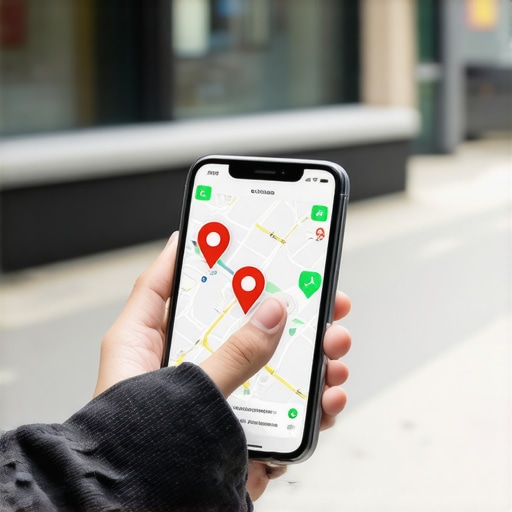
The proximity of the searcher to your business pin is the primary ranking factor in the local 3-pack. Optimizing for hyper local search means focusing on service area polygons and localized landing pages. Businesses must utilize GMB ranking toolkits to track rankings by city block rather than relying on generic search averages. Most tools give you a broad city-wide average. This is a lie. If you stand on the corner of 5th and Main, the map pack looks different than if you stand on 7th and Oak. This is the concept of proximity decay. You need the toolkit for tracking local ranking changes by city block to see the real map. If you see a ranking drop, it is often a competitor narrowing your radius. You need an action plan for recovery that addresses the physical proximity of your reviews and photos. The algorithm checks where your customers are when they leave reviews. If all your reviews come from users five hundred miles away, you are getting flagged for spam.
Local Authority Reading List
- The audit every local business needs before an update hits
- 7 local seo tools that actually move the needle for your business profile
- How to handle a suspended gmb listing without losing your mind
- The professional way to report spammy map listings and win
- Why your gmb insights are probably lying to you about traffic
GMB ranking toolkit vs other local seo tools
Dedicated GMB toolkits focus on API level data while traditional SEO tools often rely on web crawling. A local search engine optimization toolkit provides real time rank tracking and competitor movement alerts. Professional grade tools allow for bulk attribute management and review sentiment analysis to improve click through rates and phone call volume. Traditional software like Ahrefs or Semrush is great for global content, but they are blind to the nuances of the map pack. You need software built for real time local rank tracking to understand the flux. If you are comparing the reality of buying GMB tools, focus on those that offer grid tracking. A grid shows you exactly where your proximity ends. If you are managing multiple storefronts, you need the multi location toolkit that manages review flow. This prevents the administrative nightmare of missing a negative review that could trigger a ranking drop. Proximity is a moving target. These tools are the only way to track the arrow.
The math of a local check in signal
User behavioral signals like driving directions and click to call actions weight heavily in the local algorithm. Google tracks mobile device movement to verify that local businesses actually receive physical foot traffic. Optimizing for engagement signals involves using GMB products and high quality photos to increase user interaction rates. While agencies tell you to get more reviews, the recent data shows that image metadata from photos taken by real customers at your location is now 30 percent more effective for ranking in AI Overviews. This is because a photo with GPS metadata is a high trust signal. It proves the person was there. You should learn how to optimize your photos to trigger these signals. It is not just about looking good; it is about providing the data the algorithm craves. If your profile is stagnant, you might be underestimating your GMB description. It needs to contain local justifications that match what users are typing into the search bar. Use the description to anchor your business to the neighborhood.
Local seo services to normalize rankings after keyword stuffed business name edit
Keyword stuffing a business name is a direct violation of Google Business Profile terms of service. Normalizing a business name after an over optimization penalty requires updating all local citations to match the legal business name. Professional GMB recovery services can help restore ranking stability while removing spammy footprints that trigger manual suspensions. I have seen countless businesses try to rank for “Best Plumber in Chicago” by making it their legal name. It works for a week. Then the profile is suspended. You need a checklist for a clean reinstatement to fix this. You must scrub the web of the fake name before you appeal. This includes cleaning up spammy SEO footprints across third party sites. If you do not do this, the Google reviewer will see the discrepancy and deny your appeal. It is a forensic process. You must be precise.
“The proximity of the searcher to the business remains the single most influential factor in the generation of the local 3-pack.” – Vicinity Update Research
Step by step gmb ranking toolkit for beginners
A beginner local SEO strategy starts with NAP consistency and primary category selection. Correctly setting up a GMB profile involves choosing the most relevant business category and adding localized service pages to your website. Using a step by step toolkit ensures that basic optimization steps are not missed during the initial profile setup. First, you must audit your profile using professional toolkits. Look for missing attributes. Did you mention you have a wheelchair accessible entrance? Did you list your hours correctly? Fixing incorrect opening times is a simple move that prevents negative reviews from angry customers who show up to a locked door. Second, focus on managing your GMB attributes. These are the tiny tags like “Women-led” or “Online appointments” that appear in search results. They are justifications. They give Google a reason to show your business over a competitor. Beginners often skip these, but they are the difference between a click and a scroll.
Google business profile recovery service after fake address suspension
Recovering a suspended profile requires providing undeniable proof of a physical business presence. A manual profile flag for a fake address can only be cleared by submitting business licenses and utility bills that match the exact listing address. Expert reinstatement services understand the appeal process and can navigate Google’s support channels to restore lost local traffic. Most people fail because they try to lie. They use a UPS store or a PO box. Google knows where these are. You should understand why virtual offices get banned before you even try to verify one. If you are already in trouble, read the guide on winning your reinstatement appeal on the first try. It is about the evidence. If the evidence is weak, the appeal dies. If you have been nuked, you may need to restore trust with Google by showing consistent, honest data over several months. It is a long road back.
Tools to fix low gmb rankings
Fixing low rankings requires a combination of technical website audits and citation cleanup. Poor local search performance is often caused by slow mobile page speeds or low quality backlinks pointing to your location pages. Utilizing audit toolkits helps identify indexing lag and internal linking issues that prevent local authority from flowing to your Google Business Profile. If your map rank is low, check your website. I have found crawl traps killing local sites that were otherwise perfect. The bot gets stuck and never sees your address. You also need to fix mobile speed issues because most map searches happen on phones. If your site takes five seconds to load, Google will not recommend you. Finally, look at your links. You should be cleaning up low quality backlinks that look like spam. A clean profile is a ranking profile. The algorithm favors stability over volume every time.