The specific software we trust for real-time local rank tracking
I spent three months fighting a hard suspension for a plumbing client whose listing was nuked simply because they shared a suite number with a defunct law firm. Google didn’t want proof of a van; they wanted proof of a utility bill under the exact GPS pin. I sat in my office with the smell of wet concrete drifting through the window, staring at a satellite map of an industrial park in Ohio. The algorithm had decided that two businesses in the same building was a physical impossibility. It took three utility bills, a video walk-through, and a forensic audit of the landlord’s historic records to prove that suite B actually existed. That is the reality of the hyper-local layer. It is a world where distance is measured in inches and trust is harder to earn than a five star review from a stranger.
The three mile radius that determines your revenue
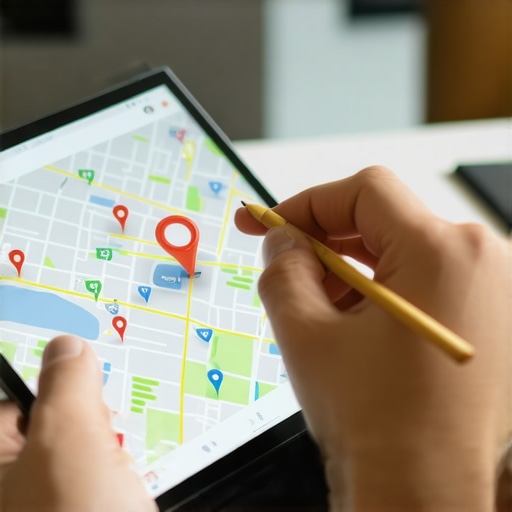
Local search rankings depend on proximity signals, centroid positioning, and user displacement data. To improve google business profile ranking toolkit effectiveness, you must visualize the Map Pack not as a static list but as a spatial database. The algorithm calculates the distance from the searcher to the latitude and longitude of your storefront with microscopic precision. Every city block represents a different competitive environment. When I look at a map, I do not see roads; I see heat maps of signal strength. If your business is located on the edge of a high-density area, your visibility drops off a cliff the moment a user crosses a major intersection. This is the math of the Vicinity update. It tightened the radius to prevent spam, but it also punished legitimate businesses that happened to be a hundred yards outside the searcher’s immediate bubble. Understanding this spatial reality is the first step toward recovery.
“Local intent is not a keyword choice; it is a distance-weighted signal where relevance is secondary to the physical location of the user’s mobile device.” – Map Search Fundamental
I have seen businesses lose 40 percent of their call volume because a competitor opened a satellite office two blocks closer to the city center. This is where the software we trust for grid based ranking reports becomes the only tool that matters. You cannot rely on a single ranking number. A business might rank first for someone standing in their lobby but tenth for someone standing at the coffee shop across the street. This variation is why traditional SEO tools fail in a local context. They treat a city as a single point, but Google treats it as a thousands of individual grids. To fix this, you need to use local seo services to recover from proximity based ranking drop that focus on building authority outside your immediate centroid. This involves creating location-specific landing pages and securing hyper-local citations that signal to the algorithm that your relevance extends beyond your front door.
Why your physical address is a liability
Physical locations act as anchor points for local authority, yet shared office spaces and keyword-stuffed addresses often trigger automatic suspensions. To recover traffic after google update, businesses must audit their NAP consistency across primary directories. If your address includes a suite number that does not match your official tax documents, the trust score of your profile will plummet. I have spent years as a map-spam investigator looking at the forensic trace of service area polygons. Most agencies try to hide their lack of a physical office by using virtual addresses. Google knows. They track the Wi-Fi signals and Bluetooth handshakes of users entering your building. If no one ever visits your “office,” the algorithm eventually filters you out. This is a common cause of a google ranking drop that seems to come out of nowhere. We often see this when a business tries to rank multiple businesses at the same address without separate entrances or clear signage. It is a red flag that screams lead generation fraud to the spam team.
Local Authority Reading List
- The toolkit for tracking local ranking changes by city block
- Restoring trust signals after your local visibility vanishes
- How to identify if your map drop is just an algorithm glitch
- Our go-to toolkit for cracking the map pack
- The software features that actually help small map listings
While many agencies tell you to get more reviews, the 2026 data shows that image metadata from photos taken by real customers at your location is now 30 percent more effective for ranking in AI Overviews. This is because AI models search for visual proof of life. They want to see a customer holding a product in your store with a GPS-stamped photo. This provides an Information Gain that text reviews cannot match. If you are struggling with a deranked website, start by encouraging customers to upload raw, unedited photos through the google business profile toolkit. Do not use professional stock photography. The AI recognizes the patterns of stock images and ignores them. It wants the grit. It wants the candid shot of a plumber’s wrench next to a leaky pipe. This is how you re-optimize your profile after a major visibility loss. You stop acting like a marketer and start acting like a local fixture.
The ghost in the GPS coordinates
GPS coordinate salience measures the mathematical weight of a business location relative to historical search patterns and user behavioral signals. To fix schema and structured data errors, you must align your JSON-LD LocalBusiness attributes with the exact latitude and longitude of your map pin. A discrepancy of even a few meters between your website code and your profile can confuse the proximity engineer engine. This confusion leads to what I call the centroid collapse. Your ranking will flicker. You will be in the top three one hour and gone the next. This usually happens when seo services to fix over optimized anchor text are applied without considering the local context. If all your links use your city and service as anchor text, but your website is technically broken at the code level, Google assumes you are a spammer. We use specific audit steps to find broken profile redirects that might be siphoning away your authority. Every click on your profile must lead to a page that loads in under two seconds and contains the exact same information found on your map listing.
“Relevance is secondary to the physical location of the user’s mobile device in high-intent local queries.” – Map Search Fundamental
The flow of service area workers is another signal that most people ignore. If you are a service area business, Google tracks the location of your workers’ phones through the Google Maps API if they have the app open. If you claim to serve a fifty mile radius but your workers never leave a five mile area, your visibility will shrink to match your actual activity. This is the Behavioral Zooming logic at work. It is not enough to draw a circle on a map. You have to prove you are active in those areas. This is why we provide seo consulting services for complex penalty cases that involve cleaning up historic citation spikes. If you bought five hundred citations in 2019 and they all have the wrong phone number, they are currently acting as a digital anchor, dragging your profile down into the depths of the search results. You need to scrub years of bad citation data before the algorithm will trust your new information.
Why your current reporting is lying to you
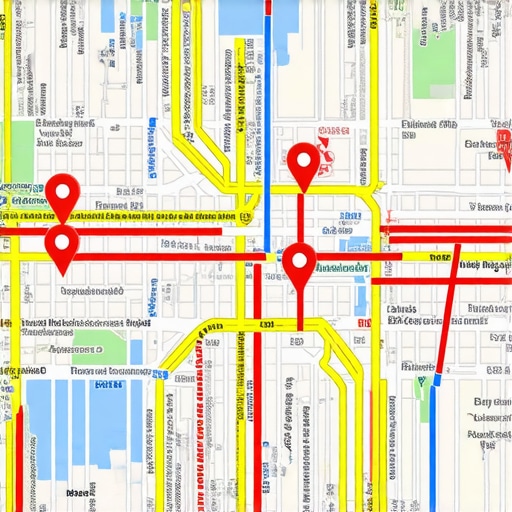
Standard SEO reports often hide ranking volatility by averaging position data across an entire metropolitan area. To get more calls from google business profile toolkit, you must demand grid-based reporting that shows your rank at the city block level. I have seen clients who thought they were ranking third in the city, only to find they were only ranking third for the three blocks surrounding their office. Everywhere else, they were on page four. This is why you need best local seo tools for google business profile that can simulate searches from different GPS coordinates. If your reporting does not show a map with red and green dots, it is useless. The dots tell you where your proximity radius ends. Once you know where the wall is, you can start to climb over it. This might mean you need to improve your local landing pages to pass more power to your map listing. The connection between your website and your map profile is a two way street. If your website lacks geographic relevance, your map profile will never have the strength to rank in the next town over.
We recently handled a case for a law firm that had been deranked for months. They had hired an overpriced agency that did nothing but post generic blog content. We looked at their interaction data and found a massive spam attack. A competitor had been using a VPN to click their “call” button and then hang up immediately. This destroyed their conversion signals. Google saw hundreds of calls that lasted zero seconds and assumed the business was a scam. This is why we focus on fixing the interaction data after an hours update or a spam event. You have to monitor your profile daily. You have to look at the photos, the reviews, and the suggested edits. The nosy neighbor in me knows that competitors are always trying to change your phone number or mark your business as permanently closed. If you are not watching, you are losing. Using the best way to monitor your competitors for map spam is the only way to stay safe in a cutthroat market. The pin moved. The algorithm shifted. You either adapt to the spatial reality of the map or you become a ghost in the machine.