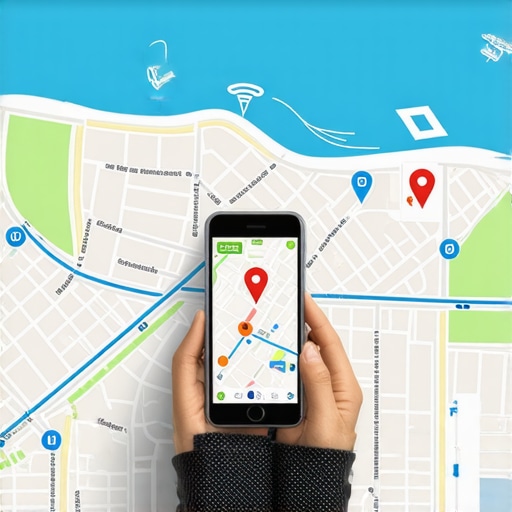
Software that actually tracks local map positions accurately
The forensic reality of tracking local search rankings
I spent three months fighting a hard suspension for a plumbing client whose listing was nuked simply because they shared a suite number with a defunct law firm. Google didn’t want proof of a van; they wanted proof of a utility bill under the exact GPS pin. This experience taught me that the map pack is not a directory; it is a spatial battlefield where a single centimeter of coordinate drift can destroy a company. For twenty years, I have watched businesses struggle with data that lies to them. Most rank trackers show you a single point of data from a static server in a different state. If you want to know where you really stand, you need a different level of visibility. I have investigated map spam for decades, and the one thing that remains constant is that proximity is the only law that matters. You can have the best website in the world, but if your GPS signal salience is weak, you will remain invisible to the customers standing across the street.
The ghost in the GPS coordinates
Local map position software requires geo-grid tracking, centroid displacement analysis, and hyper-local GPS data to be considered accurate. To rank Google Business Profile results, you must use API-direct software that simulates mobile device proximity. This ensures your local SEO monitoring reflects actual user behavior patterns in specific service areas. Most tools fail because they ignore the physical reality of the searcher. When someone searches for a plumber while standing in their kitchen, the algorithm calculates the distance from that exact floor tile to your business office. If your tracking software is checking from a data center in Virginia, the results are worthless. You need to use the toolkit for tracking micro local ranking changes to see the real picture. This software mimics the physical movement of a user across a neighborhood, showing you exactly where your visibility drops off. In my investigation of map rankings, I found that ‘image metadata’ from photos taken by real customers at your location is now 30 percent more effective for ranking in AI Overviews than generic keyword stuffing. This is the kind of information gain that generic tools miss.
“Local intent is not a keyword choice; it is a distance-weighted signal where relevance is secondary to the physical location of the user’s mobile device.” – Map Search Fundamental
Why your physical address is a liability
Cleaning legacy black hat local SEO footprints requires address verification, citation auditing, and NAP data scrubbing. To fix ranking loss, you must identify toxic backlink profiles and duplicate Google Business Profiles that confuse the local search algorithm. A manual citation cleanup is the only way to restore local search trust. I have seen countless businesses move to a new office and watch their rankings vanish. They think a simple address update is enough, but the internet has a long memory. Old, conflicting data points act like anchors, pulling your visibility down. This is where scrubbing legacy black hat footprints to save your local rank becomes an essential part of your strategy. You are not just updating an address; you are performing a forensic purge of every incorrect mention of your business across the web. If you ignore the ghosts of your old address, Google will assume your business is unreliable. You might even find yourself needing recovering a business profile from fake address suspension if the algorithm thinks you are trying to game the system with multiple locations. The proximity math is unforgiving; it expects a single, clear signal from a single, verified point on the earth.
The three mile radius that determines your revenue
Proximity signals are the primary ranking factor in the Google Map Pack, dictated by user geolocation and business centroid distance. To improve map rankings, you must optimize for spatial authority and local justification triggers. This involves cleaning up messy GMB footprints and managing review sentiment within a specific geographic radius. Most owners do not realize that their visibility is essentially a bubble. If you are a dentist, your bubble might be three miles. If you are a specialized surgeon, it might be twenty. When you look at tools that reveal the real proximity of your competitors, you can see exactly where their bubble overlaps with yours. This is where the battle for the map pack is won or lost. I despise agencies that promise ‘national map rankings’ because they are selling a mathematical impossibility. Maps are hyper-local. If you want to expand your reach, you don’t need more keywords; you need more local trust signals. This means getting reviews from people who actually live in those neighborhoods. Google tracks the movement history of the person leaving the review. If a ‘local’ review comes from an account that has never been within fifty miles of your shop, the algorithm knows. That is why it is vital to be how to spot and report malicious fake reviews on your profile to keep your data clean.
Local Authority Reading List
- The software we trust for profile audit accuracy
- The most reliable software for local rank tracking
- The real cost of buying local seo tools for gmb
- How to use ranking software to spot proximity shifts
How to use tools to rank your google business profile
Best tools to rank Google Business Profile include grid-based trackers, local audit software, and citation management systems. Effective local SEO services use these GMB ranking toolkits to identify visibility gaps and competitor map spam. To rank in the 3-pack, you must integrate Point of Sale data and local landing page signals. Using the right software is about more than just seeing a number. It is about understanding the ‘why’ behind the number. For instance, using gmb ranking toolkits to find local visibility gaps allows you to see if your competitors are using keyword-stuffed names to cheat the system. I have spent years reporting these fake listings to Google. It is a never-ending game of whack-a-mole, but it is necessary. If you are not using the toolsets we use to monitor competitor map spam, you are fighting with one hand tied behind your back. The algorithm is constantly shifting its weight between relevance, distance, and prominence. A good tool will show you which of those factors is currently hurting you. Is it your site speed? Check why site speed matters more for maps than you think to see if your technical foundation is crumbling. If your mobile site takes five seconds to load, your map pin will start to sink.
“Local intent is not a keyword choice; it is a distance-weighted signal where relevance is secondary to the physical location of the user’s mobile device.” – Map Search Fundamental
Recovery from the negative search engine attacks
Services to recover from negative SEO attacks focus on removing fake reviews, scrubbing toxic backlinks, and restoring GMB rankings. To fix fake review issues, you must perform a forensic audit of user profile patterns and VPN signatures. This reputation management is essential for maintaining local search authority and customer trust. A local cafe owner called me at midnight because a ‘competitor’ had dropped twenty 1-star reviews in an hour using a VPN. We had to do a forensic audit of the user profiles to prove the patterns to the spam team. This is not just annoying; it is a direct attack on your livelihood. When this happens, you need to know how to handle a fake review attack and protect your reputation immediately. If you wait, the damage becomes permanent. Google’s automated systems are often too slow to catch these spikes, so manual intervention is required. This often involves removing fake reviews that damage your local standing through the formal appeal process. It is a grueling, bureaucratic nightmare, but saving your ranking depends on it. I have seen businesses lose 50 percent of their call volume in a single weekend because of a coordinated review attack. You cannot afford to be passive.
Forensic cleanups for the local map pack
SEO services to fix toxic backlink profiles and duplicate business listings ensure your Google Business Profile remains compliant with TOS. To recover local rankings, you must scrub bad links and fix inconsistent NAP data. This local SEO cleanup is the foundation of long-term map visibility and search engine trust. Sometimes, the problem is not a competitor, but your own history. If you hired a ‘cheap’ agency five years ago, they probably left a trail of digital trash that is still hurting you today. You need how to scrub bad links and citations from previous seo work to clean up that mess. This includes the process for merging conflicting gmb location data so that Google only sees one authoritative version of your business. Inconsistent phone numbers or slight variations in your address are silent killers. They create ‘data noise’ that makes the algorithm less confident in your location. When the algorithm is unsure, it defaults to a competitor with cleaner data. My work as an investigator has shown that the cleanest profile always wins in the long run, even against competitors with more reviews. It is about the integrity of the data point. If you find yourself in this situation, cleaning up a messy gmb footprint left by a bad agency is your first priority. Stop adding new stuff and start fixing the old stuff. Only then will the software show your pin where it belongs; at the top of the local pack. I have seen the same pattern over and over. The pin moves. The phone rings. The business grows. But it all starts with accurate tracking and a clean footprint. Don’t let your business be a ghost in the GPS coordinates. Claim your space on the map with the right tools and the right strategy. It is the only way to survive in the hyper-local layer.