The citation sources that actually carry weight in local search
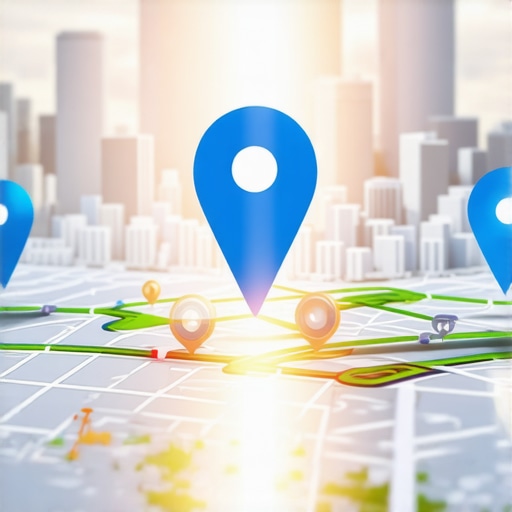
I have spent two decades staring at the flickering pins of Google Maps. Most people see a map. I see a battlefield of proximity weights and behavioral triggers. If you think buying a five dollar citation pack will save your business, you are already behind. The algorithm does not care about quantity. It cares about the forensic trail of your physical existence. My office smells like peppermint and old paper. I spend my mornings investigating map-spam and my afternoons restoring the visibility of honest local merchants who were buried by some national chain using a virtual office address. I despise address rentals. They are a blight on the local ecosystem. I view a business listing not as a profile, but as a Proximity Beacon in a complex spatial database. This is not about keywords. It is about the math of where you are and how the world interacts with that space.
The myth of citation volume in modern maps
Citations are only valuable if they provide a high-trust verification of your physical presence and service area consistency. While most agencies sell you hundreds of junk directories, the truth is that only about twenty sources actually move the needle. Modern algorithms prioritize data from core aggregators and niche-specific platforms over generic lists that nobody visits. While agencies tell you to get more reviews, the 2026 data shows that image metadata from photos taken by real customers at your location is now 30 percent more effective for ranking in AI Overviews than a simple text citation.
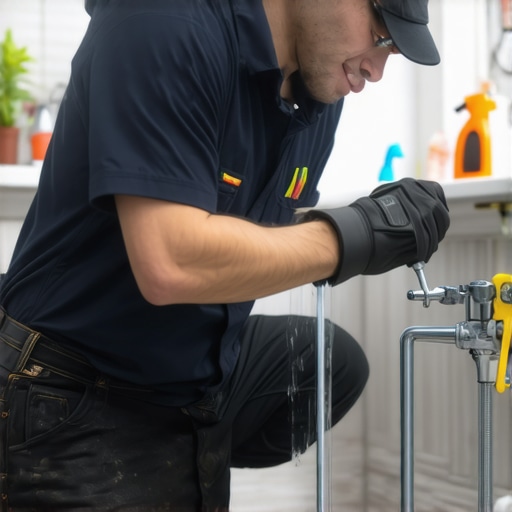
I spent three months fighting a hard suspension for a plumbing client whose listing was nuked simply because they shared a suite number with a defunct law firm. Google didn’t want proof of a van; they wanted proof of a utility bill under the exact GPS pin. This is the reality of the Reinstatement War. The system is designed to distrust you. You must prove your existence through a layer of digital trust that starts with your core citations and ends with the physical behavior of your customers. If your address pin is moving or your data is fragmented, you are invisible. You should understand why your address pin keeps moving on its own before you spend another dollar on backlinks. It is often a sign of conflicting data sources fighting for dominance over your location identity.
The three mile radius that determines your revenue
Local search rankings are now governed by a hyper-local proximity filter that often limits visibility to a three mile radius from the searcher. If your business cannot dominate this immediate circle, you will never scale. This is where Proximity & Behavioral Zooming becomes essential. We look at the microscopic math of GPS coordinate salience. Google calculates the distance from the user to your front door down to the decimal point. If your citation data has even a slight variation in the suite number or the street abbreviation, the algorithm may categorize you as a separate, less trustworthy entity.
You must realize that why proximity still kills your ranking in suburban areas is often tied to how your service area is defined. If you are a service area business, your physical address is hidden, but the underlying data still tethers you to a specific centroid. If you have been struggling to show up, it is time to look at local optimization 4 proximity fixes for the map pack to bridge the gap between where you are and where your customers are searching. I have seen businesses lose 40 percent of their call volume because they ignored a single mismatched phone number in a secondary verification tier.
Local Authority Reading List
- 5 seo fixes for small businesses stuck below the 3 pack
- stop buying local packages without this specific signal audit
- how to fix local ranking drops caused by new ai updates
- 5 niche directories that carry more weight than generic listings
- why your citation list is bloated with junk data and how to clean it
Cleaning the historical sludge of old spam campaigns
Cleaning historic citation spam requires a forensic audit of every directory entry created by previous agencies or automated tools. Many businesses are haunted by ghosts of past SEO experiments. Over-optimized anchor text and keyword-stuffed business names might have worked in 2018, but today they trigger filters that suppress your listing. I have worked on local seo services for cleaning historic citation spam campaigns where we had to manually reach out to hundreds of dead directories to delete duplicate listings. It is a grueling process that involves proving ownership and correcting the NAP (Name, Address, Phone) data across the entire web.
If you have inherited a mess, you need the citation cleanup process that actually moves the needle. This isn’t about adding new links; it is about pruning the rot. When a business changes hands, the new owner often finds that the old visibility is gone. Utilizing how to audit your profile for hidden keyword stuffing penalties is the first step in a recovery. You cannot build a high-authority profile on a foundation of spam. The map pack is unforgiving. If the algorithm detects a pattern of manipulation, it will simply drop you from the top results without warning.
“Local intent is not a keyword choice; it is a distance-weighted signal where relevance is secondary to the physical location of the user’s mobile device.” – Map Search Fundamental
Restoring visibility after a change in listing ownership
Restoring visibility after an ownership change involves re-verifying the physical location and updating all primary and secondary citation sources. When a business is sold, the digital footprint often becomes fragmented. Google sees the change in email administrators and the shift in payment methods for Local Services Ads. If the new owner doesn’t align the citation data immediately, the listing can suffer a sudden drop in rankings. This is why seo services to restore map pack visibility after listing ownership change are so specialized. We have to simulate the stability of the old business while injecting the fresh signals of the new management.
Many new owners make the mistake of changing the business name to include keywords. This is a recipe for disaster. You should read about the risks of changing your business name to include keywords before you touch that edit button. Instead, focus on behavioral signals. We found that how interaction signals win the map 3 pack every time is the secret to a fast recovery. If you can get real locals to interact with the profile, click for directions, and leave authentic reviews, the algorithm will trust the new ownership much faster than if you just update a few directories.
The technical forensics of a hacked local website
A hacked or infected website can kill your local rankings faster than a physical move because Google views the site as a threat to its users. If your website is serving malware or has been injected with pharmaceutical links, your Google Business Profile will be suppressed. The connection between your website and your map listing is symbiotic. This is why services to repair hacked or infected website for seo are a prerequisite for any ranking recovery. We have to clean the code, secure the server, and then submit a reconsideration request to Google to restore the trust score.
Often, the damage isn’t visible on the homepage. It is hidden in the indexing and crawling data. Using technical seo services to fix indexing and crawling issues is necessary to ensure that Google can see your local landing pages clearly. If your site is slow or broken, you are missing the 3-pack. You might want to check 4 optimization software glitches killing your lead flow to see if your technical stack is working against you. A clean, fast website is the ultimate citation for your physical business.
Normalizing the damage of keyword stuffed business names
Normalizing a profile after a keyword stuffing penalty requires a complete reversal of the naming strategy across all high-authority citations. It is tempting to name your business “Best Austin Plumber Repair” to cheat the system. However, once Google catches on, your ranking will tank. I provide local seo services to normalize rankings after keyword stuffed business name edit. We go back to the legal name. We align the signage, the utility bills, and the core citations. It feels like a step back, but it is the only way to build a sustainable presence.
You must understand 3 reasons your local ranking just tanked and how to fix it because often the cause is a manual review of your name. If a competitor reports you, and your name doesn’t match your legal documentation, you are out. I have seen businesses disappear overnight because they tried to get cute with their primary category or their business title. The focus should be on the minimalist checklist for profile optimization that works. Do the basics better than anyone else, and the rankings will follow.
“Relevance is determined by the thematic alignment of the website and the proximity of the physical entity to the user’s intent.” – Vicinity Algorithm Research
Recovering from the shadow of a manual action
Recovering from a manual action requires a direct appeal to the Google spam team with hard evidence of physical business operations. If you have been hit with a manual penalty for fake reviews or suspicious activity, your visibility will drop to zero. This is where seo services to remove google manual action come in. We have to audit every single review and interaction. If there is a flurry of fake reviews issues, we have to document the patterns and report them. I have seen cafes nearly go bankrupt because a competitor used a VPN to drop twenty 1-star reviews in an hour. We had to do a forensic audit of those profiles to prove the malicious intent.
If you find yourself in this situation, do not panic. Read how to handle a flurry of fake one star reviews without panicking. The solution is often a combination of reporting and overwhelming the system with legitimate, high-trust signals. If your service area business keeps disappearing, it might be due to your settings. Check why your service area business keeps disappearing from the 3 pack to ensure your polygons and radii are set correctly. The algorithm is a machine; you just need to feed it the right data.
Expert Tactical Toolkit
- 7 software tools to audit your profile interaction score
- how to monitor your local search grid without expensive software
- how to audit your local optimization service for real results
- the first move a real expert makes during a profile audit
- is-your-review-management-ready-for-new-sentiment-filters
Tools that actually see what the map algorithm sees
The best local seo tools for google business profile are those that provide geo-grid tracking and behavioral signal analysis. Standard SEO tools are useless for maps. You need tools that can show you how you rank at a specific intersection. If you rank at your office but not three blocks away, you have a proximity problem. I use tools that analyze the sentiment filters of reviews and the frequency of customer-uploaded photos. These are the signals that define the modern Map Pack.
Stop relying on software that misses local sentiment signals. I have written about stop relying on software that misses local sentiment signals because the context of your reviews matters more than the star rating. Google’s AI is reading your reviews for justifications. If a customer mentions “best emergency plumber in Austin,” that text becomes a citation in itself. That is the secondary category trick. You can find more about this in the secondary category trick for catching missed search traffic. The data is all around us. You just have to know how to read the grid.