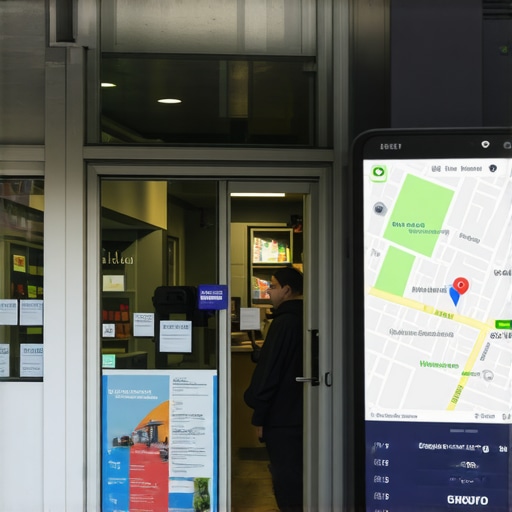
Why small businesses are beating big brands in local maps lately
The reinstatement war at the map level
Small businesses dominate local maps because they focus on proximity signals, granular location data, and high-frequency interaction clusters that national brands cannot replicate at scale. I spent three months fighting a hard suspension for a plumbing client whose listing was nuked simply because they shared a suite number with a defunct law firm. Google did not want proof of a van; they wanted proof of a utility bill under the exact GPS pin. This level of forensic verification is where the local shop wins. They can produce the paper trail while a corporate office in a different state fumbles with outdated spreadsheets. This tactical agility is the primary reason the map pack has shifted in favor of the owner operator. Large corporations often treat their listings as a bulk upload exercise. This leads to data drift and massive address conflicts hiding their profile from the very customers they want to reach.
The ghost in the GPS coordinates
Local map visibility is determined by the specific mathematical salience of a physical location and the behavioral signals emitted within its immediate radius. The algorithm no longer looks for the biggest name; it looks for the most active beacon. When a small business uses 7 gmb seo hacks for 2025, they are optimizing for the mobile reality of the user. National chains suffer from centroid collapse. Their data is often centered on a shopping mall or a generic city center point. A small business owner who manages their own pin knows exactly where the door is located. This matters because the distance between a user and a pin is measured in millimeters within the database. If your pin is ten feet off, your proximity score drops. This is why many companies are looking for the tactical fix for businesses stuck outside the 3-pack. It is often a matter of physical precision that big brands ignore because they manage listings by the thousands.
“Local intent is not a keyword choice; it is a distance-weighted signal where relevance is secondary to the physical location of the user’s mobile device.” – Map Search Fundamentals
The three mile radius that determines your revenue
Hyper local proximity is now the most aggressive ranking factor in the Google Business Profile ecosystem, often outweighing traditional organic backlinks. If a user is standing two blocks from your shop, you will rank higher than a multi billion dollar brand five miles away. This is the proximity shield. Small businesses are learning to use local grid trackers to find ranking blind spots. They see exactly where their signal dies. They then use local news mentions and neighborhood specific events to push that signal further. Big brands cannot do this because their marketing is too broad. They cannot write a blog post about a specific pothole on 5th Street. A local shop can. That local relevance is a massive ranking signal. When you combine this with the citation cleanup process that actually moves the needle, the small business becomes an unshakeable local authority.
Why your physical address is a liability
An unverified or inconsistent physical address acts as a trust anchor that can sink your entire digital presence if it deviates from the local truth. National brands often use virtual offices or shared spaces. These are now massive red flags for the spam team. Small businesses with a real storefront and a real sign have a distinct advantage. Google’s AI vision now scans user uploaded photos to verify that the business name on the building matches the digital record. If you are a big brand with 500 locations and half of them have slightly different signage, you are at risk. Small shops can ensure high resolution storefront images are always present. This physical verification is a prerequisite for ranking in competitive niches. Many businesses are failing because of the exact reason your map pin is showing up in the wrong neighborhood, which is usually a failure of NAP consistency that a local owner can fix in five minutes.
Local Authority Reading List
- The truth about proximity and city centers
- Structuring service areas for maximum reach
- The evolving reality of citation consistency
- Automated cleanup for messy citations
The forensic trace of service area polygons
Service Area Businesses must define their operational boundaries using precise polygons rather than generic radius circles to satisfy current Google verification requirements. If you tell Google you serve a 50 mile radius but your vans only ever ping GPS coordinates within 10 miles, you are going to lose visibility. Small businesses are more honest about their service areas by necessity. They do not want to drive three hours for a service call. This honesty reflects in the data. Big brands often claim entire states. This triggers a suppression filter because it is physically impossible for one listing to serve a whole state from one office. Small businesses should focus on fixing the service area glitch to ensure they show up exactly where they are capable of working. This precision is what the Vicinity update was designed to reward.
The mathematical weight of local review sentiment
Review sentiment analysis now evaluates the specific geographic location of the reviewer to determine the authenticity and weight of the feedback provided. If a big brand gets 1,000 reviews but 900 of them come from people who have never physically visited the location, those reviews carry less weight. Small businesses get reviews from locals. Google knows where these reviewers live. When a local resident leaves a review, it is a high trust signal. Small businesses can use the strategy for getting reviews that actually mention your services to beat big brands who rely on generic five star ratings. Keywords inside reviews are a massive ranking factor. A review that says the plumber fixed a leak in Atlanta is worth ten reviews that just say great job. This is also why the review sentiment secret is the key to winning the map pack in 2025.
“Relevance is determined not just by the content of the listing, but by the physical interaction history of the community with that entity.” – Local Search Intelligence Report
Fixing the deranked local website
A deranked website often suffers from technical debt or mismatched local signals that disconnect the organic site from the Google Business Profile. If your website says one thing and your map listing says another, Google will trust neither. This is where seo services to fix slow website and technical issues become mandatory. You need to ensure your local landing pages are optimized with the correct schema. Many small businesses are beating big brands because their websites are lean and focused. A big brand website is often a slow, corporate mess. A fast, local site that uses why your local landing page is just as important as your map listing logic will always outrank a bloated national site in a local search. Technical SEO is the foundation of local map dominance.
The future of local search is behavioral
User interaction signals like click through rate and direction requests are now the primary drivers of map rank for competitive local niches. Google is watching how people interact with your listing. Do they call you? Do they ask for directions? Do they linger on your photos? Small businesses have more interesting, real world photos. Big brands use stock photos. Stock photos kill conversion. By using specific photo metadata that influences map visibility, a small shop can signal to Google that they are a real, bustling part of the community. This is also why the impact of video content on your local map click through rate is so high right now. People want to see the person who is coming to their house. They want to see the inside of the store. Big brands cannot provide that level of intimacy across thousands of locations. The small business owner is the face of the listing, and in local search, the face wins. If you are struggling, you might need seo consulting services for complex penalty cases to find out where your behavioral signals are failing. In the end, the map is a reflection of the physical world. The business that is most present in the physical world will eventually win the digital one.