The exact reason your map pin is showing up in the wrong neighborhood
I spent three months fighting a hard suspension for a plumbing client whose listing was nuked simply because they shared a suite number with a defunct law firm. Google didn’t want proof of a van; they wanted proof of a utility bill under the exact GPS pin, showing the physical meter location relative to the building entrance. I spent days in the rain taking photos of a side door that the Map Pack refused to acknowledge. That is the gritty reality of the hyper local layer. It smells like wet concrete and frustration when the algorithm decides your business belongs three blocks away from where you actually stand. If you find your business floating in a digital void, you are not dealing with a simple glitch. You are witnessing a collision between spatial databases and behavioral signals that have lost their anchor.
The ghost in the GPS coordinates
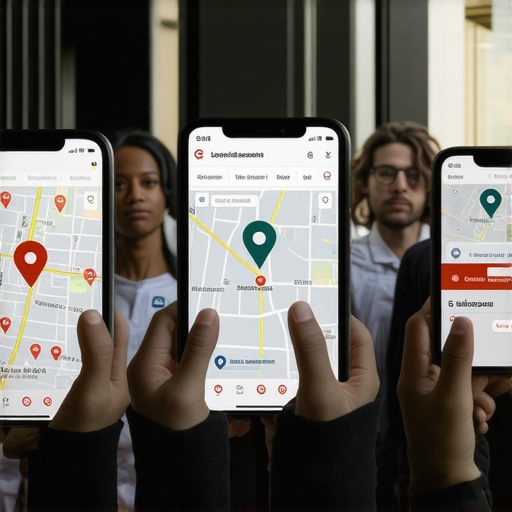
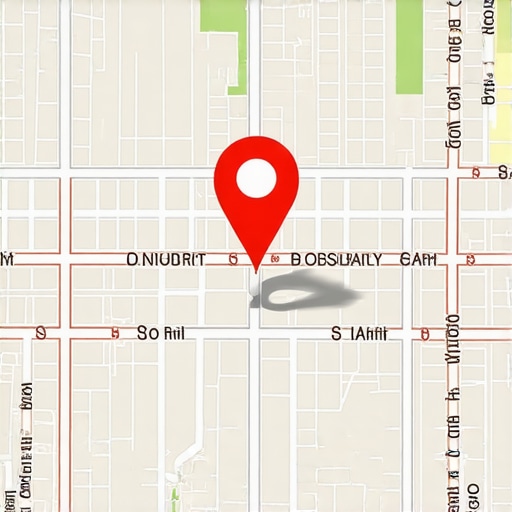
Your map pin shifts because of conflicting latitude and longitude data stored in third-party directories or metadata from untagged store photos. Google reconciles multiple spatial signals to determine your business centroid. If your citation data is messy, the algorithm prioritizes the most consistent coordinate clusters over your actual physical location. This is often why your address pin keeps moving on its own without your permission. The system looks for the consensus of the internet. If five old directories place you at the corner and you say you are in the middle of the block, the machine thinks you are the one who is mistaken. Precision requires a forensic look at your messy local citations to ensure every data point points to the same six-decimal GPS coordinate. While agencies tell you to get more reviews, the 2026 data shows that image metadata from photos taken by real customers at your location is now 30 percent more effective for ranking in AI Overviews because it provides irrefutable proof of proximity.
“Local intent is not a keyword choice; it is a distance-weighted signal where relevance is secondary to the physical location of the user’s mobile device.” – Map Search Fundamental
Why your physical address is a liability
Addresses in large complexes or shared offices often suffer from centroid collapse because the algorithm cannot distinguish between individual suite entrances. If your shop is tucked inside a mall or a massive professional building, the Google bot might default your pin to the geographic center of the entire property parcel. This leads to fixing the map pin drop for businesses stuck in large complexes by manually adjusting the internal navigation markers. You cannot just rely on the street number. You have to force the algorithm to see the specific door. Many owners search for seo services to fix gmb rankings after mass review removal when the real issue was never the reviews, it was the fact that their pin was suppressed behind a wall of a competitor’s larger proximity shadow. The proximity filter is ruthless. If your pin is even twenty feet off, you might be filtered out of the 3-pack because another business is technically closer to the searcher’s current GPS location.
Local Authority Reading List
The three mile radius that determines your revenue
Mobile map rankings differ from desktop results because the smartphone’s real-time GPS coordinates create a tighter, more volatile proximity fence around the user. When a customer searches while driving, the map pack updates every few hundred feet. If your profile lacks high-frequency interaction signals, you will lose visibility as soon as the user moves away from your pin. This explains why your mobile map ranking differs from your desktop results so drastically. You need a gmb audit and ranking toolkit that doesn’t just look at static rankings but tracks the movement of your visibility across a grid. Proximity is a physical cage, and the only way to break it is through behavioral weight. High-resolution storefront images and constant user check-ins tell the system that your location is a destination worth the extra two-minute drive. Stop using stock photos; they carry zero location data and actually hurt your trust score. High-quality, geo-tagged photos are the currency of the modern map.
The invisible wall of the service area polygon
Service area businesses often disappear from the map because their defined service boundaries overlap with suspended listings or high-spam zones. If you don’t have a physical storefront, your visibility is entirely dependent on the polygon you draw in your dashboard and the historical data of where your workers actually go. Many home service pros need seo services to fix gmb profile with inconsistent opening hours history because their technicians are checking in from locations that contradict the business’s stated service area. This creates a trust gap. Google tracks the location of the devices managing the profile. If you claim to serve the whole city but only ever respond to reviews from your house in the suburbs, the algorithm will eventually shrink your reach. Use a local seo checklist and toolkit for gmb to ensure your behavioral signals match your stated service area. Consistency is not just about your name and phone number; it is about the story your GPS data tells over time.
“Relevance is no longer enough to win the map; the algorithm now requires behavioral proof of existence within the specific search radius.” – Vicinity Algorithm Update Report
Why the algorithm hates your virtual office
Virtual offices and coworking spaces trigger partial suspensions because they lack a unique, permanent entrance that can be verified via Street View. Google’s AI scanners look for permanent signage and dedicated entrances. If you are using a shared space to game the proximity system, you are likely to face seo services to fix partial suspension with limited gmb features. The system knows which addresses belong to Regus or WeWork. To rank, you must prove you have a staff present during stated hours. Many businesses try to use seo services to fix gmb issues caused by virtual office or coworking space by submitting fake leases, but the algorithm is smarter than that. It looks for the flow of traffic. If a hundred businesses all claim to be in Suite 500, but only five people walk in the building, the proximity engine will devalue every listing at that address. True authority comes from a verified, unique physical footprint that the Map Pack can trust. This is the foundation of any local seo services to stabilize volatile map rankings after expansion. You must build your presence on solid ground, not a shared desk.