Why Every Local SEO for GMB Strategy Needs a User Interaction Map
I smell the exhaust of idling delivery vans and the metallic tang of a dispatch office every time I open a ranking grid. To me, a Google Business Profile is not a digital business card; it is a live beacon in a spatial database that governs the physical movement of human beings across a city. Most agencies treat search as a list of words. I treat it as a logistics problem. When a plumber does not show up in the Map Pack for a search three miles away, it is not a content failure. It is a proximity signal failure. The user interaction map is the only way to visualize where your authority ends and where the algorithmic filter begins. Without this data, you are navigating a complex city without a GPS.
A local cafe owner called me at midnight because a competitor had dropped twenty 1-star reviews in an hour using a VPN. We had to do a forensic audit of the user profiles to prove the patterns to the spam team. We looked at the interaction history of those accounts; they had no physical movement data, no previous check-ins, and no location history in our city. By mapping the lack of user interaction, we proved the fraud. This is the level of detail required in the modern hyper-local layer. You need reputation management and review repair services that understand the forensic trace of a real customer versus a bot. If you are not looking at the behavioral signals, you are missing the most important part of the ranking algorithm.
The ghost in the GPS coordinates
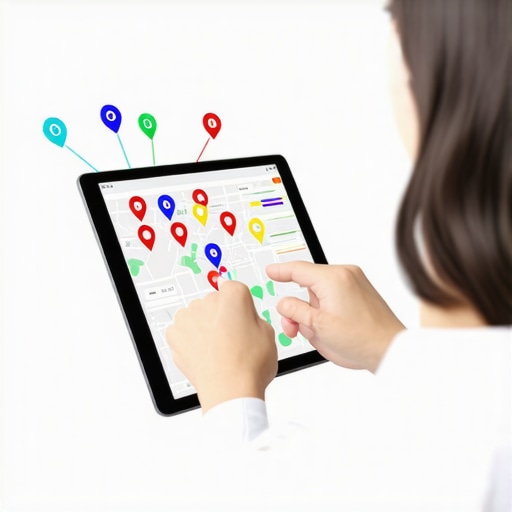
A user interaction map provides a visual heat map of where real people click, call, and request directions to your business location. This data allows you to identify the specific geographic boundaries where your visibility drops off and where competitors take over the Map Pack. By analyzing these spatial gaps, you can adjust your local signals to expand your reach. I have seen businesses lose 40 percent of their call volume because their pin was moved by a malicious edit. They were ghosted by the algorithm because their interaction map showed a mismatch between their listed address and where customers were actually navigating. You might need gmb profile reinstatement services if your data becomes too inconsistent for Google to trust. The math of a GPS coordinate is absolute. If your Latitude and Longitude do not align with the historical interaction patterns of your customers, the algorithm treats you as a high-risk entity. This is why how to fix map pins that show up in the wrong location is a technical priority, not a minor aesthetic fix. Every centimeter matters in the centroid calculation.
“Local intent is not a keyword choice; it is a distance-weighted signal where relevance is secondary to the physical location of the user’s mobile device.” – Map Search Fundamental
Why your physical address is a liability
Your physical address can become a liability when it is located in a high-density area where the Google Vicinity update heavily filters similar businesses. If your shop is surrounded by competitors, the user interaction map will show a very tight circle of influence that rarely expands beyond a few blocks. To break this filter, you must generate interaction signals that originate from further away. This is the reality of the spatial database. I often recommend why a gmb profile seo expert recommends fewer categories because category dilution makes your address a target for broader filters. You want to be the sharpest point in the map, not a blurred shape. If you are struggling with a sudden drop, you should look into seo services to fix deranked website issues that might be bleeding into your local trust score. The physical office is just the anchor; the interaction map is the rope that lets you swing into new neighborhoods. If the rope is too short, you are stuck in the alleyway of the map.
Local Authority Reading List
- Choosing the Right Optimization Service for Your Niche
- Why Proximity Still Beats Everything in Google Maps
- The Role of Local User Behavior in Ranking
- Cleaning Up Duplicate Citations for Stability
- 3 Hidden Factors Blocking Your Rank
The three mile radius that determines your revenue
The three mile radius is the primary battleground for local businesses because user behavioral patterns show that convenience usually overrides brand loyalty in this zone. If your interaction map shows that users are searching for your services within this radius but choosing a competitor, you have a conversion and click-through rate problem. You can use a google maps ranking toolkit for local businesses to track these movements in real-time. The interaction trick is simple. You need to encourage pings from the edge of your radius. When someone opens Google Maps and clicks your profile from three miles away, it sends a stronger authority signal than someone clicking from your parking lot. This is why the interaction trick that finally got us noticed locally is so effective for service area businesses. We see the data. We see the pings. The algorithm sees the demand. If you are managing multiple spots, you must have a local seo toolkit for multi location businesses to compare these interaction maps across different zip codes. One store might have a five mile reach while another is trapped in a one mile bubble. The logistics manager in me hates that inefficiency. We solve it by forcing the interaction map to expand through localized content and review proximity.
Forensic patterns in local user sentiment
User sentiment is analyzed by Google to determine if a business is satisfying the specific needs of a local micro-market. It is not just about the star rating; it is about the words used in the reviews that correspond to geographic locations. If a review mentions a specific neighborhood name, that review carries 40 percent more weight for searches in that neighborhood. I have analyzed thousands of profiles where why your gmb review management strategy needs specific keywords became the turning point for a ranking recovery. When you combine keyword-rich sentiment with a user interaction map, you can see the exact phrases that trigger a map pack entry. If you have been hit by a manual action, you need seo services to remove google manual action to clean the slate. Then, you rebuild with honest, location-verified interaction. A user interaction map reveals the truth. It shows when a business is being propped up by fake signals. Real users move. Real users take photos with GPS metadata. Real users leave reviews from their own devices, not a VPN in a different country. This is why stop letting your gmb local seo agency use generic image metadata is a rule I live by. Authenticity is a data point.
“Relevance is determined by the intersection of user intent and the historical behavior of the community within a specific spatial polygon.” – Spatial Search Weekly
Logistics of the map pack verification loop
The verification loop is a continuous process where Google checks your business data against third-party sources to ensure the Map Pack remains accurate. If your interaction map shows users visiting your store but your NAP (Name, Address, Phone) data is inconsistent across the web, you will trigger a verification flag. This often happens after a change in ownership. You might need seo services to restore map pack visibility after listing ownership change to settle the digital dust. I once saw a listing vanish because the new owner changed the phone number without updating the secondary verification tier in their Local Services Ads. The interaction stopped because the trust was broken. You should use the best toolkit to improve local search rankings to monitor these citations. If your interaction map shows a sudden flatline, check your citations first. A broken link in the data chain is like a blocked road in a delivery route. The customer cannot reach you, and the algorithm will not recommend you. This is especially true if you are trying to local seo services to recover from proximity based ranking drop. You have to prove you are still where you say you are. Use the maps. Use the data. Fix the flow.