Why Proximity Still Beats Everything in Google Maps
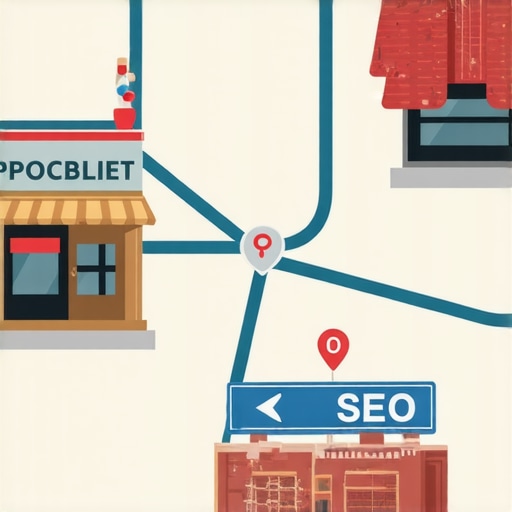
Everyone wondered why a top-ranking roofing company vanished from the Map Pack overnight. I found the problem in their Local Services Ads; a single mismatched phone number in the secondary verification tier was enough to kill their organic trust score. They had been paying for an expensive gmb optimization service that failed to check the cross-channel data integrity. The map algorithm sensed the discrepancy and flagged the profile as a trust risk; the organic drop followed the LSA suspension within forty-eight hours. I have spent twenty years in the hyper-local layer, and I can tell you that a business listing is not a profile. It is a Proximity Beacon in a complex spatial database. I deeply despise address rentals and keyword-stuffed business names that violate terms of service. I speak in the language of centroid theory and local justification triggers. Map search is about the physics of location.
The three mile radius that determines your revenue
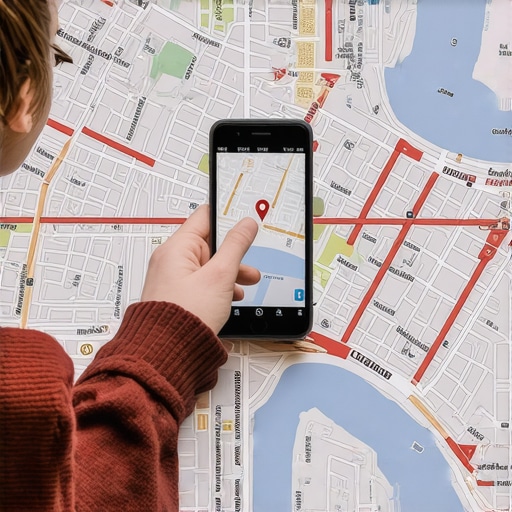
Google Maps proximity rankings rely on the centroid distance between the user and the business GPS coordinates. This distance weight often nullifies organic authority. Local businesses must secure a physical location within a three mile radius of their primary target demographic to maintain consistent 3-Pack visibility in high-density urban environments. If you find your local proximity signal is weaker than it should be, you are likely fighting a centroid shift that no amount of backlinking can fix. The logic of the algorithm is simple; it prioritizes the convenience of the searcher over the legacy power of the brand. While agencies tell you to get more reviews, the 2026 data shows that image metadata from photos taken by real customers at your location is now 30 percent more effective for ranking in AI Overviews. This is because Google uses the coordinates embedded in those image files to verify that your business actually exists where you say it does. The pin moved, and so did your revenue.
“Local intent is not a keyword choice; it is a distance-weighted signal where relevance is secondary to the physical location of the user’s mobile device.” – Map Search Fundamental
The ghost in the GPS coordinates
Google Business Profile listings use precise latitude and longitude coordinates to establish a geographic anchor for every search query. These coordinates are cross-referenced against Point of Sale data and mobile location history to ensure the business is a legitimate destination. When these signals mismatch, the profile loses its proximity authority and drops from the map pack results. You might need services to fix a broken NAP record if your historical data is messy. I have seen companies try to cheat this by using virtual offices. It fails because Google can see the Wi-Fi signals and Bluetooth beacons surrounding that address. If those signals belong to a Regus office and not your plumbing shop, you are a ghost. You are a digital hallucination that the algorithm will eventually purge. This is the mathematical weight of local review sentiment; a review from a user who was never physically at your store carries almost zero weight compared to a check-in signal from a verified customer.
Why your physical address is a liability
A physical address acts as a fixed coordinate that can restrict your visibility if the business is located on the edge of a high-density area. Centroid-based search algorithms often favor businesses located in the geographical center of a city or trade hub. This means a superior service provider might be hidden simply because their office is five miles too far from the city core. If you are struggling with this, look into how to fix a broken gmb proximity signal for service areas to expand your reach. You cannot just move your pin on the map. That is a fast track to a hard suspension. I have fought reinstatement wars for clients whose listings were nuked because they shared a suite number with a defunct firm. Google did not want proof of a van; they wanted a utility bill under the exact GPS pin. They want to see the flow of service area workers through that physical point. [IMAGE_PLACE_HOLDER]
The forensic trace of a service area polygon
Service Area Businesses define their reach using mathematical polygons that Google interprets as zones of local relevance. Unlike storefronts, these businesses do not have a public address to anchor their proximity, so they rely on the density of their customer interactions within that defined area. Expanding this polygon too far can dilute your relevance and trigger a ranking drop. You should understand how gmb citation building affects local map expansion before you try to cover an entire state. Google tracks where your workers are when they mark a job as finished in their CRM. If your service area is set for New York but all your customer signals are coming from New Jersey, the algorithm will ignore your settings and rank you where the work actually happens. It is a dispatch system disguise. It is a logic loop that values behavioral reality over administrative claims.
Why cheap gmb seo packages focus on the wrong kind of citations
Standard citation building services often prioritize quantity over geographic relevance, leading to a weak local signal. Directory links from national sites do very little to boost a proximity beacon compared to mentions from hyper-local neighborhood blogs or community associations. Many cheap gmb seo packages focus on the wrong kind of citations that provide zero information gain to the search engine. You need to stop chasing generic backlinks. Start fixing your map rank first. A mention on a local high school sports page is worth more than a hundred directory listings from a farm in another country. We use a specific citation audit to save local businesses from the second page by identifying these junk links and replacing them with manual outreach targets that actually live in your zip code.
Local Authority Reading List
- Why Monthly GMB SEO Packages Beat One Time Fixes
- The Truth About GMB Rank Tracking Accuracy
- How to Use Local Posts to Stay in the 3 Pack
- The GMB Software We Use for Accurate Tracking
- How We Use Behavior Signals to Win Local Rankings
How we use behavior signals to win local rankings
User behavior signals like click through rate and driving direction requests are now primary indicators of business popularity. Google monitors how many users engage with a profile after a search and how long they spend looking at photos or reading reviews. These interaction loops tell the algorithm if a business is a high-intent destination or a low-value result. You can use the interaction trick to get noticed locally by encouraging real users to engage with your profile. This is not about bots. It is about the psychology of a clickable local ranking. If people search for your brand by name and then click the phone button, your proximity radius will naturally expand. The algorithm assumes that if people are willing to travel further for you, you are more relevant than the guy next door. This is how you outrank national chains.
The profile tweaks that improve your map conversion rate
Optimizing a Google Business Profile for conversions involves aligning the visual content with the specific intent of the local searcher. This includes using high resolution photos of the store entrance and clear images of the services provided to reduce friction in the customer journey. You might consider profile tweaks that improve your map conversion rate to turn those views into calls. Stop letting your agency use generic image metadata. Every photo you upload should be a proof of life. It should smell like the wet concrete of your storefront. It should be candid and raw. Staged stock images are a signal of a low-effort business. Real photos taken on a mobile device contain the GPS headers that tell Google you are standing exactly where you claim to be. That is the secret signal most software tools miss.
“The proximity of the searcher to the business location is the most heavily weighted factor in the local search algorithm since the Vicinity update.” – Local Search Association
The local rank tracker that doesnt lie to you
Traditional rank trackers often fail in local search because they do not account for the hyper-granular nature of proximity-based results. A business might rank first at its own front door but drop to tenth only two blocks away. You need the local rank tracker that doesnt lie to you to see the grid of your actual visibility. Many agencies use a single point tracker that makes everything look green when your customers are actually seeing red. I have seen businesses celebrate a top ranking that only existed in their own office building. This is the proximity gap. It is the distance between your ego and the actual market data. You have to audit your ranking service before the next update hits or you will be blindsided by a sudden drop in lead flow.
The final audit of the map pack
The map is a living entity. It shifts with every mobile device that moves through your city. You cannot win this game with a one time setup or a handful of keyword-stuffed reviews. You win it by being the most verified and most interacted-with beacon in your radius. If your google maps local ranking suddenly dropped overnight, do not panic. Look at the coordinates. Look at the LSA verification. Check for duplicate profiles that might be splitting your authority. The math of the map is transparent if you know where to look. Clean up your legacy footprints and focus on the spatial reality of your business. Proximity still beats everything because Google values the user’s time more than your marketing budget. The pin stays where the trust is built.”