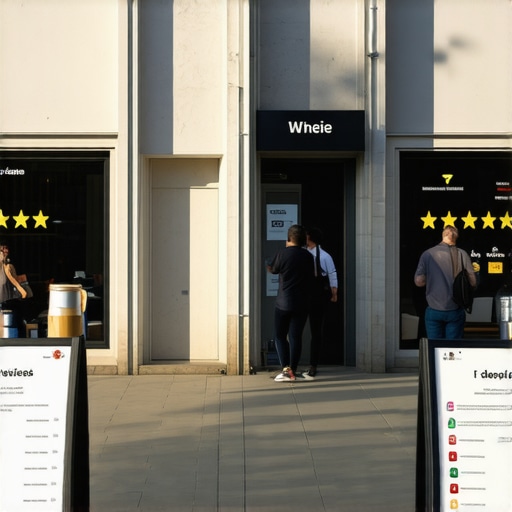
The reason your competitors are winning the 3-pack with fewer reviews
I spent three months fighting a hard suspension for a plumbing client whose listing was nuked simply because they shared a suite number with a defunct law firm. Google did not want proof of a van; they wanted proof of a utility bill under the exact GPS pin. The office smelled like peppermint and old paper as we dug through 1970s property deeds to prove the partition of the building. It was a brutal reminder that the local algorithm does not care about your hard work or your five star count if the physical data layer is fractured. You can have five hundred reviews and still lose to a guy with ten if his proximity signal is cleaner and his behavioral data shows more active movement. This is the reality of the hyper local layer where math beats marketing every single time.
The phantom weight of the proximity centroid
Google Business Profile ranking depends on proximity, relevance, and prominence. A competitor wins with fewer reviews because their GPS coordinates align perfectly with the user intent and the search centroid. This involves positional accuracy and NAP consistency across the local data ecosystem. You might find that why your local proximity signal is weaker than it should be is the primary reason for your invisibility. The pin moved. It is a simple fact of the digital map. If your competitor is five hundred feet closer to the theoretical center of a high intent search, they gain a mathematical advantage that reviews cannot easily overcome. We call this the centroid collapse. When Google sees a business located in a high density commercial zone versus one on the outskirts, the algorithmic weight shifts. It is not just about where you are; it is about how many other entities surround you. A business situated in a cluster of related categories often sees a ranking boost because Google views that area as a high relevance hub for the user.
Why star counts are a vanity metric
Review sentiment analysis and local justifications are far more powerful than the total star count on a profile. Google uses Natural Language Processing to extract keywords from customer feedback to trigger map pack appearances. This means why your review sentiment score is more important than star count in the modern era. I have seen profiles with three thousand reviews get buried by a shop with twenty highly specific reviews that mention the exact service the user searched for. The algorithm looks for justifications. Those are the little snippets of text that say ‘Their website mentions…’ or ‘Reviewers say…’. If your competitor has ten reviews that all mention ’emergency water heater repair’ and your five hundred reviews are generic ‘great service’ blurbs, you lose. The math of sentiment is cold. It weighs the presence of nouns and verbs against the user query. This is why you must understand how to get google reviews that actually impact your position instead of just chasing numbers.
“Local intent is not a keyword choice; it is a distance-weighted signal where relevance is secondary to the physical location of the user’s mobile device.” – Map Search Fundamental
The physics of the service area polygon
Service Area Businesses or SABs must define service areas without overextending their geographic reach in the dashboard. If you claim a fifty mile radius but your behavioral signals only show activity within five miles, Google will throttle your visibility. Learning how to fix your service area business map visibility requires a forensic look at your interaction data. You cannot lie to a system that tracks the real time location of your technicians through their mobile devices. If your competitor has their profile tightened to a five mile radius where they actually work, they will outrank you every time. Google sees the ‘ghost’ of your actual service area through the pings of your team. This is why why your service-based business is missing from nearby maps often boils down to a mismatch between your claimed area and your actual physical footprint. The polygon is the law. If your service area is too broad, you dilute your proximity signal until it is too weak to trigger a 3-pack appearance anywhere.
Local Authority Reading List
- The tactical fix for businesses stuck outside the 3-pack
- The specific behavioral signals that finally move your map position
- How to audit your local map rank without bias
- The real reason your gmb listing is suspended and how to fix it
Hidden category conflicts that kill rankings
Primary categories and secondary categories must be chosen based on competitive density and search volume. Most businesses make the category optimization mistake of choosing too many irrelevant labels which causes keyword cannibalization. You should how to audit your profile for hidden category conflicts to ensure your primary category matches the user intent. If your competitor chose ‘Italian Restaurant’ and you chose ‘Restaurant’ as your primary, they will win every search for ‘Italian food’ even if you have more reviews. The specific beats the general. We often see businesses fail because they try to be everything to everyone. This is a fatal error in the map pack. Google wants to provide the most specific answer to a query. If you are struggling, it might be time to look at the category optimization mistake most local shops make. One wrong secondary category can link your profile to a different ‘neighborhood’ of intent, effectively moving you out of the race for your core services. Clean data is the only currency the map pack accepts.
The forensic trace of behavioral signals
Click through rate, direction requests, and phone call clicks are the behavioral signals that Google uses to validate a business listing. If people search for your brand name and then click directions, your proximity authority increases exponentially. You need to understand the hidden interaction signals that move the needle for local shops. Your competitor might have fewer reviews, but if their customers are actually using the ‘call’ button frequently, Google views them as more relevant. A profile that sits idle is a dead profile. This is why how we boosted gmb interaction without using any bots is a frequent topic of study for investigators like me. Real human movement is the gold standard. When a user drives to a location and their phone stays there for thirty minutes, Google logs a successful visit. This is a massive ranking signal that bypasses review count entirely. If your competitor has ten reviews but fifty people a day are getting directions to their shop, they are the king of that radius.
“Local relevance is a product of interaction frequency where the physical movement of the user validates the digital existence of the entity.” – Geospatial Ranking Journal
Recovering from a proximity based ranking drop
Proximity based ranking drops usually occur after a core algorithm update like Vicinity or Opossum. To recover rankings, you must audit your local citations and clean up mixed listings for multi location businesses. Using local seo services to recover from proximity based ranking drop often involves re-verifying the address or adjusting the pin. You should look into how to handle a sudden drop in gmb ranking visibility before you panic. Sometimes the drop is not about you; it is about a competitor finally fixing their NAP data. We also see drops when local citations are no longer indexed by Google. This is why why your local citations arent being indexed by google is a critical bottleneck. If the algorithm cannot find a consistent trail of your business address across the web, it loses confidence in your physical location. It then shrinks your visibility radius to play it safe. Recovery is a slow process of rebuilding that trust through clean backlinks and location specific content.
The danger of cheap ranking tools
GMB ranking tools and automated citation builders can often do more harm than good if they use low quality data sources. The best gmb ranking tools for local seo are those that provide unbiased grid tracking and competitor analysis. I suggest you check the hidden cost of cheap local seo software tools before subscribing to anything. Many tools use proxies that Google has already flagged, giving you false ranking data. You need to know how to audit your gmb software tools for accuracy. If your software says you are number one but your phone is not ringing, the software is lying. A gmb ranking toolkit is only as good as the human interpreting the data. I have seen agencies spend thousands on software while their clients listings were suffering from invisible keyword stuffing. This is a common trap. You think you are winning because a dashboard is green, but the local leads are going to the guy with the messy profile and the perfect proximity signal.
Managing multi location profiles without losing soul
Multi location businesses often struggle with duplicate listings and fragmented authority across different zip codes. You need seo services to fix mixed listings and ensure each storefront has a unique local phone number and landing page. If you are managing fifty sites, the best gmb software for agencies managing 50 plus sites is a necessity. However, you must avoid the bulk optimization trap. Each location needs unique photos and local review responses. If you use the same corporate response for every review, you kill your relevancy. Learn how to manage gmb reviews across twenty locations without looking like a robot. Google rewards the individual location that feels like a part of the community. If a shop in Austin has the same description as a shop in Boston, the algorithm views them as generic entities. Generic entities do not win the 3-pack. They get filtered out in favor of the local hero who took a high res photo of their actual storefront today. That photo is a timestamp of existence. It is a signal of life that reviews cannot replicate.