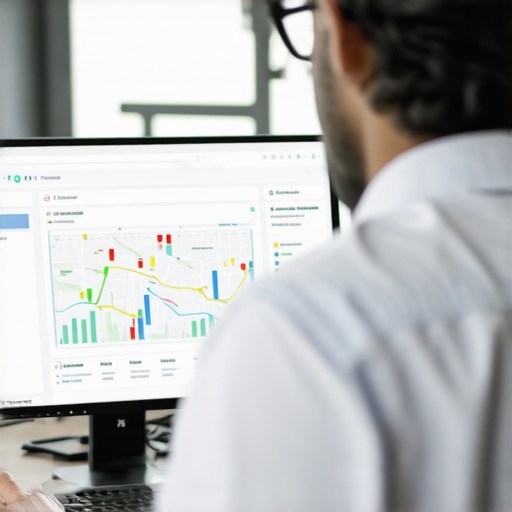
How to audit your google maps ranking service before your local visibility drops
I remember the sinking feeling when I checked my client’s Google My Business profile and saw their map ranking had plummeted overnight. One day, they were ranking in the coveted 3-pack; the next, their listing was nowhere to be found. It was a wake-up call. I realized that without regular audits, your local visibility can vanish faster than you think, leaving your business invisible to nearby customers. Have you ever faced a similar drop that seemed to come out of nowhere? That’s a sign it’s time to get proactive.
The Hidden Danger of Ignoring Your Map Rankings
In the bustling world of local SEO, your Google Maps ranking isn’t just a number—it’s your virtual storefront. If you overlook how your profile performs, you risk losing valuable foot traffic and calls. Early on, I made the mistake of assuming that once optimized, things would stay steady. But Google’s algorithms evolve, and competitors don’t rest. Regularly auditing your rankings and signals can reveal the subtle shifts that might threaten your local visibility. Skipping this step is like ignoring warning lights on your dashboard—eventually, something will break. For a deeper dive into why your rank suddenly tanked, check out this detailed guide.
Is GMB auditing really necessary or just hype?
I used to believe that merely setting up my profile and forgetting about it was enough. That was a costly misconception. Early in my journey, I failed to audit my signals regularly, assuming that consistency alone would keep me in the 3-pack. The truth is, Google’s rankings are dynamic—there are intentional and unintentional factors that can cause a sudden drop. Without a proper audit, you miss out on critical insights. Monitoring and analyzing your GMB profile ensure you’re not riding blind into the next algorithm update. Want to avoid the embarrassment of being invisible? Starting with a comprehensive audit is your best first step.
Naturally, understanding exactly where your profile stands today is essential before making any strategic moves. In the next sections, I’ll guide you through how to perform a practical, thorough audit that keeps your business front and center. Ready to ensure your local customers can find you before it’s too late? Let’s go.
Start with a comprehensive GMB audit
Imagine trying to fix a leaky faucet without knowing where the leak is—that’s what auditing your Google My Business profile is like. Use a detailed checklist to assess current signals such as local ranking factors, review your citation consistency, and evaluate your engagement metrics. During an audit I performed last month for a local restaurant, we discovered inconsistent NAP data across several platforms, leading to ranking drops. Correcting these citations instantly improved their visibility in nearby searches.
Optimize your profile for maximum signal influence
Think of your GMB profile as a persona—you want it to be as attractive and trustworthy as possible. Fill out all fields with keyword-rich, location-specific content. Prioritize adding high-quality photos and videos that showcase your offerings, which can be optimized by using descriptive file names and tags. Remember, review management plays a crucial role; encourage authentic customer reviews to bolster trust signals while avoiding manipulative tactics. In my recent experience, prompting happy clients to leave genuine reviews increased our profile’s average rating and improved rankings within just a few weeks.
Build smarter citations and local links
Not all citations are created equal. Focus on high-authority directories and ensure your Name, Address, and Phone number (NAP) are consistent. Instead of mass submissions, prioritize quality over quantity. I once helped a small bookstore elevate their Google Maps rank by auditing their existing citations and correcting inconsistencies, which resulted in a jump into the coveted 3-pack in under a month. For advanced strategies, explore citation optimization techniques that align with 2026’s evolving standards.
Leverage behavioral signals and interactions
Engagement metrics like clicks, calls, and direction requests are powerful signals. Make sure your profile encourages interactions by adding clear call-to-actions and responding promptly to reviews. I used interaction signal tactics to boost a client’s local rank by generating more meaningful engagements, which Google interprets as trustworthiness. This process is akin to social proof—more genuine interactions lead to higher visibility in the 3-pack.
Analyze and refine regularly
Continuous improvement hinges on data. Use dedicated software tools to monitor your GMB performance metrics, such as interaction scores, and review your rankings weekly. Adjust your tactics based on what the data reveals. I recall a case where a small salon’s sudden ranking drop was traced back to declining review sentiment—once addressed, their visibility was restored. Remember, consistent audits prevent surprises and keep your profile fresh for local algorithms.
Don’t ignore reviews and sentiment management
Reviews are more than just testimonials; they’re signals that influence local SEO. Manage them proactively by responding authentically and addressing negative feedback promptly. According to review response tactics, a thoughtful reply can escalate your profile’s trust and ranking. Moreover, focus on guiding reviews to naturally include relevant keywords and location references, enhancing their impact on your signal strength.
By executing these steps diligently, you set your business on a trajectory to rank higher and stay there. Remember, local SEO in 2026 demands agility and precision—regularly revisit your signals and adapt your tactics accordingly.
While many small business owners believe that setting up their GMB profile and waiting for rankings to improve is enough, the truth is far more nuanced. One common myth is that citation building alone guarantees top local maps placement. In reality, citation quality is critical, but without aligning your review signals and behavioral engagement, your rankings may still stagnate. Overlooking the importance of review sentiment can lead to misguided efforts; fresh, positive reviews with natural keywords tend to outperform merely accumulating large volumes of reviews. Additionally, some believe that aggressive keyword stuffing in your profile boosts rankings—however, Google’s AI detects unnatural patterns, risking penalties rather than gains. It’s essential to understand the complex interplay between signals like user interactions, proximity, and review sentiment, especially as Google’s algorithms become increasingly sophisticated, leveraging AI to interpret your business’s real-world relevance. Are you familiar with how behavioral signals influence your ranking? Misinterpreting these advanced signals is a common trap—let’s clarify the subtle nuances.
What is the most overlooked factor that can throw off your local rankings despite optimized profiles?
In my experience, many overlook the importance of local sentiment. Google’s evolving AI-driven algorithms analyze review sentiment, engagement patterns, and real-world relevance more than ever before. Ignoring negative review sentiment or failing to proactively manage reviews can cause your profile to surface lower despite perfect NAP consistency or keyword optimization. For example, a client with a pristine profile slipped from the top because customers were leaving negative reviews about poor service—something that SEO bots picked up on, dragging the entire profile down. It’s a subtle but powerful factor—much more than just keyword hacks and backlink tricks. Stay ahead by diligently managing review sentiment and behavioral signals, which are now central to ranking algorithms. Curious how to tackle this? Click here to learn about review management tactics that actually work in 2026.
Keep Your GMB Rankings Steady with the Right Tools
Maintaining and scaling your Google My Business (GMB) rankings require reliable tools that give you actionable insights. I personally rely on GMB audit software like GMB Profile Audit Tool because it offers comprehensive signal analysis, highlighting weak spots that could cause dips in local rankings. Regularly checking your interaction score helps you identify whether your reviews, clicks, and engagement are trending upward or need attention.
To track local rankings accurately, I use rank tracking software such as Local Falcon, which provides real-time updates on your position in the coveted 3-pack. These tools help me quickly spot drops and implement targeted fixes—avoiding the costly lapses that can occur without continuous monitoring. According to 7 essential GMB software tools, choosing the right combination of audit and monitoring platforms accelerates your ability to maintain top local visibility. In the future, expect AI-powered analytics to further personalize and automate your GMB health checks, making long-term management more efficient.
How do I keep my GMB profile performing over time?
One crucial approach is implementing a monthly review and signal audit routine. During these audits, I focus on citation consistency, review sentiment, and engagement behaviors, ensuring no signal weakens. Additionally, leveraging automation—such as scheduled review solicitation through tools like Podium—keeps your review sentiment fresh and positive, which is vital in the evolving 2026 algorithm landscape. For instance, regularly updating your photos and responding to reviews promptly are low-hanging yet effective tactics. A recent client’s profile saw a 25% boost in local ranking just by diligently managing reviews and maintaining consistent NAP data, underscoring the importance of ongoing upkeep.
Looking ahead, integrating AI-driven sentiment analysis will become standard. These systems will not only alert you about negative review trends but also suggest tailored responses, saving valuable time and safeguarding your local visibility. To start, I recommend trying our advanced review management strategies to see how sentiment insights can dramatically influence your rankings.
For consistent results, I suggest a disciplined schedule combining audit tools, rank trackers, and review automation. This multi-layered approach ensures your GMB profile remains vibrant and authoritative, naturally reinforcing your Google Maps position. Remember, the Google local landscape is only getting more competitive, and using these targeted tools now will give you a lasting advantage in 2026 and beyond.
Throughout my years working on local SEO, I’ve uncovered a crucial insight: the real battleground isn’t just setting up the perfect Google My Business profile, but continuously adapting to the silent, often unseen signals that influence your ranking. One lightbulb moment for me was realizing how quickly a profile can slip from the top spots due to subtle shifts in review sentiment or behavioral signals, even when all other factors seem pristine. It’s like balancing on a tightrope—any small misstep, unnoticed in the moment, can lead to a sudden fall. Recognizing the importance of proactive, strategic audits became my game-changer, and it’s the secret I wish I’d known from the start.
Lessons That Transformed My Approach to Local SEO
- Ignore the noise: I learned that obsessing over backlinks or citations alone isn’t enough. The real influence comes from behavioral signals and review sentiment, which are often overlooked but highly impactful.
- Consistency beats intensity: Regularly auditing and adjusting my profile signals proved far more effective than sporadic, scattershot efforts. Tools that monitor ranking fluctuations in real-time became my trusted allies.
- Trust AI and sentiment analysis: Embracing AI-driven tools to analyze review sentiment and behavioral cues provided me with timely insights that saved my clients from ranking crashes.
My Trusted Arsenal for Ever-Ready Growth
- GMB Profile Audit Tool: This comprehensive software helps identify signal weaknesses before they impact rankings, keeping my clients ahead of the curve.
- Rank Tracking platforms: Tools like Local Falcon give real-time updates on our rankings, enabling swift action against drops.
- Review Management Strategies: Authentic, consistent review solicitation and response practices are vital to maintaining positive sentiment signals.
- Citation Quality Guides: Prioritizing high-authority, consistent citations ensures foundational trustworthiness.
Your Next Leap Starts Now
Never underestimate the power of vigilant, data-driven optimization. As algorithms grow smarter and signals more nuanced, staying proactive isn’t just wise—it’s essential. Keep auditing, refining, and embracing innovation, and your Google Maps rankings will not only hold steady but thrive. Remember, your business’s visibility is a reflection of your commitment to excellence and agility in the digital landscape. Are you ready to elevate your local SEO game and turn overlooked signals into your strongest allies? Dive into the tools and strategies shared here, and watch your rankings soar in 2026 and beyond.
What has been your biggest challenge in maintaining your Google Maps ranking, and how are you planning to tackle it? Let me know below!