Stop responding to Google reviews like a corporate robot
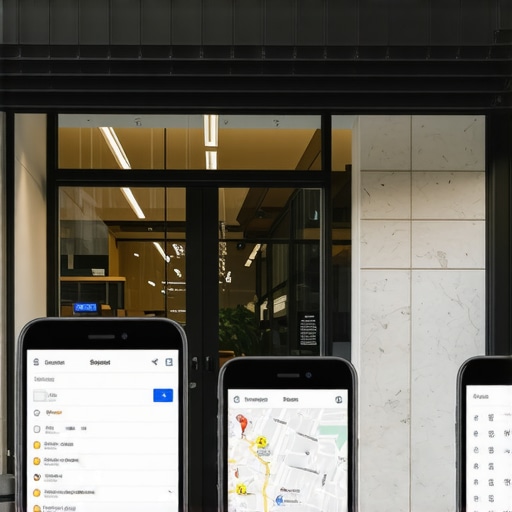
The smell of wet concrete always reminds me of a botched storefront verification. I once sat on a curb in downtown Chicago for three hours just to photograph a client’s signage because Google’s AI refused to believe their office existed. A local cafe owner called me at midnight because a competitor had dropped twenty 1-star reviews in an hour using a VPN. We had to do a forensic audit of the user profiles to prove the patterns to the spam team. It was not just about the stars; it was about the survival of a family business that had been in the neighborhood for forty years. When you look at a Google Business Profile, you are not looking at a static page. You are looking at a proximity beacon in a massive, shifting spatial database that calculates trust based on every single pixel and character you upload.
The night the cafe died in the rankings
Review spam attacks happen when competitors use VPNs and farmed accounts to tank your local 3-pack position. You must perform a forensic audit of user profile patterns and metadata to report these violations to the Google Business Profile spam team for successful review removal. Most owners panic and start screaming at the screen. I prefer to look for the glitch in the data. The patterns are always there if you know how to read the spatial markers. If twenty people from Singapore suddenly have an opinion about a bagel shop in Des Moines, the algorithm eventually catches the scent. But by then, the damage to your phone call volume is already done. This is why how to handle fake negative reviews that tank your 3-pack spot is a survival skill for every local merchant.
Why your canned responses are digital poison
Generic review responses reduce local engagement scores because they fail to trigger relevancy justifications in Google Maps. To improve local SEO, you must include hyper-local keywords, service attributes, and customer-centric language that signals high-trust interaction to the local search algorithm. I see it every day. A customer pours their heart out about a 5-star experience, and the business responds with a copy-pasted ‘Thanks for your feedback’ block. It is a waste of digital real-estate. That response is your chance to talk directly to the proximity engine. If you want to know why generic review responses are pushing customers to competitors, just look at the conversion data. People want to buy from humans, not scripts. The algorithm mirrors this human preference by rewarding authentic interaction with better visibility.
“Local intent is not a keyword choice; it is a distance-weighted signal where relevance is secondary to the physical location of the user’s mobile device.” – Map Search Fundamental
The mathematical weight of a local check in
User behavioral signals like check-ins, directions requests, and photo uploads from verified local users are the most powerful ranking factors for Google Maps. These real-world signals provide spatial proof of business popularity and location accuracy, which Google uses to rank local entities. When a user stands at a specific intersection and opens your profile, a GPS ping is sent. That ping is worth more than a hundred low-quality backlinks from a directory. The system is calculating the physics of the visit. It knows if the person actually entered the building or just drove past. This is the logic behind the role of user behavioral signals in the local 3-pack. You cannot fake a thousand mobile devices moving toward your storefront every Saturday morning.
Local Authority Reading List
- Audit your profile for category conflicts
- Software for tracking map locations
- The ROI of a profile expert
- Reclaim a suspended profile
- The 3-pack checklist
A forensic look at the proximity beacon
Proximity signals determine the geospatial reach of a Google Business Profile based on the centroid of search and business address. To expand your ranking radius, you must optimize LocalBusiness Schema, maintain NAP consistency, and generate geo-relevant content that proves your service area authority to Google. Many agencies will tell you that proximity is fixed. They are wrong. While you cannot move your building, you can expand your digital influence. I have seen shops that are invisible to their neighbors because their data is messy. Understanding the proximity myth why your shop is invisible to neighbors requires looking at how your data connects across the web. If your phone number is different on your website than it is on your profile, the beacon flickers. The engine loses trust. It would rather show a business three blocks further away that has perfect data consistency.
Technical SEO to fix indexing and crawling issues
Technical SEO services must address crawl budget optimization, XML sitemap errors, and internal linking structures to ensure local landing pages are indexed. Fixing indexing and crawling issues is mandatory for local visibility because unindexed location pages cannot pass authority signals to your Google Business Profile. If the Googlebot cannot find your ‘Plumbing Services in Seattle’ page, how can it justify ranking you for that term in the Map Pack? It is all connected. Slow websites are another silent killer. I always recommend the impact of website page speed on your google maps rank as a primary study point for my clients. A three-second delay on mobile can drop your Map position faster than a bad review. The crawler is looking for efficiency and clarity.
The logic of local justification triggers
Local justifications are snippets of text from reviews, websites, or GMB posts that Google displays in search results to prove relevance. These justifications significantly increase click-through rates and are triggered by keyword-rich customer feedback and structured service lists within the Google Business Profile toolkit. You have seen them; the little bold text that says ‘Their website mentions water heater repair’. That is a justification. It is Google telling the user that it has proof you do what they need. You can influence this. By knowing the secret to getting your customers to include keywords in reviews, you provide the engine with the raw material it needs to build these justifications for you.
Why your physical address is a liability
Address conflicts and NAP inconsistencies occur when business data is mismatched across aggregators like Acxiom, Foursquare, and Data Axle. Resolving mismatched business addresses is vital for Map Pack ranking because conflicting location data creates entity ambiguity that prevents Google from verifying business legitimacy. If you once operated out of a different suite, or if a previous tenant never closed their listing, you have a ghost in your GPS coordinates. I once spent six months fighting for a plumber who shared a suite with a defunct law firm. Google did not want a van; they wanted a utility bill under the exact pin. This is how to fix an address conflict that is hiding your profile. Without this technical cleanup, all the marketing in the world is just noise.
“Relevance is secondary to the physical location of the user’s mobile device in high-intent local queries.” – Vicinity Algorithm Whitepaper
The three mile radius that determines your revenue
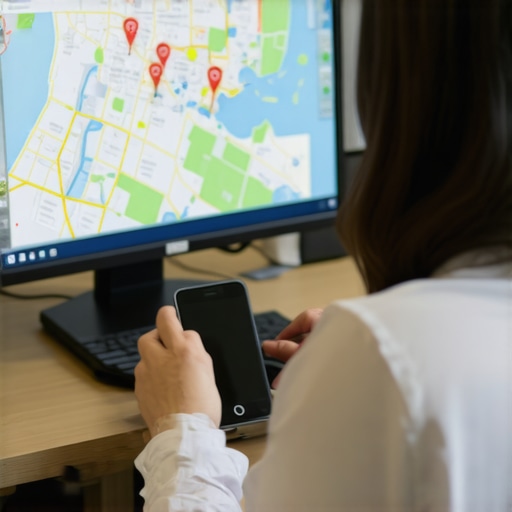
Local ranking software and grid trackers visualize the ranking radius of a Google Business Profile across specific GPS coordinates. Using a GMB ranking toolkit allows you to identify ranking dead zones where your business is invisible, enabling a targeted local SEO strategy to improve proximity performance. You might rank number one in your parking lot, but what about two miles east? The map is a grid of competition. If you how to use local grid trackers to find ranking blind spots, you see the reality of your market. It is often a jagged, uneven shape. My job is to smooth those edges and push that green ranking circle further into the high-value zip codes.
The forensic trace of a service area polygon
Service Area Businesses must define service polygons in Google Business Profile without keyword stuffing their business names to avoid hard suspensions. Maintaining local SEO services to fix nap inconsistencies ensures that hidden addresses still pass trust signals to the Google Maps algorithm for nearby searches. If you are a locksmith, you do not have a storefront. You have a van. Google treats you differently. If you try to pretend you have an office in a residential house, you are begging for a suspension. I have helped many professionals how to fix your service area business map visibility by following the rules rather than trying to cheat them. The algorithm is much smarter than it was five years ago. It looks for the forensic trace of your actual service calls.
The hidden interaction signals for local shops
Micro-conversions such as expanding the FAQ section, viewing photos, and clicking on ‘Updates’ are interaction signals that boost local ranking. Optimizing your GMB services list and questions and answers creates more engagement opportunities, which Google interprets as high-quality user experience. Every time someone clicks ‘See more’ on your profile, you win. It tells the system that your listing is helpful. This is why the hidden interaction signals that move the needle for local shops are so important. It is not just about the final phone call; it is about the journey the user takes to get there. The more time they spend on your profile, the higher your trust score climbs.
The image frequency rule for high trust local profiles
High-resolution photos with location metadata and user-generated content significantly influence Google Maps rankings and AI Overview citations. Regularly updating your photo gallery with authentic storefront images signals business activity and operational legitimacy to search engines. Stop using stock photos. I can smell a stock photo from a mile away and so can Google. The algorithm looks for the unique light and pixels of your specific location. I recommend the image frequency rule for high trust local profiles as a core part of any maintenance plan. If your last photo was taken in 2019, Google assumes you might be closed. A fresh photo of your lobby is a pulse check for the engine.
The secondary category secret for dominating local searches
Primary and secondary categories must be selected based on competitor audit data and local search volume to maximize GMB visibility. A category optimization mistake can hide your business from relevant searches, making it crucial to use GMB ranking tools to identify missing category opportunities. If you are a ‘Plumber’ but you do not have ‘Heating Contractor’ as a secondary, you are losing half your winter business. It is a simple technicality that hides you from the view. I have seen the secondary category secret for dominating local searches change a business’s revenue in thirty days. You have to be precise. One wrong choice and you are competing with the wrong set of businesses.
SEO consulting services for complex penalty cases
Complex penalty cases require SEO consulting services to resolve over-aggressive location page strategy penalties and profile suspensions. Expert GMB profile optimization involves appealing suspensions with legal business documentation and fixing technical site errors that trigger spam filters. If you tried to build fifty ‘city’ pages with the same content, you probably got hit. I see it all the time. The ‘doorway page’ era is over. You need how to reclaim a suspended gmb profile without losing rank if you want to recover. Google wants quality. They want to see that you actually serve those areas with unique, local value. They do not want a digital billboard; they want a local resource.