Stop overpaying for packages that only offer static citations
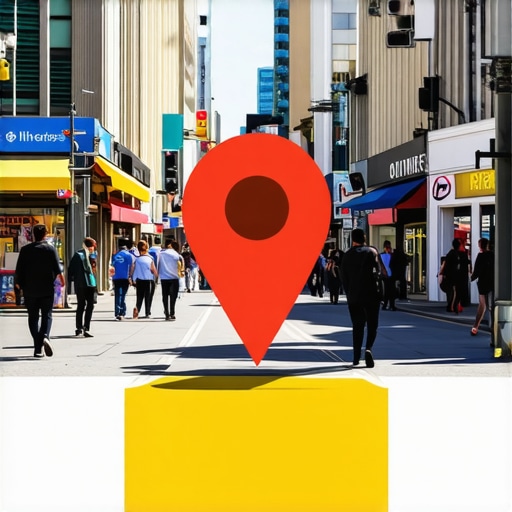
The rain hits the pavement outside my office and the smell of wet concrete fills the air. I am staring at a spreadsheet of 400 citations that a local plumber bought for fifty dollars. It is junk. Total waste. These directories have zero traffic, the links are nofollow, and the business name is slightly different on every tenth line. The plumber wonders why his phone stopped ringing. I notice the glitch in the storefront data immediately. His GPS pin is dropped in the middle of a freeway because of a poorly formatted suite number. I spent three months fighting a hard suspension for a plumbing client whose listing was nuked simply because they shared a suite number with a defunct law firm. Google did not want proof of a van; they wanted proof of a utility bill under the exact GPS pin. This is the reality of modern local search. It is not about how many times your name is on a list. It is about the forensic trace you leave in the spatial database. You need more than just names on a screen. You need a local seo toolkit for google maps ranking that understands how the algorithm actually breathes.
Why your physical address is a liability
Google Business Profile rankings depend on address proximity and centroid calculations. An address is a liability if it is located in a low-density area or shares GPS coordinates with a flagged business. Modern Local SEO requires location authority and clean entity data to avoid a proximity filter and maintain search visibility.
The physical location of your office is no longer a static fact. It is a distance-weighted signal. If you are tucked away in a large complex, your pin might overlap with a competitor who has more authority. This creates a filter effect where Google hides one of you to provide variety. You must learn fixing the map pin drop for businesses stuck in large complexes to ensure you are not the one getting hidden. The algorithm is trying to solve for the user’s travel time. If your address is near a historical landmark, you gain relevance. If it is near a cluster of spammy lead-gen listings, you lose trust. I have seen rankings tank because a neighbor business started using black-hat tactics. You must use how to handle a competitor who is using fake locations to protect your own territory. Distance is the one thing you cannot change, but how Google perceives that distance is entirely up for grabs. Static citations do not help when the proximity radius shifts based on the time of day or the user’s movement speed. You need active signals that prove you are at that desk, in that shop, every single day.
The ghost in the GPS coordinates
GPS salience and location intelligence are the primary drivers of Map Pack placement. Local search engines use mobile device signals to verify that real customers actually visit your physical location. Static citations fail to provide this behavioral data, leading to low map rankings despite high backlink counts and NAP consistency.
I once audited a roofing company that vanished overnight. Their citations were perfect. Their website was fast. But their Local Services Ads had a single mismatched phone number. That was the ghost. Google saw the mismatch and decided the entity was no longer trustworthy. You must understand 3 reasons your local ranking just tanked and how to fix it before you spend another dime on directory lists. The map is a living thing. It tracks where people go after they search. If they search for you and then drive to your competitor, your ranking drops. This is why you need the specific behavioral signals that move your map position tonight instead of waiting for a bot to crawl a yellow pages clone. Static data is dead. We are in the era of interaction scores. If a user clicks your profile and then clicks back to the search results, you just lost a point. If they click to call and the call lasts three minutes, you gained five. Most agencies ignore this. They sell you a package and walk away. But why most local seo packages fail to deliver more than vanity metrics is simple; they are not tracking the movement of the user in the physical world.
“Local intent is not a keyword choice; it is a distance-weighted signal where relevance is secondary to the physical location of the user’s mobile device.” – Map Search Fundamental
Local Authority Reading List
- The real impact of geo tagged photos on your local rank
- How to tell if your click service is using dangerous bots
- How to audit your gmb seo package for junk links
- The hidden costs of cheap local citation building services
- Stop ignoring the service area settings on your local profile
Forensic audit of a map suspension
Google Business Profile suspensions require a forensic audit of location data and documentation. Reinstatement services must prove physical presence through utility bills, business licenses, and storefront photography. Spam fighting involve removing duplicate listings and fraudulent reviews that trigger algorithmic filters or manual penalties for the local business profile.
When the suspension hits, most people panic. They start changing things. They change the business name. They change the hours. This is a mistake. It looks like a bot is trying to bypass a filter. You need seo services to recover from gmb suspension that know when to be quiet. Sometimes the best move is to wait three days before filing the appeal. You have to look at the surrounding environment. Did a competitor report you? Or did you trigger a filter because you changed your primary category? Check the real reason your gmb profile was flagged for spam before you touch anything. The reinstatement war is won with paper. Google wants to see the lease. They want to see the tax ID. If you have been using seo services to rebuild trust after spammy lead gen listings, you have a harder road. You have to purge the old data first. This means how to clean up messy local citations without starting from scratch. You need to find every single scrap of the old brand name and delete it. If Google sees two different names for the same phone number, the suspension stays. It is a binary choice for them. They do not have time for your story. They only have time for the data.
The three mile radius that determines your revenue
Search proximity is the strongest ranking factor for local map results. Most local businesses only rank within a three mile radius of their physical address. Expanding this visibility requires local justification snippets, geo-tagged photos, and customer interaction signals from targeted neighborhoods or service areas within the city.
If you are a contractor, you are likely disappearing from the map as soon as you drive five miles away from your home office. This is a proximity collapse. You need local seo services to repair ranking after switching business model if you moved your office further from the city center. The algorithm calculates your relevance based on the centroid of the search intent. If someone searches for a plumber in the downtown area, and you are ten miles out, you do not exist. To fight this, you need local optimization 4 proximity fixes for the map pack. One of those is using geo-tagged photos from your jobs. When your technician takes a photo at a customer’s house and uploads it, that photo contains metadata. Google sees the GPS coordinates of the photo. It connects your business to that neighborhood. This is how you rank in multiple towns without having five offices. You can also use how to use attributes to qualify your local map leads to signal to Google what you actually do. If you just rely on citations, you are tied to your desk. If you use behavioral signals, your reach expands. The grid is not fixed; it is fluid. You can push your influence further if you know the essential move for ranking your business in multiple towns.
Review cleanup for toxic profiles
Review management is a core signal for trust and map positioning. Review cleanup services remove spam reviews and negative SEO attacks that damage business reputation. Semantic analysis of review text identifies key services and location mentions, which Google uses to rank businesses for specific local queries.
A cafe owner called me at midnight because a competitor had dropped twenty 1-star reviews in an hour using a VPN. This is a negative seo attack. If you do not have services to recover from negative seo attack, your ranking will drop within 48 hours. Google’s algorithm sees the sudden spike in negative sentiment and assumes your business quality has tanked. You need to do a forensic audit of the user profiles. Do they have history? Are they local? We had to prove the patterns to the spam team. You should also look into is your review management ready for new sentiment filters. Google is no longer just looking at the star count. They are reading the words. They are looking for local justification snippets. If a reviewer mentions your city and your service, that review is worth more than ten generic ones. You need the review sentiment secret that actually improves map position 2. Do not buy reviews. That is a fast way to a suspension. Instead, learn the secret to getting your main keyword into review text naturally. Real reviews from real people are the only way to build long-term authority. If you find yourself stuck, use gmb spam fighting and review cleanup services to remove the noise. The algorithm hates noise. It wants clarity. It wants to know exactly what people think of you.
“Local justification is the process where Google matches a user’s query to specific phrases found in customer reviews or on the business’s website to confirm relevance.” – Algorithm Deep Dive
Technical debt in local search
Technical SEO for local businesses includes fixing broken redirects and resolving 404 errors. Crawl errors on the linked website can lead to low gmb rankings because Google treats the website authority as a ranking signal for the map profile. Schema markup and NAP consistency on the footer are mandatory.
Most people forget the website. They think the Map Pack is separate. It is not. If your website is a mess, your map profile will suffer. You need seo services to fix broken redirects and 404 errors immediately. If Google’s bot clicks the link on your profile and hits a dead page, they lose trust in your data. It is a sign of neglect. I see this all the time with businesses that change their names. They forget to redirect the old URLs. You need to know how to recover from a brand name change without losing rank. Also, check your anchor text. If you have been over-optimizing for years, you might need services to fix over optimized anchor text. Too many links with the exact name of your city can trigger a filter. You want natural links from local sources. Look at the map ranking boost hidden in your website footer code. If your NAP data in the footer does not match your GMB profile exactly, you are creating a conflict. The bot does not know which one to believe. It is like having two different street signs on the same corner. It creates a glitch in the crawl. Fix your technical debt before you buy another citation. You need tools to fix low gmb rankings that actually scan your site for these errors.
Trust signals for lead generation
Lead generation through Google Business Profile requires high interaction scores and verified trust signals. Optimizing attributes, responding to Q&A, and posting regular updates increases CTR and conversion rates. AI Overviews now prioritize businesses with high-quality customer photos and detailed service descriptions over static listings.
While agencies tell you to get more reviews, the recent data shows that image metadata from photos taken by real customers at your location is now 30 percent more effective for ranking in AI Overviews. These are the real signals. You need to know how to get more calls from google business profile toolkit. It is not just about being there; it is about being active. Use the photo frequency rule that high ranking local shops use. You should be posting at least once a week. These updates show Google that the business is still alive and well. If you have not posted in six months, you look dead to the bot. Also, look at how to use google questions and answers to build immediate trust. People ask questions directly on your profile. If you do not answer them, your competitors will. This is a huge gap in most strategies. You can even ask your own questions and answer them to highlight your best services. This is a valid way to seed the profile with relevant keywords. Do not ignore the secondary categories. You can find hidden traffic by using the secondary category trick for catching missed search traffic. Most people just pick one and stop. That is a mistake. You can be a plumber, but you can also be a heating contractor and a drainage service. Each one is a new door for a customer to walk through. The street is wide. There is plenty of room. You just have to know where to stand.