
Is Your GMB Marketing Service Using Real Interaction Signals?
Is Your GMB Marketing Service Using Real Interaction Signals?
I sit in my small office at the edge of the shipping terminal every morning, watching the trucks roll through the gate. My job is about flow, latency, and the physical reality of assets moving across a grid. I view Google Business Profiles exactly like a fleet of delivery vans. If the data is dirty, the van never reaches the door. If the engine is idling but the wheels aren’t turning, you are burning money. Most local businesses are burning money because they focus on static markers instead of the kinetic energy of interaction signals. They want the pin on the map, but they forget that the pin has to breathe. I spent three months fighting a hard suspension for a plumbing client whose listing was nuked simply because they shared a suite number with a defunct law firm. Google didn’t want proof of a van; they wanted proof of a utility bill under the exact GPS pin, tied to the real-time movement of their service vehicles. That is the gritty reality of local search today.
The ghost in the GPS coordinates
A real interaction signal is a verified behavioral event that occurs when a user engages with your local business entity. This includes direction requests, click to call events, and dwell time on your profile images. These signals prove to the algorithm that your business exists in physical space and serves real people. When you hire an agency, you must ask if they are just pushing citations or if they are driving these behavioral triggers. If they cannot explain how they move the needle on user intent, they are likely selling you a ghost. I have seen countless businesses fall for the trap of high volume, low quality directories. You need to understand how to spot an incompetent gmb marketing service before they pollute your data stream. The algorithm is no longer fooled by a simple NAP mention on a basement-tier website. It looks for the signal of a mobile device moving from point A to your front door. It tracks the latency between the search query and the moment the user taps the call button. This is the microscopic math that dictates who wins the Map Pack and who disappears into the second page of results.
Why your physical address is a liability
Physical addresses become a liability when they are shared with multiple business entities or located in high density commercial zones with poor interaction history. Google uses proximity filters to prevent a single building from dominating local search results for similar service categories. This can lead to your listing being filtered out. This is the dreaded Opossum filter at work. If your neighbor is a more established plumber, your listing might get squeezed into the hidden results. To combat this, you need seo services to fix gmb profile stuck in filter for duplicated locations that focus on differentiating your digital signature. I remember a case where a locksmith was ghosted because three other locksmiths had used the same executive suite as a shell office. The algorithm saw three pins on one dot and simply picked the one with the highest interaction weight. The others were discarded like bad cargo. You must prove your business has a unique heartbeat. This is why why a gmb profile seo expert focuses on local area signals rather than just generic backlinks. They are looking at the spatial density of your reviews and the location of the people writing them. If all your reviews come from another state, the grid knows. It knows you are faking the flow.
“Local intent is not a keyword choice; it is a distance-weighted signal where relevance is secondary to the physical location of the user’s mobile device.” – Map Search Fundamental
The three mile radius that determines your revenue
The three mile radius is the primary combat zone for local service businesses where proximity and user behavior intersect to determine ranking. Within this circle, Google prioritizes businesses that show the highest density of localized engagement and rapid response times to customer inquiries. If your fleet cannot get to the customer in fifteen minutes, why should Google show you first? This is where why proximity still beats everything in google maps becomes a hard truth. You can have the best website in the world, but if you are five miles further away than a competitor with decent interaction signals, you lose. I often recommend that clients look into how to get more calls from google business profile toolkit strategies that emphasize local justifications. These are the snippets of text that say ‘Their website mentions repair’ or ‘Reviewers mention fast service.’ These justifications are triggered by real customer interactions and verified data points. They are the shipping manifests of the local SEO world, proving that the goods were delivered as promised. If you are not optimizing for these microscopic signals, you are just a stationary target.
Forensic traces of a service area polygon
A service area polygon is a digital boundary that defines where your business operates and how Google calculates your relevance for non-brick-and-mortar searches. Correctly setting these boundaries requires analyzing lead data and ensuring your Google Business Profile matches your actual service fleet movements. Many businesses set their service area to a fifty mile radius thinking it will get them more leads. It does the opposite. It thins out your relevance. You become a mile wide and an inch deep. I prefer to see a tight, dense polygon where you actually have trucks on the road. You should be using the gmb seo marketing tactic for service area businesses to align your digital footprint with your physical one. When a customer in a specific zip code searches for you, Google looks for evidence that you have served that zip code before. This evidence comes from geo-tagged photos, local reviews, and check-in data. It is a forensic audit of your business life. If the audit fails, the pin drops. I have seen profiles restored using local seo services to repair ranking after switching business model because they finally aligned their service area with their real-world logistical capabilities. Don’t claim a territory you cannot defend with interaction signals.
The digital paper trail of citation consistency
Citation consistency is the practice of maintaining identical Name, Address, and Phone Number (NAP) data across the entire web to build trust with search engines. Inconsistent data acts like a broken GPS, sending conflicting signals to Google and degrading your local authority. I have seen businesses with twenty different phone numbers across twenty different directories. It is a logistical nightmare. You need citation cleanup services for local businesses to scrub the old data and replace it with a single, verifiable truth. Google is a massive database that cross-references everything. If it finds a mismatch, it treats it as a data error and suppresses your listing. Think of it like a manifest that doesn’t match the cargo. The ship gets held in port. You should also stop using inconsistent nap data on your gmb profile if you want to see any real movement in the rankings. This is the foundation. Without a clean paper trail, your interaction signals won’t matter because Google won’t be sure which business they belong to. I have spent countless nights auditing spreadsheets of old citations for companies that changed their name three years ago but never updated their Yelp or Yellow Pages listings. It is tedious work, but it is the only way to clear the path for growth.
Ranking recovery after a keyword stuffing disaster
Recovering from a keyword stuffing penalty requires a complete normalization of the business name and a manual appeal to Google to restore trust. This process involves stripping away all descriptors that are not part of the legal business name and proving the correction through official documentation. I hate keyword stuffing. It is the digital equivalent of putting a fake decal on a truck to look like a national brand. It works for a week, and then the hammer falls. If you are stuck in this hole, you need local seo services to normalize rankings after keyword stuffed business name edit to get back into Google’s good graces. The algorithm is now very good at identifying names that look like ‘Plumber Chicago Best Fast Repair.’ Real businesses have real names. When you clean up the name, you will see an initial drop in rankings, but then the trust returns. This is how you build a long-term asset. I have worked with clients who needed seo services to remove google manual action because they were too aggressive with their naming conventions. We had to submit photos of their storefront, their business license, and their branded vehicles to prove they were legitimate. It is a long road back, but it is the only road that leads to sustainable revenue. Stop trying to hack the system and start building a signal that lasts.
“The proximity of the searcher to the business location is the single most influential factor in the local pack, yet it is often the one businesses have the least control over without strategic signals.” – Local Search Association Whitepaper
Local Authority Reading List
- Why some GMB SEO packages ignore local citation consistency
- How to fix your Google Maps local ranking after a core update
- The GMB SEO hacks 2025 for hyper-local service businesses
- Why your GMB marketing service should focus on call to action posts
- The truth about Google My Business ranking and website authority
Microscopic math of real user interactions
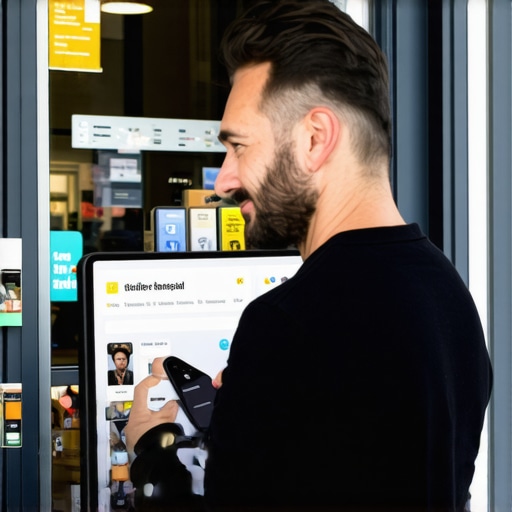
User interaction math calculates the ratio of profile views to conversions such as calls and direction requests to determine a listing’s relevance. Google prioritizes businesses with higher engagement rates because they provide a better user experience for searchers in that specific geographical area. [image-placeholder] This is the heart of the engine. If a hundred people look at your profile but nobody clicks the call button, Google assumes your business is irrelevant or closed. I analyze the click-through rates on every post and every photo. I want to see which images make people stop scrolling. High resolution photos of your team in action are worth more than a thousand words of sales copy. If you use a gmb ranking toolkit for small business owners, make sure it allows you to track these specific interaction metrics. You need to know if your calls are dropping because of a ranking shift or because your profile looks unprofessional. Sometimes the fix is as simple as updating your opening hours. I have seen profiles tank because of seo services to fix gmb profile with inconsistent opening hours history issues. If Google thinks you are closed when a customer is looking for you, it won’t show your pin. It is about reliability and data integrity. Every small interaction adds up to a massive ranking signal over time. Don’t ignore the small things.
The relationship between local authority and mobile signals
Mobile signals are the primary data source for local search authority as they provide real-time location data and verify the physical presence of customers at a business. A business that frequently appears in the location history of local residents will naturally rank higher in the Map Pack. This is the hidden layer of the grid. Every time a customer walks into your store with their phone in their pocket, they are giving you a digital thumbs up. Google sees that movement and associates that device with your business location. This is why hosting local events or being a neighborhood staple is so powerful for SEO. It is about physical density. If you are struggling to get traction, you might need seo services to rebuild trust after spammy lead gen listings to clear the air. You need to replace the fake signals with real ones. The algorithm can distinguish between a bot-driven interaction and a real human moving through space. It looks at the speed of travel, the time spent at the location, and the historical behavior of the user. It is a complex web of data that most agencies don’t even understand. They are still talking about meta tags while the rest of us are looking at GPS pings. Focus on the human element and the rankings will follow.
Why your marketing service fails the interaction test
Marketing services fail when they prioritize vanity metrics like total impressions over actionable interaction signals like phone calls and booked appointments. A successful local strategy must focus on converting the users who find your listing into verified customers who provide feedback to the algorithm. If your current provider is just sending you a report with a graph going up, but your phone isn’t ringing, you are being sold a dream. You need to see the data on how people are interacting with your profile. Are they looking at your menu? Are they asking questions in the Q&A section? Are they clicking the ‘Request a Quote’ button? These are the signals that matter. I always suggest that business owners why you should audit your gmb marketing service monthly to ensure they are actually doing the work. Don’t let them hide behind vague terminology. Ask for the interaction data. Ask how they are optimizing for the Vicinity update. If they look at you with a blank stare, it is time to move your fleet to a different port. The local search environment is too competitive to leave to amateurs. You need a strategist who understands the logistics of the map and the psychology of the searcher. The pin is just the beginning. The interaction is the goal. Keep your data clean, your signals real, and your fleet moving. That is how you win the local game.