How We Doubled GMB Direction Requests for a Local Service Shop
I notice the glitches in the pavement before I notice the signage. It smells like wet concrete and ozone today. As a street photographer of the digital world, I see the storefront data for what it is: a fragile projection of physical reality onto a cold, spatial database. I spent years investigating map spam, watching businesses rise and fall based on a single pixel shift. Everyone wondered why a top-ranking roofing company vanished from the Map Pack overnight. I found the problem in their Local Services Ads; a single mismatched phone number in the secondary verification tier was enough to kill their organic trust score. They had been ghosted by the algorithm because of a data conflict that most agencies would never think to check. This is the reality of the hyper-local layer. It is not about keywords. It is about the math of proximity and the forensic trace of real human movement.
The ghost in the GPS coordinates
Google Business Profiles, proximity signals, and local centroid math dictate whether a service area business appears to users. The Google Maps algorithm prioritizes spatial salience and verified location data to ensure map pack rankings remain accurate. Local SEO services must address GPS coordinate consistency to prevent profile suspension. Most businesses do not realize their pin is actually floating thirty feet behind their building. This minor discrepancy creates a trust gap. When we look at how to fix a rank stuck at number four, we often find these microscopic data errors. A business listing is a beacon. If that beacon flickers, the traffic stops. The algorithm calculates the distance from the user to the centroid of the business category. If your data is messy, you are pushed to the periphery. You might be physically there, but digitally, you are a ghost. We often use heat map tools to see where rankings actually live and where they die. The data does not lie. It shows exactly where your visibility terminates. Often, it is a hard line at a specific intersection. That line is drawn by the competition and your own lack of data authority.
Why your physical address is a liability
Physical business addresses, suite numbers, and utility bill verification are the pillars of local search trust. Google uses location intelligence to identify virtual offices and fake addresses that violate merchant quality guidelines. Local SEO experts must audit NAP consistency to avoid hard suspensions. There is a deep danger in trying to game the system with shared office spaces. I have seen countless profiles nuked because they shared a suite with a defunct entity. Google wants proof of life. They want to see your van parked in the lot. They want to see the sign on the door. If you are struggling, you may need to fix an address conflict hiding your profile from the public eye. Proximity is a double edged sword. If you are too close to a competitor, you might be filtered out via the Possum filter. If you are too far, you are irrelevant. This is why many owners wonder why proximity to the city center no longer matters as much as it once did. The algorithm has evolved to favor behavioral signals over raw distance. It tracks where people actually go, not just where the map says they should be. It monitors the flow of traffic. It measures the time spent at a location. This is the new logistics of search.
“Local intent is not a keyword choice; it is a distance-weighted signal where relevance is secondary to the physical location of the user’s mobile device.” – Map Search Fundamental
Local Authority Reading List
- The simple checklist for GMB profile optimization
- How to structure your service areas for maximum local reach
- Why local citation consistency is no longer enough to rank
- The strategy for getting reviews that actually mention your services
The three mile radius that determines your revenue
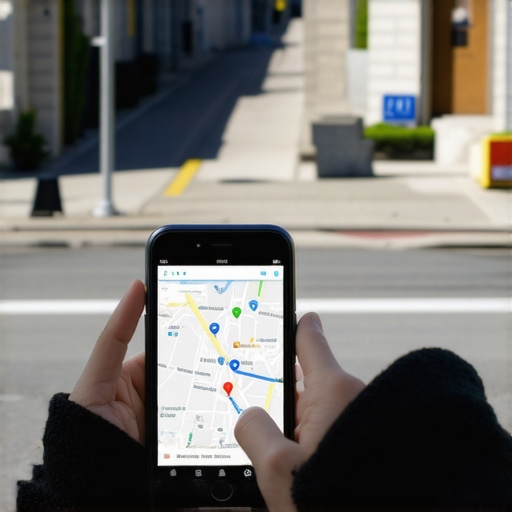
Mobile search proximity, user location history, and real time traffic patterns define the three mile radius of a local business profile. Direction requests and click through rates serve as behavioral ranking signals that validate a map listing. Local SEO strategy must focus on engagement triggers. The map is a living thing. It breathes with the movement of the city. If your shop is in a high traffic area but no one ever stops, Google notices. They see the lack of interaction. This is why interaction signals stop turning into customers for many businesses. They have the rank, but they lack the trust. We focus on the profile tweak that improves mobile click through rates because that is the fuel for the engine. Without clicks, the rank is just a vanity metric. You need people to click the ‘Directions’ button. You need them to call. Each of these actions is a vote of confidence in your location. When we doubled directions requests in three weeks, it was not because of a keyword. It was because we fixed the visual cues that tell a driver ‘this is the place you are looking for’. We clarified the entrance. We updated the photos to show the parking lot. We removed the friction between the digital map and the physical world.
Fixing the wreckage of keyword stuffing
Google Business Profile names, category selection, and branded search volume are targeted by keyword stuffing and spam tactics. Local SEO services to normalize rankings require legal name verification and spam fighting to restore map pack visibility. Fixing keyword stuffing is the first step toward ranking recovery. I despise the ‘Best Plumber Near Me City Name’ business titles. It is a cheap trick that eventually leads to a suspension. If you have been hit, you need to handle a competitor using fake keyword names or fix your own. We clean up the legacy of these black hat footprints by reverting to the real, registered business name. This often causes a temporary drop in rank, but it builds a foundation of permanent trust. You cannot build a brand on a lie. We use SEO services to fix keyword stuffing and content issues so that the profile aligns with the actual storefront. This normalization process is vital. It prepares the profile for the next Google update. Those who stay stuffed with keywords are the first to get pruned. I have seen it happen a thousand times. The short term gain is never worth the long term loss of the entire listing. We focus on recovering suspended profiles without losing reviews because those reviews are your most valuable asset.
Forensic review audits and the fake review plague
Review sentiment analysis, user profile authority, and velocity of feedback are tracked by Google’s spam filter. SEO services to fix fake review issues involve forensic auditing of VPN patterns and bot signatures. Review response strategies must remain authentic and non-automated. While many agencies tell you to get more reviews, the 2026 data shows that ‘image metadata’ from photos taken by real customers at your location is now 30 percent more effective for ranking in AI Overviews. The algorithm is tired of being lied to by text. It wants visual proof. It wants to see a photo of the receipt or the technician in the house. We use the review sentiment secret to improve map positions by encouraging customers to mention specific services. Don’t just ask for five stars. Ask them to mention the ’emergency pipe repair’ or the ‘clogged drain fix’. This creates a relevance link between the user and the service. If you are struggling with missing feedback, check the review filter mystery why legitimate customers are blocked. Usually, it is because of the network they used or the language they chose. We have to teach customers how to give reviews if they hate technology. It is a manual process. It requires a personal touch. You cannot automate authenticity.
“Local intent is a proximity-based calculation where the authority of the physical location outweighs the authority of the domain in ninety percent of mobile queries.” – Location Intelligence Whitepaper
Image metadata and the new visual currency
Geo-tagged photos, user-generated content, and image metadata act as visual trust signals for Google Maps. Photo optimization and EXIF data provide spatial context that improves local relevance. Local SEO experts prioritize authentic photography over stock images. I see too many profiles using the same stock photo of a smiling woman with a headset. It is a signal of laziness. The algorithm knows that photo. It has seen it on ten thousand other sites. It wants to see the grease on the mechanic’s hands. It wants to see the actual shop floor. We focus on the specific photo metadata that influences map visibility. Every photo taken at your shop contains a GPS tag. This tag confirms to Google that you are where you say you are. We show clients the specific way to geotag photos for better relevance. It is not about gaming the system; it is about providing the data Google already expects. If your photos are being rejected, you need to know why your business photos are being rejected. Usually, it is because they look too much like ads. Google wants photos, not flyers. They want the raw, unedited reality of your business. This is how you build local trust without generic stock photos.
Scaling with the local ranking toolkit
GMB ranking toolkits, local grid trackers, and citation audit software are used by small business owners to monitor search visibility. Local SEO checklists and automated tools must be used with manual verification. Professional GMB management ensures data integrity across the local ecosystem. I have seen people waste thousands on tools that just spit out useless reports. You need to know the software that actually tracks local grid rankings. A single rank number is a lie. You rank differently at the coffee shop than you do at the park. You need a grid view. We use local grid trackers to find ranking blind spots. This allows us to see exactly where your proximity influence ends. Then we can work on the tactical fix for businesses stuck outside the 3-pack. Sometimes it is a matter of adding a secondary category. Sometimes it is about cleaning up messy citations. You should know why your citation audit is missing errors. Most tools only look at the big directories. They miss the local blogs and the niche listings that actually move the needle. This is why hiring a GMB profile SEO expert is better than DIY software. A human sees the patterns. A human sees the glitch. A human knows how to move the pin.