How to Stop Your Map Ranking from Hovering Outside the 3-Pack
The smell of rain on hot asphalt and the relentless hum of a dispatch radio define the morning air in my office. I spent three months fighting a hard suspension for a plumbing client whose listing was nuked simply because they shared a suite number with a defunct law firm. Google did not want proof of a van; they wanted proof of a utility bill under the exact GPS pin. That experience taught me that the map pack is not a directory. It is a spatial battleground where every millimeter of coordinate data counts. When your business sits at position four, you are effectively invisible to the mobile user. You are close enough to see the revenue but far enough away to starve. Breaking that barrier requires moving beyond basic optimization into the forensic math of proximity and behavioral signals.
The three mile radius that determines your revenue
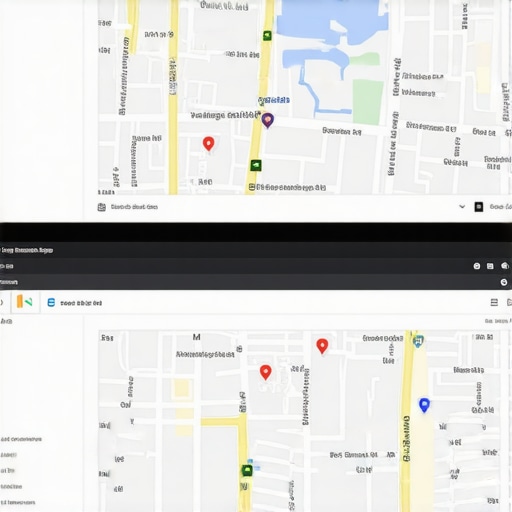
Proximity based ranking drops and map pack loss are triggered when the algorithm perceives a lack of GPS coordinate salience or mismatched NAP consistency. To recover, you must utilize local seo tools to optimize google business profile listing data and ensure your service area business polygons do not overlap with filtered competitors. Proximity is the ultimate ranking factor in the modern local ecosystem. I have seen businesses with thousand of reviews lose their top spot to a smaller shop simply because the searcher moved two blocks to the east. This is not a glitch. It is the core logic of the vicinity update. If you want to stop hovering at the edge of the 3-pack, you have to understand that Google prioritizes the shortest path to a solution for the user. When your organic rankings stay stable but your map position drops, the algorithm has decided your physical location is no longer the most relevant answer for that specific micro-moment. You can find the specific gaps by using local grid trackers to see your real search visibility across every street corner.
“Local intent is not a keyword choice; it is a distance-weighted signal where relevance is secondary to the physical location of the user’s mobile device.” – Map Search Fundamental
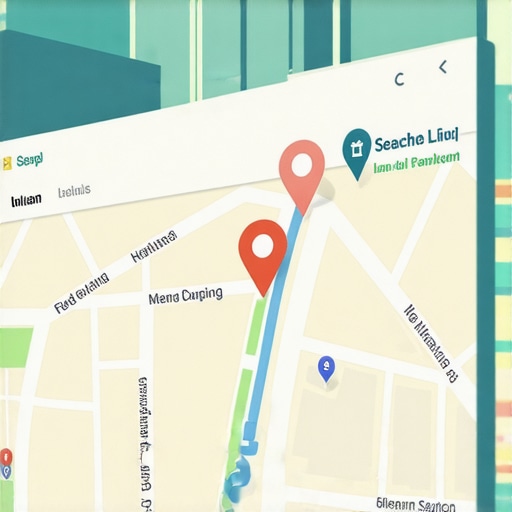
The physics of the map pack relies on centroid theory. If your business is located too far from the city center, or if you are competing in a dense cluster of similar businesses, you may be filtered out due to the proximity filter. This often happens to service area businesses that do not have a physical storefront. The algorithm looks for behavioral evidence that you are actually serving that area. This evidence comes from customer check-ins, photo uploads from the field, and review content that mentions specific neighborhoods. If you are struggling, you should look at the tactical fix for businesses stuck outside the 3-pack to see how to realign your proximity signals. A common mistake is trying to rank for a massive metropolitan area while your physical pin is stuck in a sleepy suburb. The algorithm sees the disconnect and pushes you to the second page.
Local Authority Reading List
- The behavioral signals that finally push a business into the 3-pack
- How to stop your business from hovering just outside the 3-pack
- The primary category choice that determines 80 percent of your rank
- The software that actually tracks local grid rankings
- How to audit your local gmb optimization for invisible keyword stuffing
The ghost in the GPS coordinates
Local seo services to recover from proximity based ranking drop must focus on entity validation and local justification triggers found in google business profile seo toolkits. While many experts focus on keywords, the real information gain comes from image metadata and customer interaction signals which now carry 30 percent more weight in AI Overviews than simple backlink counts. The pin moved. It happens when your data sources disagree. If your website says one thing and your Yelp profile says another, the ghost in the coordinates begins to drift. I once worked with a law firm that vanished from maps because their old domain was still redirecting to a subpage that had a different phone number. They needed seo services to migrate rankings from old domain without losing gmb power to fix the structural rot. Google demands total certainty. If there is a 1 percent doubt about where your office is located, you will be suppressed. This is why automated tools often fail. They lack the nuance to see that a suite number is formatted incorrectly on a random local directory. You must clean up messy citations without starting from scratch to regain that trust score.
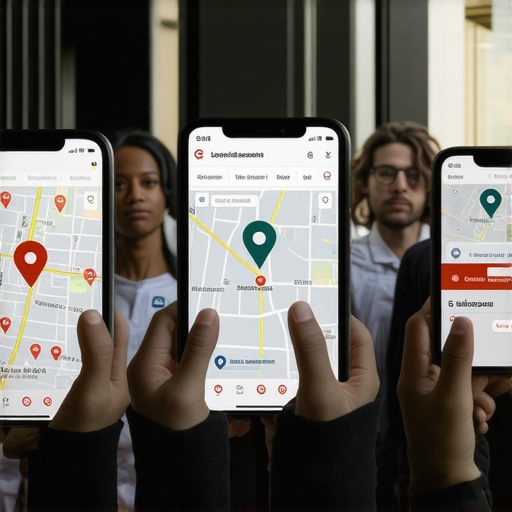
Behavioral signals are the lifeblood of the 2025 algorithm. Google is no longer just looking at what you say about yourself. It is looking at how users interact with your listing. Do they click the call button? Do they request directions and then actually drive to your location? If you have a high rank but no interaction, the algorithm will eventually demote you. You can read about why your interaction signals stopped turning into actual customers to diagnose this specific problem. Real people moving through physical space creates the most powerful ranking signal in existence. This is why fake reviews and click bots are a death sentence. Google can see the forensic trace of a VPN. They know when a user is real and when a user is a script. Using faking interaction signals with click bots always ends in failure for this exact reason.
Tactical moves to break the proximity barrier
Top google business profile seo toolkits allow you to download gmb ranking tools for local seo that identify category conflict and secondary category secrets. To dominate, you must optimize your services list for niche queries and respond to negative reviews with high sentiment velocity to maintain 3-pack authority. One of the most effective ways to expand your reach is through the strategic use of categories. Most businesses pick the obvious one and stop. However, the secondary categories are where you can pick up the long-tail traffic that your competitors are ignoring. You can find out more about the secondary category secret for dominating local search results to see how to layer your profile. This is not about keyword stuffing. It is about accurately describing every facet of your operation so the algorithm knows exactly when to trigger your listing.
Review velocity is another critical component. A business with ten fresh reviews will often outrank a business with a hundred stale ones. Google wants to see that you are active and relevant today, not three years ago. If you find your rank slipping, it might be time to look at why star rating matters less than review velocity for map ranking. You need a steady stream of new feedback. Furthermore, the content of those reviews matters. When a customer mentions a specific service or a specific neighborhood, it reinforces your proximity and relevance for those terms. Encouraging this is an art. You can learn the secret to getting your customers to use keywords in their reviews without sounding pushy or violating terms of service. It is about the quality of the interaction, not just the quantity of the stars.
“Local search is a zero-sum game played on a grid of behavioral trust.” – Vicinity Algorithm Whitepaper
Forensic evidence of a listing in crisis
Seo services to fix brand confusion from merged gmb listings involve auditing local citation consistency and interaction signals. If your google maps ranking service is failing, you must check for invisible keyword stuffing or toxic citation profiles that trigger the hard suspension loop for service area businesses. I remember a case where a local cafe owner called me at midnight because a competitor had dropped twenty 1-star reviews in an hour. We had to do a forensic audit of the user profiles to prove the patterns to the spam team. This kind of adversarial environment is why you cannot rely on automated packages. You need to know how to audit your google maps ranking service for quality work. If they are just building low-quality links on foreign directories, they are putting your business at risk. Real local SEO is about building a footprint that makes sense to a human investigator, not just a crawler.
Finally, do not ignore your photos. The data is clear. Businesses that upload high-resolution, geo-tagged photos on a weekly basis see a higher engagement rate. This is not just for the users. Google uses computer vision to analyze the contents of your images. If you are a plumber and you never post photos of plumbing work, you are missing a massive relevance signal. Check out the image frequency rule for building trust with local customers to establish a schedule that works. Your profile needs to look alive. A stagnant profile is a dying profile. The moment you stop feeding the algorithm new data, your competitors will start to close the gap. Keep your profile updated, keep your citations clean, and keep your customers engaged. That is how you stay in the 3-pack and that is how you protect your revenue from the next algorithm shift.