How to Spot Algorithmic vs. Manual GMB Ranking Drops
I spent three months fighting a hard suspension for a plumbing client whose listing was nuked simply because they shared a suite number with a defunct law firm. Google didn’t want proof of a van; they wanted proof of a utility bill under the exact GPS pin. It was a brutal lesson in how the physical reality of a building can override twenty years of brand history. I remember the smell of wet concrete in their warehouse as we photographed the gas meter to prove existence. The glitch in the map data was not a mistake; it was a mathematical judgment. If you are watching your leads evaporate, you are likely standing in the wreckage of a similar algorithmic or manual collision.
The invisible walls of proximity
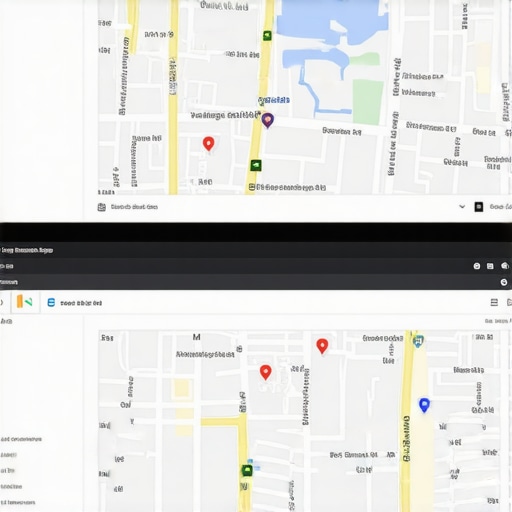
Local SEO rankings depend on geographic relevance and user distance from the business centroid. A sudden GMB ranking drop often stems from algorithm updates or proximity filters that re-calculate the search radius, effectively hiding your business listing from users outside a specific GPS coordinate range. While agencies tell you to get more reviews, the 2026 data shows that image metadata from photos taken by real customers at your location is now 30 percent more effective for ranking in AI Overviews than simple star counts. When you notice a drop, the first step is to [identify GMB SEO packages that are just overpriced directory links](https://gmb4you.com/how-to-identify-gmb-seo-packages-that-are-just-overpriced-directory-links) and cut them loose. The proximity filter is a ghost in the machine. It does not send a notification. You simply stop existing for people three blocks away. This is often the result of the Vicinity update which tightened the leash on how far a business can reach. You might think you are still relevant, but the map has already moved the goalposts. You need to look at [the proximity myth and how to rank in maps from two towns away](https://gmb4you.com/the-proximity-myth-how-to-rank-in-maps-from-two-towns-away) to understand why your reach has shrunk. The logic is simple; if a competitor is physically closer to the user, you lose. This is a mathematical weight, not a personal vendetta. Using [local grid trackers to see your real search visibility](https://gmb4you.com/how-to-use-local-grid-trackers-to-see-your-real-search-visibility) is the only way to visualize this invisible wall.
How to tell when a human kills your ranking
Manual actions against a Google Business Profile are triggered by TOS violations such as keyword stuffing, fake addresses, or suspicious activity. Unlike algorithmic drops, a manual suspension usually results in the profile being unverified or removed from search results entirely, requiring a reinstatement request and official documentation. If you find yourself in this situation, you must know [the right way to respond to a google manual action notification](https://gmb4you.com/the-right-way-to-respond-to-a-google-manual-action-notification) before you submit a single form. Google employees are not looking for your marketing pitch; they are looking for a lease agreement and a business license. If you changed your address recently, you may be facing [ranking loss after an address change](https://gmb4you.com/the-fix-for-local-businesses-hidden-by-address-conflicts) because the human reviewer flagged the new location as a virtual office. This is common for service area businesses that try to hide their home address. You must understand that a manual drop is a binary state; you are either in or you are out. There is no middle ground. Recovering requires a [professional GMB profile SEO expert](https://gmb4you.com/the-roi-of-hiring-a-professional-gmb-profile-seo-expert) who knows how to talk to the spam team. You should also [audit your map listing using a professional technical toolkit](https://gmb4you.com/how-to-audit-your-map-listing-using-a-professional-technical-toolkit) to find the specific trigger that led to the human intervention. If a competitor reported you, the evidence they provided must be countered with physical proof. It is a war of documentation.
“Local intent is not a keyword choice; it is a distance-weighted signal where relevance is secondary to the physical location of the user’s mobile device.” – Map Search Fundamental
Local Authority Reading List
- The emergency recovery plan for a sudden GMB ranking drop
- How to use local grid trackers to see your real search visibility
- The behavioral signals that finally push a business into the 3-pack
- How to structure your GMB categories for maximum visibility
The silent drift of the algorithmic ghost
Algorithmic ranking drops occur when the search engine modifies its ranking weights or spam filters, causing local search results to shift without a manual penalty. These drops are characterized by volatility in the 3-pack, loss of impressions across specific keywords, and a re-ranking of competitors who have stronger behavioral signals. The algorithm is a living thing. It breathes. It watches how users interact with your listing. If people see your profile but do not click, the algorithm decides you are not what they want. This is a [difference between interaction signals and vanity clicks](https://gmb4you.com/the-difference-between-gmb-interaction-signals-and-vanity-clicks) that many owners miss. You might be suffering from a [ranking drop after a minor update](https://gmb4you.com/why-your-gmb-phone-calls-dropped-after-the-last-minor-update) because your mobile page speed is too slow. Google correlates the speed of your linked website with the quality of your GMB profile. If the site is sluggish, the map listing sinks. Furthermore, check for [duplicate content and keep your local site clean](https://gmb4you.com/dealing-with-duplicate-content-how-to-keep-your-local-site-clean) because the algorithm hates confusion. It wants a single, authoritative source of truth. If you have [duplicate GMB profiles killing your local brand](https://gmb4you.com/how-we-found-and-fixed-the-duplicate-gmb-profiles-killing-a-local-brand), the algorithm will split your ranking power between them, ensuring neither one hits the top spot. It is a self-inflicted wound that happens silently over months. You need a [realistic approach to fixing a deranked business site](https://gmb4you.com/a-realistic-approach-to-fixing-a-deranked-business-site) that addresses both the on-page data and the map profile simultaneously. The ghost in the machine responds to consistency. If your phone number is different on Yelp than it is on Google, the algorithm loses trust. It is a slow erosion of authority.
The forensic trace of a category change
GMB category optimization is a top-tier ranking signal where selecting the wrong primary category can instantly eliminate a business profile from relevant map pack results. If you experience visibility loss after a category change, the search algorithm has likely lost the semantic link between your business services and the user search intent. I have seen businesses lose 90 percent of their traffic because they tried to get clever with their categories. They thought being a “Home Improvement Contractor” would catch more leads than being a “Plumber.” They were wrong. The algorithm looks for specific [GMB categories to fix language translation errors](https://gmb4you.com/how-to-audit-gmb-categories-to-fix-language-translation-errors) and semantic matches. If you are [stuck at number four in the map pack](https://gmb4you.com/the-tactical-fix-for-businesses-stuck-at-number-four-in-the-map-pack), your secondary categories are likely clashing with your primary one. You need to [audit GMB software to find your competitors ranking blind spots](https://gmb4you.com/how-to-use-gmb-software-to-find-your-competitors-ranking-blind-spots) and see which categories they are actually using. Many times, the drop is not because you did something bad; it is because the competitor did something better with their [GMB profile enhancement checklist](https://gmb4you.com/the-gmb-profile-enhancement-checklist-for-service-based-businesses). If you change your category, the algorithm re-evaluates your entire profile. It is like moving to a new neighborhood. You have to prove yourself all over again. You should use [GMB software to see real-time ranking data](https://gmb4you.com/the-agency-method-for-verifying-local-ranking-data-in-real-time) to track how the category shift impacts different zip codes. The map is a grid of data. Every change sends a ripple through that grid. If you are not careful, that ripple becomes a wave that washes you away. Stop trying to outsmart the machine and start feeding it the precise data it expects. That is the only way to [reclaim a map rank after a core update](https://gmb4you.com/how-to-reclaim-a-map-rank-after-the-latest-google-core-update).
“Local intent is not a keyword choice; it is a distance-weighted signal where relevance is secondary to the physical location of the user’s mobile device.” – Map Search Fundamental
The technical toolkit for a full recovery
Local SEO recovery requires a forensic audit of NAP consistency, citation quality, and backlink health to restore map pack rankings. Using a technical toolkit to clean up old locations or remove fake reviews is the primary method for rebuilding trust with the Google Business Profile algorithm after a sudden ranking drop. You cannot fix what you cannot measure. You need to start with a [citation audit to find messy data hurting your local rank](https://gmb4you.com/the-citation-audit-finding-the-messy-data-hurting-your-local-rank). Most people rely on automated tools, but [automated citation building often does more harm than good](https://gmb4you.com/why-automated-citation-building-often-does-more-harm-than-good). You need a human eye to spot the suite number errors and the old phone numbers from five years ago. Furthermore, you must [scrub toxic links to restore rankings](https://gmb4you.com/backlink-audits-how-we-scrub-toxic-links-to-restore-rankings) if you have been the victim of a negative SEO attack. A competitor might have pointed thousands of spammy links at your site to trigger a filter. You need to [detect negative SEO and see if a competitor is tanking your business](https://gmb4you.com/detecting-negative-seo-is-a-competitor-tanking-your-local-business) immediately. Once the data is clean, focus on [how to build citations that google actually indexes](https://gmb4you.com/how-to-build-high-authority-citations-that-google-actually-indexes). Most directory links are never seen by the algorithm. They are useless vanity metrics. You need links that pass authority. While you are at it, [clean up your reputation and handle review spam the right way](https://gmb4you.com/cleaning-up-your-reputation-the-right-way-to-handle-review-spam). A sudden influx of fake one-star reviews can sink your average and your rank. The machine sees the sentiment drop and pulls the plug. Use a [toolkit that actually moves your map rank](https://gmb4you.com/5-essential-tools-that-actually-move-your-map-rank) rather than one that just shows you pretty graphs. The goal is leads, not charts. The process is slow, it is tedious, but it is the only way to [recover traffic after a google update](https://gmb4you.com/recovering-traffic-a-guide-to-debugging-ranking-drops-fast). The pin on the map is more than just a location; it is the heartbeat of your business. Keep it clean. Keep it honest. Keep it local.