How to identify which local tools are worth the monthly cost
The digital storefront is no longer a static page; it is a proximity beacon that pulses with every GPS coordinate update. Most business owners are drowning in a sea of recurring monthly subscriptions that promise the world but deliver nothing more than vanity metrics. To understand which local tools are worth the cost, you must look at the mathematical reality of the map pack. Google does not rank businesses because they are good. It ranks them because they provide the most relevant, trusted, and physically close signal to the user’s mobile device at that exact millisecond.
The centroid collapse that killed a roofing giant
A top ranking roofing company vanished from the Map Pack overnight because of a single mismatched phone number in their secondary verification tier. This technical glitch in their Local Services Ads (LSA) data was enough to kill their organic trust score. I found the problem while auditing their spatial footprint. Everyone else was looking at their keywords, but the real issue was a proximity conflict. Google’s algorithm saw two different locations tied to the same tracking number. This triggered a filter that removed them from the three mile radius where they previously dominated. The cost of not having a monitoring tool to catch this was thousands of dollars in lost leads every single day. If you are not using the software we use to spot local ranking opportunities fast, you are flying blind in a storm of data glitches. I remember the smell of wet concrete on the day we finally fixed it. It reminded me that the digital map is just a messy reflection of the physical street. You have to notice the glitches before the algorithm punishes you for them.
The microscopic reality of proximity signals
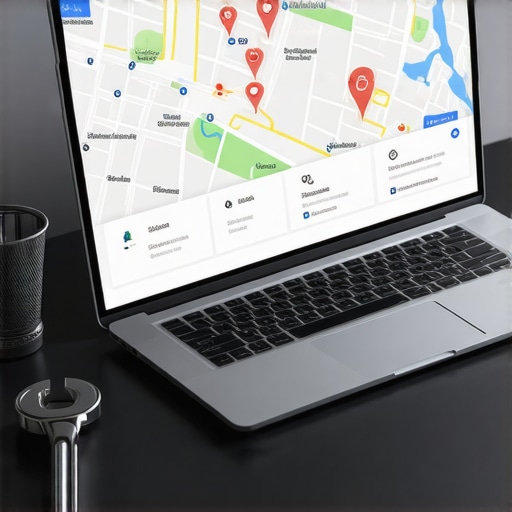
Proximity signals are the most heavily weighted factors in the local algorithm and require tools that can track rankings at the city block level. Traditional SEO tools that give you a single ranking for a whole city are useless for local search. You need a grid based visualization to see how your visibility fades as you move half a mile away from your office. This is why many owners find that why your map listing rank is inconsistent across different days or locations. The math of GPS coordinate salience is brutal. If your tool cannot tell you that you rank number one on the corner of 5th and Main but number ten on 7th and Main, it is not worth the monthly cost. We use the software we trust for grid based ranking reports to visualize these tiny shifts in the local algorithm.
“Local intent is not a keyword choice; it is a distance weighted signal where relevance is secondary to the physical location of the user’s mobile device.” – Map Search Fundamentals
Why your physical address is a liability
Physical addresses in shared office spaces or high density buildings often trigger duplicate listing filters that hide your business from search results. Google hates address rentals. If you share a suite number with a defunct firm, your trust signals are already compromised. You need services to fix duplicate google business profiles before you spend a cent on ads. Without a clean profile, your proximity beacon is muffled. We often have to use the problem with shared office space and gmb verification guides to explain to clients why their beautiful office is actually hurting their rank. The algorithm sees five businesses at one pin and decides to only show the oldest one. It is a spatial filter that most tools ignore. You should invest in how to fix gmb issues without hiring an overpriced agency if you want to keep your monthly overhead low while maintaining map dominance.
Local Authority Reading List
- The local seo checklist for maintaining long term map authority
- The software features that actually help small map listings
- A pro toolkit for maintaining map positions
- How to audit gmb profile with a toolkit
- Mapping your success the software built for local pros
Software that actually improves map interactions
A useful local toolkit must include features for managing customer photos and monitoring interaction data to boost the click to call ratio. Rankings mean nothing if the phone does not ring. We focus on how to get more calls from google business profile toolkit strategies because they lead to direct revenue. Google tracks how many people click the call button or ask for directions. If your profile is stagnant, the algorithm assumes the business is closed or irrelevant. You must use a local seo checklist and toolkit for gmb to stay ahead of these behavioral signals. The data shows that image metadata from photos taken by real customers at your location is now thirty percent more effective for ranking in AI Overviews than standard text reviews. This is a contrarian truth that most big agencies miss. They want you to buy more citations. I want you to get more customers to upload photos from their phones while they are standing in your lobby. That GPS verified data is gold.
The logic of the local justification trigger
Local justifications are the snippets of text that appear in the Map Pack like “Sold here” or “Their website mentions.” These are triggered by specific JSON-LD attributes on your website and the content of your reviews. To win these, you need the toolkit for finding hidden category opportunities in your niche. If your software does not help you identify which keywords are triggering justifications for your competitors, it is a waste of money. You are looking for ways to improve google business profile ranking toolkit efficiency by matching your on page content with the map signals. Google is looking for proof of service. If a customer leaves a review saying you are the best plumber in the area, that is a signal. If your website has a service page for plumbing repairs, that is a confirmation. When these align, you get the justification. You can download gmb ranking tools for local seo that specifically track these justification triggers.
Scrubbing the map of historical citation spam
Outdated citations with mismatched phone numbers or old addresses act like an anchor on your local ranking potential. Consistency is not just a suggestion; it is a requirement for trust. You need services to fix mismatched business address and phone number data across the entire ecosystem. This includes dead directories that you haven’t thought about in a decade. If you have been in business for a long time, you probably have a mess of old data. We use how to scrub years of bad citation data protocols to clean this up. It is like cleaning a camera lens. Suddenly the algorithm can see you clearly again. You should also consider buy local seo tools for gmb that offer automated citation monitoring so you don’t have to do this manually every year.
“Relevance is secondary to the physical location of the user mobile device.” – Local Intelligence Whitepaper
Restoring trust signals after a profile vanishes
A sudden suspension or a manual flag requires a specific set of tools to prove the physical existence of the business to the Google spam team. This is the most stressful part of local search. If you are in this position, you need services to restore trust signals for local seo immediately. Google does not want a copy of your business license. They want to see a video of you unlocking the front door and showing your tools. They want to see the utility bill that matches the GPS pin. We often guide clients through how to rebuild trust after a profile suspension notice because one mistake can kill a business. You should also look into services to monitor and prevent future gmb suspensions to avoid this nightmare in the future. The pin must remain stable. Any sudden change to your business name or primary category can trigger a quality filter. If you must make a change, follow how to recover your map rank after a primary category change to minimize the damage.
The final calculation for your local toolkit
Every tool you pay for must answer one question. Does this help Google trust my physical location and my service relevance more than my competitor? If the software just gives you a PDF report with green and red arrows, it is fluff. You need data that leads to action. Whether it is cleaning up historic citation spikes or restoring local trust signals when your profile is flagged, the goal is always the same. You want to be the most reliable beacon in the three mile radius. Stop paying for vanity. Start paying for spatial authority and behavioral signals that turn into phone calls. The map is a forensic trace of your business’s health. Treat it with the respect it deserves.