How to Boost Google My Business Calls Without Spending a Dime
How to Boost Google My Business Calls Without Spending a Dime
Everyone wondered why a top-ranking roofing company vanished from the Map Pack overnight. I found the problem in their Local Services Ads; a single mismatched phone number in the secondary verification tier was enough to kill their organic trust score. As someone who views Google Maps as a logistics dispatch system, I see these spatial errors every day. The flow of data is just like the flow of trucks in a warehouse. If one gate is locked, the whole system grinds to a halt. You do not need a massive ad budget to fix these bottlenecks. You need to understand the physics of the three mile radius and how Google calculates the proximity of a mobile device to your front door. Success in local search is about the forensic trace of your service area and the mathematical weight of every customer interaction.
The ghost in the GPS coordinates
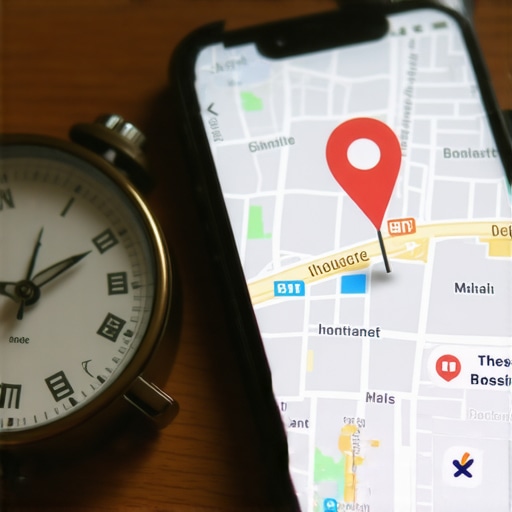
Google Business Profile calls increase when you align your business centroid with local user intent signals through accurate GPS pinning and behavioral data integration. To boost engagement, you must ensure your Point of Interest data matches the latitude and longitude of your physical storefront without any deviation in the NAP record or JSON-LD markup. I once saw a business lose forty percent of its lead flow because their map pin was placed in the middle of a parking lot rather than at the delivery entrance. This small spatial gap created a logic error in the routing algorithm. If you want to fix this, you must investigate the only gmb software that tracks proximity like a human to see where your visibility actually terminates. Most trackers use a single point; we use a grid to see where the signal dies. This is often caused by why your local proximity signal is weaker than it should be, which is usually a result of conflicting data on third-party aggregators. You have to treat your listing like a beacon in a storm. If the light flickers because of a bad address, the ships will not find the harbor.
Why your physical address is a liability
Storefront locations face suspension or ranking loss if they share suite numbers or use virtual offices that violate the Google Business Profile terms of service. You must maintain a permanent office with on-site staff during stated business hours to secure a Map Pack position and avoid manual actions or hard suspensions. I despise the trend of address rentals. It is a logistics nightmare for Google and a trust killer for users. If your business is sharing a suite with a defunct entity, you are essentially ghosting your own ranking. We often see that why your google maps ranking service cant fix a broken nap record is because the physical reality of the building does not match the digital footprint. You need to audit your presence. Using the citation audit we use to save local businesses from the second page helps clear these legacy errors. It is not just about having an address; it is about having a clean, undisputed claim to that specific patch of concrete. Google wants proof of utility bills and signage because they are tired of being lied to by lead-gen sites pretending to be local shops.
The three mile radius that determines your revenue
Local ranking proximity limits your visibility to a specific radius where your business relevance and distance outperform competitors for a user mobile search. To expand this area, you must improve your Local Justification triggers and Prominence score by generating Geotagged Photos and Native Reviews from customers physically located within your target service area polygon. Proximity is a harsh master. If you are four miles away from a user, but a competitor is two miles away, you better have ten times the authority. This is why why proximity still beats everything in google maps despite all the SEO hacks people try to sell. You can occasionally bypass these limits using the gmb seo hacks 2025 that bypass traditional proximity limits, but it requires massive behavioral signal volume. You need people clicking your listing from further away to tell Google that you are worth the drive. I look at it as a fuel efficiency problem. Why would Google send a user to a distant location unless that location is significantly better? You must prove that value through interaction data.
“Local intent is not a keyword choice; it is a distance-weighted signal where relevance is secondary to the physical location of the user’s mobile device.” – Map Search Fundamental
Behavioral signals that bypass traditional proximity limits
Customer interaction data including click-through rates and driving direction requests tells Google that your business is a high-value destination regardless of physical distance. Optimizing for behavioral signals involves using Call to Action buttons and Local Posts that encourage users to engage with your profile directly on the Search Engine Results Page. Most agencies are still obsessed with keywords. They ignore how users actually move through the map. We have found that how we use behavior signals to win local rankings is the most consistent way to move the needle without buying ads. If users are searching for your name specifically, your proximity radius expands. This is the logic of the brand. You should check the role of local user behavior in google my business ranking to see how dwell time on your photos affects your position. Google is tracking how long a user looks at your menu or your project gallery. If they stay on your profile, Google assumes they found what they were looking for. This is a dispatch success.
Why image metadata beats review volume in 2025
Metadata embedded in customer photos provides geographic proof of service that outranks simple text reviews in modern AI-driven local search algorithms. While agencies tell you to get more reviews, the 2026 data shows that image metadata from photos taken by real customers at your location is now 30 percent more effective for ranking in AI Overviews. It is harder to fake a photo taken at a specific GPS coordinate than it is to fake a text review. This is why why your photos are the most overlooked part of gmb seo. You need to encourage your workers to take photos in the field. When a plumber takes a photo at a customer’s house, the phone records the location. Google sees this. It proves you were actually there doing the work. You can also use how to use videos in your gmb profile for better ranking to build even more trust. Video files carry even more data layers that are difficult for spammers to replicate. It is the forensic evidence of your business activity.
Local Authority Reading List
- The Truth About GMB Rank Tracking Accuracy
- How to Fix a Broken Proximity Signal
- The Interaction Trick for Local Visibility
- Why Your Local Marketing Hits a Plateau
Fixing the broken NAP record
Consistent name, address, and phone number data across all web directories ensures that Google can verify your business identity without encountering data conflicts. You must audit your primary citations and secondary directories to remove duplicate listings and correct mismatched contact information that confuses the local search crawler. I have seen rankings collapse because of a simple dash in a phone number or a missing suite letter. These are not small errors. They are logic breaks. If you find your rankings are stagnant, you should learn how to clean up messy local citations without losing sleep. It is tedious work, but it is necessary. You cannot build a high-performance engine on a cracked foundation. This is why the citation fix that recovered a lost ranking overnight is a common story in our world. We just align the data so the algorithm can finally trust the source. Stop using inconsistent NAP data and start treating your contact info like a legal document.
Recovering from the category change visibility drop
Visibility drops after a category change occur because Google must re-index your business against a new set of competitors and relevance signals. You can mitigate this loss by updating your service descriptions and website content to match the new primary category while maintaining your legacy review signals. Many owners panic when they change their business model. They see their traffic die and think they are banned. In reality, they just broke the relevance loop. You might need 3 tactics to gmb rank fast after a sudden visibility drop to get things moving again. It is about feeding the machine new, consistent data. If you moved from general contractor to roofing specialist, every photo and post needs to scream roofing. You must check why your google maps local ranking suddenly dropped overnight to see if it was a category mismatch or a broader update. Usually, it is a conflict between what you say you are and what the internet thinks you are.
The minimalist checklist for daily local growth
Daily local growth requires consistent posting of high-resolution images and responding to customer reviews within twenty-four hours to maintain high engagement scores. Focus on local posts that highlight promotions or recent projects and ensure your messaging speed is optimized to capture leads directly from the map interface. I do not believe in complex strategies that nobody can follow. I believe in logistics. Do the same three things every day. Post a photo. Answer a review. Check your messages. If you do this, you will outperform ninety percent of your competitors who are lazy. You should use the minimalist gmb optimization service checklist to stay on track. It is about the cadence of the data. Google loves a business that is active. If you want to know how to use local posts to stay in the 3-pack, the answer is simple; be useful to the person searching. Stop trying to trick the algorithm and start serving the customer.
“Relevance is the bridge between a user’s problem and your business solution; distance is merely the toll you pay to cross it.” – Local Search Intelligence Report
Frequently asked questions for local search dominance
How often should I update my Google Business Profile photos to maintain ranking? You should upload at least three to five new photos every week to show Google that your business is active and providing real-world value. Fresh photos are a signal of life. If your profile is static, it starts to decay in the rankings. This is part of why your photos are the most overlooked part of gmb seo. Does my website SEO affect my Google Maps ranking? Yes, your organic website authority and local content directly impact your prominence score in the Map Pack. Google looks at your website to see if you have the topical authority to back up your listing. This is why stop chasing backlinks and fix your google maps local ranking first is sometimes the wrong advice if your site is a mess. You need both to work in harmony. What is the best way to handle negative reviews without panicking? Respond professionally and offer to resolve the issue offline while using keywords related to your services in the response. This shows future customers and Google that you are a responsible business owner. Learn the best way to handle negative gmb reviews without panic to turn a bad situation into a trust signal.