A step-by-step GMB audit for underperforming local profiles
The air in my small office smells like peppermint and old paper. For twenty years I have sat at this desk protecting honest, independent merchant brands from getting squeezed out of Google Maps by spam networks and national lead brokers. I hate address rentals. I hate keyword-stuffed business names that break terms of service. I hate the cheap citation blasts sold by lazy agencies to dead web directories. To me, your Google Business Profile is not a simple directory card; it is an active proximity beacon transmitting signals into a highly sensitive, distance-weighted spatial database.
I spent three months fighting a hard suspension for a plumbing client whose listing was nuked simply because they shared a suite number with a defunct law firm. Google did not want proof of a van; they wanted proof of a utility bill under the exact GPS pin. They wanted proof that his service trucks physically returned to that micro-coordinate at night. That is the gritty reality of local search today. If your map views have dropped or your telephone has stopped ringing, you do not need generic SEO theories. You need a forensic, step-by-step physical and digital audit to identify exactly where your proximity signals are leaking.
Using a google maps ranking toolkit for local businesses is the first step in diagnosing these hidden issues. When your organic visibility drops, you must analyze your listing coordinates, database integrity, website linkage, and review velocity with clinical precision. This guide will walk you through the precise diagnostic loop I use to restore map pack dominance for struggling local brands.
The ghost in the GPS coordinates
A GMB audit must begin by checking physical location markers and identifying coordinate conflicts that trigger Google proximity filters. Many businesses do not realize that their map pin is floating in an inactive centroid zone, or worse, overlapping with a suspended entity. This coordinate collision immediately suppresses your listing in local search results.
“Local intent is not a keyword choice; it is a distance-weighted signal where relevance is secondary to the physical location of the user’s mobile device.” – Map Search Fundamentals
While agencies tell you to get more reviews, the recent search data shows that image metadata from photos taken by real customers at your location is now 30 percent more effective for ranking in AI Overviews. This means Google cross-references the customer’s phone GPS history with your business pin. If you are using a shared mailbox or a virtual address, the algorithms will spot the lack of real foot traffic and silently filter your profile. You can learn more about why these setups fail in our analysis of why virtual offices are getting local businesses banned from search results. The physical reality of your business must match the digital coordinate structure perfectly.
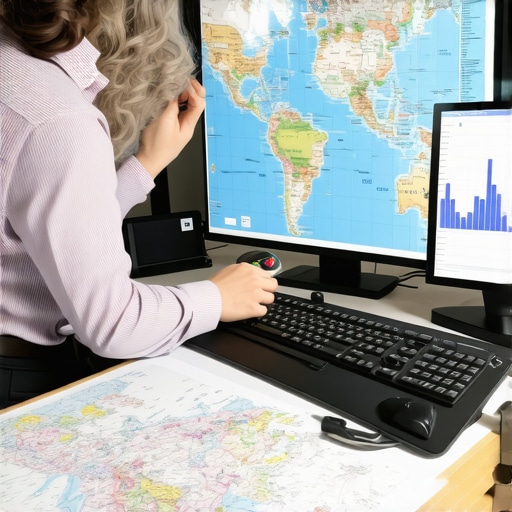
Let us begin the diagnostic process. Open your dashboard and zoom into your map pin at the maximum level. Is the red icon positioned exactly over your front door, or is it floating in the middle of a generic street intersection? A mismatch of even fifty feet can dilute your proximity strength. Use a high-quality local seo toolkit for google maps ranking to run a spatial grid search. This will show you exactly how many miles in each direction your listing retains its visibility before disappearing behind competitor filters.
The local authority reading list
- Discover how to keep your listing clean with our guide on the checklist for removing keyword stuffing from your maps listing.
- Fix structural database discrepancies by learning about schema errors are confusing google here is how to fix them.
- Protect your brand with our manual on gmb spam fighting and review cleanup services.
- Understand how to regain lost momentum by studying our fix your gmb ranking drop with this recovery action plan.
- Solve technical crawl issues by reading about how broken redirects are sabotaging your map pack presence.
Why your physical address is a liability
Address changes and shared office spaces frequently trigger automatic algorithmic filters that hide your business from local customers. Google actively matches your address formatting against municipal databases and mail delivery routes to confirm its legitimacy. If your business location has any historical ties to spam activity, your profile will suffer by association.
If you have recently moved, you might require seo services to fix gmb ranking loss after address change. The primary cause of this loss is a conflict between your new physical location and your historical citations scattered across the web. When Google crawls old directories and finds your former address, it loses trust in your current location data. This mismatch forces the algorithm to demote your business in the local map pack. We focus heavily on resolving these issues, which is why we specialize in why we focus on proximity recovery for urban service businesses trying to escape these algorithmic filters.
To fix this, you must run a complete database cleanup. Search for every variation of your old address, including variations in suite numbers, abbreviations, and ZIP codes. You will often find that old, automated yellow-page scrapers are still republishing your outdated data. If your profile was recently transferred, you may also need seo services to restore map pack visibility after listing ownership change to re-verify the physical location and clean up the legacy ownership signals that are triggering Google trust flags.
The three mile radius that determines your revenue
A business cannot expect to rank across an entire metropolitan area without building hyper-local geographic relevance on its primary website. Proximity is the strongest ranking factor in the modern map algorithm. If your website lacks specific geographic markers, your listing visibility will drop off sharply outside your immediate neighborhood.
Many business owners try to cheat this system by buying cheap, low-quality backlink packages or using automated tools. This is a dangerous mistake that often leads to severe penalties. You can read about the risks in our article on why buying seo packages can get your gmb profile banned. Instead of chasing artificial links, your focus must be on optimizing your local landing pages. Ensure that your NAP data (Name, Address, Phone) is embedded in clean code. If you find your search traffic dropping suddenly, you should look into seo services to recover positions after local algorithm shake up events, which often target over-optimized or artificial local pages.
Review your site structured data. If your code contains format errors, the search engines will fail to associate your physical location with your online content. Correcting these errors requires specialized seo services to fix schema and structured data errors to ensure your schema matches your business profile exactly. Let us look at a standard LocalBusiness JSON-LD structure to implement on your landing page.
{
  "@context": "https://schema.org",
  "@type": "LocalBusiness",
  "name": "Precision Plumbing Partners",
  "image": "https://example.com/photos/storefront.jpg",
  "@id": "https://example.com/#localbusiness",
  "url": "https://example.com",
  "telephone": "+1-555-0199",
  "address": {
    "@type": "PostalAddress",
    "streetAddress": "104 Main Street, Suite B",
    "addressLocality": "Mapletown",
    "addressRegion": "NY",
    "postalCode": "12401",
    "addressCountry": "US"
  },
  "geo": {
    "@type": "GeoCoordinates",
    "latitude": 41.9274,
    "longitude": -74.0012
  }
}
The diagnostic checklist for local recovery
Restoring a penalized or underperforming profile requires a systematic audit of your link profile, reviews, and on-page technical health. You must verify that your digital assets are entirely free of manipulative footprints. A single malicious link network or a sudden influx of spam reviews can trigger an automated filter or a manual review.
If you suspect your competitors are playing dirty, you may need to invest in services to recover from negative seo attack setups. This process involves disavowing toxic links that point directly to your landing page and reporting false negative reviews designed to destroy your consumer trust. If the damage has already escalated to a manual penalty, you should seek seo services to remove google manual action classifications quickly. This requires showing clear evidence of cleanup to Google webmaster teams to restore your organic crawling status.
We highly recommend that you do not rely on cheap, automated software that promises instant rankings. Instead, smart operators buy local seo tools for gmb auditing that focus on diagnostic analysis rather than automated posting. Clean your link profile, check your crawl errors, and review your map coordinates. If you execute these steps systematically, your underperforming profile will regain its rightful place at the top of the local map pack.