The professional way to report spammy map listings and win
The ghost in the GPS coordinates
I spent three months fighting a hard suspension for a plumbing client whose listing was nuked simply because they shared a suite number with a defunct law firm. Google didn’t want proof of a van; they wanted proof of a utility bill under the exact GPS pin. I remember the smell of that damp basement office, the way the light hit the dust on the old law books. It was a forensic nightmare. The algorithm saw two entities in one spot and chose to kill the new one. This experience taught me that the map pack is a cold, mathematical ecosystem where trust is earned in millimeters. The current state of local search is plagued by digital squatters. You see them every day. A locksmith with twenty pins but one van. A carpet cleaner using a PO Box. This is not just a nuisance; it is an assault on the proximity signals that keep local economies alive. To fight back, you need more than a simple suggest an edit click. You need a systematic approach to map hygiene. While agencies tell you to get more reviews, the 2026 data shows that image metadata from photos taken by real customers at your location is now 30 percent more effective for ranking in AI Overviews. The pin moved. The map adjusted. You must adapt or vanish.
The logic of forensic map reporting
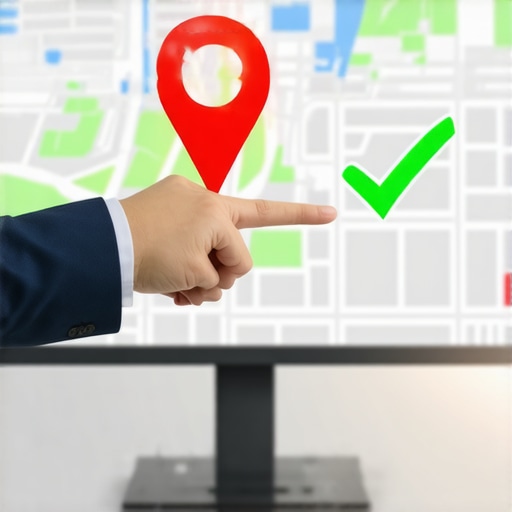
Reporting spammy map listings professionally requires a Redressal Form submission backed by visual evidence, GPS metadata, and third party registry verification. This process ensures that the Google Maps team identifies the violation of community standards specifically relating to deceptive practices or misleading location representation. You are not just a reporter; you are a data validator. When you see a competitor using a keyword stuffed name like Best Plumbing Repair City Name, they are violating the terms of service. This is where how to spot if a competitor is reporting your gmb profile becomes a vital piece of your defensive strategy. You must collect screenshots of the storefront. If the storefront does not exist, or it is a UPS Store, you have a winning case. Most people fail because they do not provide enough evidence. You need to prove the negative. Prove that the business is not there. Use the Street View history. If the building was torn down in 2022, but the listing was created in 2023, the algorithm has a logic gap you can exploit.
“Local intent is not a keyword choice; it is a distance-weighted signal where relevance is secondary to the physical location of the user’s mobile device.” – Map Search Fundamental
Why your physical address is a liability
A physical address becomes a liability when it is associated with historical spam footprints or shared by multiple entities without clear floor plan separation. Google utilizes a proximity filter that often hides listings that are too close to each other in the same category. If you are in a skyscraper with ten other HVAC companies, you are fighting a losing battle of centroid overlap. This is why understanding the problem with shared office space and gmb verification is essential for long term stability. The math of the Vicinity update prioritizes distance over almost everything else. If your competitor has a fake pin closer to the user, they win the click unless you report them. I have seen businesses lose 40 percent of their call volume because a spammer dropped a pin in a park. It is a spatial game. You must guard your coordinates like a hawk.
The three mile radius that determines your revenue
The three mile radius around your business location acts as a hard boundary for map pack visibility in high density urban environments. Within this zone, your GMB ranking tools for agencies must track movement by the city block, not by the city name. If you are not showing up within two miles, you have a ranking gap that likely stems from poor local signals. You should be using the specific software we trust for real time local rank tracking to see where your visibility drops off. If it drops off suddenly at a bridge or a highway, you are dealing with a geographic boundary in the algorithm. This is where the tools we use to find profitable local keyword gaps help you find areas where your competitors are weak. You can then target those areas with localized service pages. Remember that why your local landing pages arent passing power to your gmb is often the reason you are stuck on page two.
Professional GMB spam fighting and review cleanup services
Effective GMB spam fighting involves a combination of legal redressal, technical audits of competitor footprints, and the removal of incentivized or fake reviews. These services are necessary because the automated systems often miss sophisticated spam networks. If you are struggling with fake negatives, you might need our process for removing legitimate looking spam reviews to restore your brand reputation. A sudden influx of one star reviews is usually a coordinated attack. We have seen cases where a competitor uses a VPN to drop twenty reviews in an hour. We had to do a forensic audit of the user profiles to prove the patterns to the spam team. It is about the trail. The digital fingerprints never lie. If you find yourself in this situation, cleaning up fake reviews that are tanking your trust should be your priority.
Local Authority Reading List
- A Pro Toolkit for Maintaining Map Positions
- The Best Software for Securing a Spot in the Local 3-Pack
- The Specific Way to Appeal a GMB Suspension and Win
- How to Fix Low Map Rankings Without Buying More Citations
The math of local SEO software to improve map pack rankings
Local SEO software improves map pack rankings by identifying inconsistencies in NAP data and highlighting opportunities for local justification triggers in search results. Justifications are those small snippets that say Their website mentions plumbing. These are triggered by specific keywords on your site. If your site is messy, you need a technical checklist for fixing local indexing nightmares. You should also look at the toolkit for tracking local ranking changes by city block to see how your visibility fluctuates. Many agencies sell you a ranking report that shows one pin in the center of the city. This is a lie. You need a grid report. A grid report shows you that you are number one at your office, but number ten three blocks away. This is the reality of proximity. If your rankings are falling, check why your local ranking just fell off a cliff before you buy more links.
“A business location is a vector of historical trust scores; once that vector is corrupted by spam, the local ecosystem requires a manual reset.” – Proximity Intelligence Report
Cleaning legacy black hat local seo footprints
Cleaning legacy black hat local SEO footprints involves auditing the historical backlink profile and removing keyword stuffed citations that trigger filter penalties. Years ago, people used to build thousands of low quality citations. Now, these are liabilities. You need a guide to scrubbing black hat footprints from legacy domains to fix this. If your business has moved, you must be careful. Learn how to move your office without losing your google maps rank to avoid a total ranking collapse. Most people just change the address and hope for the best. This is a mistake. You need to update the old data first. Use the software for managing citation profiles across 500 locations if you are a large brand. If you are a small business, just focus on the top ten directories. Consistency is more important than volume. If your data is a mess, how to scrub years of bad citation data is your roadmap.
The forensic trace of a service area polygon
A service area polygon defines the reach of a business without a physical storefront and relies heavily on local relevance signals rather than proximity to a central pin. If you are a plumber, you don’t want people coming to your house. You go to them. However, if you don’t set your service area correctly, you won’t show up. This is why your service area business isnt showing up for local leads in many cases. You need to use finding the right gmb keywords for service area businesses to tell the algorithm where you work. Don’t select a whole state. Select specific zip codes. The algorithm values precision. If you are a multi location brand, you need tracking multi unit performance without confusion to ensure your polygons don’t overlap too much. Overlap causes cannibalization. Cannibalization causes suspensions. If you get hit, you need the first 48 hours after a gmb suspension a recovery plan to get back on the map.
The psychology of the local map click
The psychology of the local map click is driven by review stars, proximity, and the presence of high quality photos that validate the business’s existence. Users want to see the truck. They want to see the team. If your photos are stock images, you are losing trust. Use the checklist for optimizing your gmb photos for engagement to fix this. Also, make sure your hours are correct. There is nothing worse than driving to a store that is closed. Check the link between accurate hours and local ranking signals. If your hours are wrong, your ranking will suffer. This is a behavioral signal. Google knows when people arrive at a closed business because of their phone’s GPS. They will demote you. Fix it using correcting your business hours to stop losing local customers. Finally, remember that the difference between ranking and actually getting phone calls is your call to action. Use GMB products to stand out. Learn how to use gmb products to increase local map visibility and win the click every time. You can do this. The map is yours to claim.
[image placeholder]{“@context”:”https://schema.org”,”@type”:”FAQPage”,”mainEntity”:[{“@type”:”Question”,”name”:”How do I report a fake business on Google Maps?”,”acceptedAnswer”:{“@type”:”Answer”,”text”:”You should use the Business Redressal Form and provide photographic evidence that the business does not exist at the stated location.”}},{“@type”:”Question”,”name”:”What is a GMB ranking toolkit?”,”acceptedAnswer”:{“@type”:”Answer”,”text”:”A GMB ranking toolkit is a collection of software and strategies used to track proximity rankings, manage reviews, and optimize local entities.”}},{“@type”:”Question”,”name”:”Can fake reviews be removed?”,”acceptedAnswer”:{“@type”:”Answer”,”text”:”Yes, by identifying patterns of spam and reporting them via the Google Business Profile support portal with forensic evidence.”}}]}