A guide to technical SEO for localized service pages
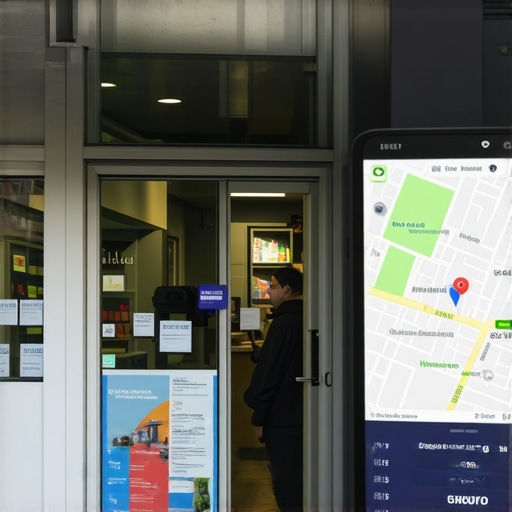
The smell of wet concrete always reminds me of the time I stood outside a heavy equipment rental yard in the pouring rain, staring at a phone screen that insisted I was standing in a high-end boutique. The digital pin was three blocks off. This is the reality of the local search ecosystem. It is a spatial database prone to glitches and fragmentation. Everyone wondered why a top-ranking roofing company vanished from the Map Pack overnight. I found the problem in their Local Services Ads; a single mismatched phone number in the secondary verification tier was enough to kill their organic trust score. That single digit acted like a poison pill, signaling to the algorithm that the entity was no longer verifiable. The business did not just drop a few spots. It was erased from the local consciousness because the centroid of their authority collapsed under the weight of a technical oversight. Local search is not about keywords. It is about the mathematical salience of your physical presence in a coordinate-based world.
The ghost in the GPS coordinates
Technical local SEO focuses on GPS coordinate accuracy, JSON-LD LocalBusiness schema, and NAP consistency across the primary data aggregators to ensure a business ranks in the Google Map Pack. This is not a simple task of filling out a profile. It is about aligning the latent semantic entities of your brand with the physical realities of your service area. When the data drifts, the ranking follows. I have seen businesses lose thirty percent of their call volume because a developer accidentally marked a landing page as noindex. To avoid this, you need a checklist for auditing your local business visibility before you make any major site changes. The algorithm does not care about your intentions; it only cares about the signal. If your website is indexed but your GMB is missing, you are fighting a ghost. You can find out what to do when your website is indexed but your GMB is missing to bridge that gap. The pin must match the pulse. If you are using a virtual office, you are already on thin ice. Many seo services to fix gmb issues caused by virtual office or coworking space environments fail because the GPS cluster of fifty other businesses at the same suite creates a signal collision that Google cannot resolve.
“Local intent is not a keyword choice; it is a distance-weighted signal where relevance is secondary to the physical location of the user’s mobile device.” – Map Search Fundamental
Why your physical address is a liability
A physical address acts as an anchor for proximity but can become a ranking liability if it is located in a centroid-saturated area or if the address formatting contains invalid suite data. I once spent three months fighting a hard suspension for a plumbing client whose listing was nuked simply because they shared a suite number with a defunct law firm. Google did not want proof of a van. They wanted proof of a utility bill under the exact GPS pin. When you move, the risk is even higher. You have to know how to move your office without losing your google maps rank or you might find yourself starting from zero in a new neighborhood. The proximity radius is unforgiving. If you are ten feet outside the preferred cluster for a specific search term, you might as well be on the moon. This is why ranking multiple businesses at the same address is a dangerous game that often ends in a mass purge of listings. The map does not like clutter. It likes distinct, verifiable anchors.
The three mile radius that determines your revenue
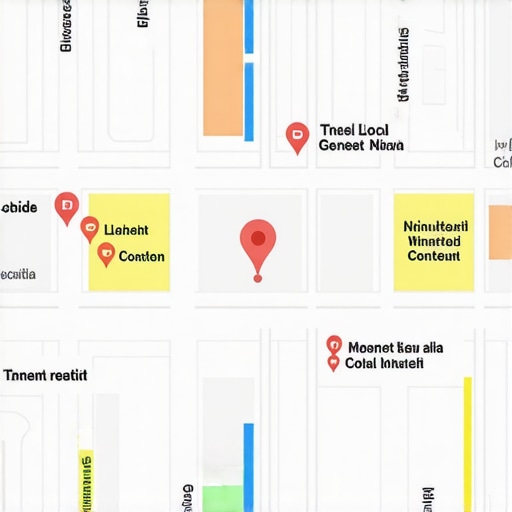
The three mile proximity radius is the primary filter for local search results, where user location data and Wi-Fi triangulation determine which Google Business Profile appears in the Top 3. This is the physics of the map. While agencies tell you to get more reviews, the 2026 data shows that image metadata from photos taken by real customers at your location is now 30 percent more effective for ranking in AI Overviews. These images contain EXIF data that confirms the physical visit. It is a behavioral zoom that Google uses to verify that your business is not just a digital shell. If you are a service area business, you face different challenges. You should look into ranking strategies for service businesses without a physical office to understand how to signal authority without a storefront. Many owners fail because they use legacy seo tactics that are getting local businesses suspended in the current era of hyper-verification. You need the software we trust for grid based ranking reports to see exactly where your authority drops off on a block-by-block basis. If your rank falls off a cliff at the city line, your technical signals are too weak to overcome the distance penalty.
Technical moves for the invisible storefront
Winning at local SEO requires advanced schema markup, mobile speed optimization, and the clean-up of legacy citation spam that creates data conflicts in the knowledge graph. [IMAGE_PLACEHOLDER] The mobile experience is everything here. If your local landing pages take more than three seconds to load, your bounce rate will kill your GMB interaction signals. You must focus on fixing the mobile speed issues that tank local rankings to stay competitive. Furthermore, your categories must be surgical. Most businesses guess at these. I recommend picking your gmb categories without guesswork using the latest data from the only category research move that matters for new listings. If you choose the wrong primary category, your visibility will vanish. If you have already made this mistake, you will need to know how to recover your map rank after a primary category change. It is a delicate process that requires patience and precise data correction. You cannot just flip a switch and expect the map to update instantly. It takes weeks for the local cluster to re-stabilize.
Local Authority Reading List
- Real-Time Rank Tracking Software
- Cleaning Up Historical Spam
- Securing a Spot in the 3-Pack
- Handling GMB Suspensions
- Long-Term Map Authority Checklist
The forensic audit of local signals
A forensic audit of local search signals identifies broken internal links, duplicate GMB listings, and toxic backlink profiles that trigger manual actions or algorithmic suppressions. I have seen businesses destroyed by identifying legacy black hat tactics killing your local rank far too late. One of the most common issues is a sudden surge of fake negative reviews. If this happens, you must act fast. Learn how to handle a sudden surge of fake negative reviews and use our process for removing legitimate looking spam reviews to protect your reputation. The reputation is a technical signal. Google looks at the velocity and sentiment of reviews to determine if a business is trending. If your sentiment drops, so does your rank. You might need seo services to clean up ai generated spam content penalties if you have used automated tools for your responses or descriptions. Google is getting better at spotting the linguistic patterns of robots. Authentic human interaction is the only safe bet. You can use strategies for burying negative reviews with authentic customer feedback to rebuild your trust score naturally.
“Consistency across the local ecosystem is the bedrock of verification; a single mismatched phone number can de-index a multi-million dollar enterprise in the map layer.” – GMB Verification Manual
Recovering from the digital death sentence
A Google Business Profile suspension is a digital death sentence that requires a formal reinstatement appeal supported by utility bills, business licenses, and photographic evidence of a permanent storefront. Most people panic. They submit a sloppy appeal and get rejected instantly. You need to know the specific way to appeal a gmb suspension and win. If you fail the first time, your chances of success drop by fifty percent. Understand why most reinstatement appeals are rejected before they are read so you do not repeat the same mistakes. Use a checklist for a clean gmb profile reinstatement to gather your evidence. In some cases, the problem is deeper. You might have toxic local footprints from an old SEO agency that used black hat methods. You will need seo services to recover from google penalty issues that involve manual scrubbing of the web. This is the heavy lifting of local SEO. It is about cleaning up years of bad data to restore your visibility. It is not pretty. It smells like digital exhaust and late nights. But it is the only way back to the Map Pack.
The software toolkit for map dominance
The best local SEO software provides automated citation monitoring, grid-based rank tracking, and competitor proximity analysis to maintain a competitive advantage in the Map Pack. Do not waste money on every shiny tool. You have to identify which local tools are worth the monthly cost. I rely on our go to toolkit for cracking the map pack which includes google business profile ranking software specifically built for multi-location tracking. If you are managing several storefronts, you need essential software for managing multiple gmb profiles to avoid overlapping login data that might flag your account for suspicious activity. Use the toolkit for tracking local ranking changes by city block to stay ahead of the curve. The map is always moving. The pin is always vibrating. You have to be the one who knows exactly where it lands. The difference between ranking and being invisible is often just a few lines of clean code and a relentless focus on the physical data that the algorithm craves. Stop thinking like a marketer. Start thinking like a cartographer. The city is a grid of opportunities if you know how to map them.