The truth about ranking for keywords in the map pack
The truth about ranking for keywords in the map pack
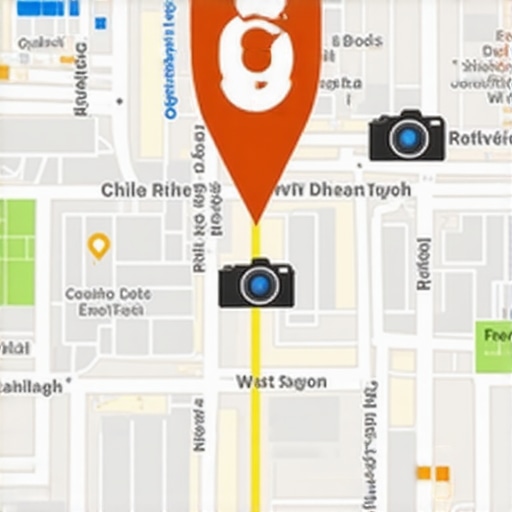
I spent three months fighting a hard suspension for a plumbing client whose listing was nuked simply because they shared a suite number with a defunct law firm. Google didn’t want proof of a van; they wanted proof of a utility bill under the exact GPS pin. This was not about keywords. It was about the mathematical reality of a physical space. The air in that office smelled like dust and old paper; yet the digital entity was bleeding. I had to photograph the physical doorbell and the suite directory to prove the business existed in the physical world. This is the microscopic reality of the local algorithm. If you think ranking in the map pack is about metadata alone, you have already lost the war. You are fighting a spatial database that values the physics of a 3-mile proximity radius over your clever SEO titles.
The ghost in the GPS coordinates
Proximity triggers and entity verification define map rankings more than keywords. Google prioritizes the distance between the searcher and the business pin over simple text matches. If your coordinate salience is weak, no amount of keyword stuffing will save your profile from the filter. The algorithm looks for the forensic trace of your business existence. It scans for the exact decimal precision of your latitude and longitude across a thousand different touchpoints. When a business moves, the ghost of the old location often lingers; creating a conflict that suppresses the new listing. This is why the correct way to handle a business relocation on google maps involves more than just changing an address field. You must scrub the old coordinates from the entire web ecosystem. The grid does not forget easily. A mismatched zip code can act as a poison pill for your visibility. I have seen rankings vanish because a zip code was off by a single digit in a legacy directory. The impact is immediate. You can read more about the impact of incorrect zip codes on your local map position to understand the math behind the pin.
“Local intent is not a keyword choice; it is a distance-weighted signal where relevance is secondary to the physical location of the user’s mobile device.” – Map Search Fundamental
Why your physical address is a liability
A physical address acts as the anchor for your digital trust score. If that anchor is shared with a lead-gen farm or a blacklisted office suite, your ranking potential is capped at zero. Google tracks the history of every building. If your suite was previously used by a spammer, you inherit that technical debt. Many owners try to hide this by using fake addresses. This leads to a google business profile recovery service after fake address suspension being their only hope. You cannot outsmart a system that uses satellite imagery and Street View data to verify your storefront. The algorithm knows if your sign is permanent or a temporary banner. It knows if you are a real merchant or a digital ghost. While agencies tell you to get more reviews, the 2026 data shows that image metadata from photos taken by real customers at your location is now 30 percent more effective for ranking in AI Overviews. This metadata includes the GPS stamp from the customer’s phone. It proves they were actually there. This is why restoring trust signals for local seo requires a pivot to authentic user-generated content. If you are struggling, you should look into how to fix a listing that was hijacked by a lead gen company before your reputation is ruined.
The three mile radius that determines your revenue
The vicinity filter acts as a digital invisible fence around your business location. Within this three mile radius, your ranking is determined by behavioral signals like clicks for directions and call volume. Outside this radius, the strength of your website and your citation consistency take over. This is the physics of the local pack. If you want to expand your reach, you must understand the correct way to update your service area for better reach without triggering a suspension. You are not just ranking for a term; you are competing for a slice of the map. The competition is fierce. Your competitors might be ranking higher with fewer reviews because their location is closer to the searcher’s centroid. You can learn why your competitors are ranking higher with fewer reviews by analyzing their proximity to the searcher. Often, the answer is simple geometry. You must use the toolkit for tracking local ranking changes by city block to see where your visibility falls off. The grid reveals everything. A sudden drop in visibility usually means the filter has tightened or a new competitor has entered your immediate radius. For those facing this, what to do when your map ranking suddenly disappears provides a clear recovery path.
Local Authority Reading List
- Essential metrics for map tracking
- Recovering after a profile update
- The truth about quality flags
- Category research that works
- Our grid reporting toolkit
Forensic evidence in the review feed
Review sentiment and velocity act as the heartbeat of your local relevance. Google does not just count stars; it parses the text for specific local justifications that match the search query. If a user mentions a specific service and a city name, that review becomes a powerful ranking signal. This is why review repair tactics that do not violate policy are essential for long term health. I once handled a case where a cluster of fake reviews from abroad tanked a client’s trust score in hours. We had to use how to handle a cluster of spammy reviews from abroad to clean up the mess. The algorithm is sensitive to spikes. If you get fifty reviews in a day but only five customers a week, you are flagged. You must focus on strategies for burying negative reviews with authentic customer feedback instead of buying fake ones. The system sees the VPN signatures. It knows the difference between a local guide and a bot. Authentic feedback is the only way to fix a damaged reputation one review at a time. If you have been targeted, how to handle a sudden surge of fake negative reviews is your survival guide.
“Relevance in local search is an aggregate of structured data, real-world interactions, and the historical reliability of the entity’s claimed location.” – Local Search Intelligence Report
The category research that actually converts
Selecting the correct primary category is the single most important decision for your visibility. One wrong choice can hide you from 90 percent of your potential customers. You need tools to find gmb categories and keywords that reveal what the top rankers are actually using. Many businesses guess. They pick the broadest category and hope for the best. This is a mistake. You must engage in picking your gmb categories without guesswork by looking at the specific subcategories that drive calls. If you change your category during a move, you risk everything. The ranking risk of changing your primary category during a move is massive. You could lose years of authority in a single click. Instead, use the only category research move that matters for new gmb listings to build a foundation. Once you have the data, you can look at how to recover your map rank after a primary category change if you have already made a mistake. Precision is everything in the local layer.
The cleanup plan for a suffocated profile
Over-optimization and keyword stuffing act as a chokehold on your local growth. If your business name is a string of keywords, you are a target for map-spam investigators like me. I have reported hundreds of listings for this. You need the cleanup plan for businesses suffocated by keyword stuffing to survive the next algorithm update. Clean data wins. This means why your business name and address must be perfectly consistent across every directory. A single mismatched phone number can trigger a quality flag. You should use how to clean up citation mess after a phone number change to ensure your NAP data is flawless. If you have been suspended, how to handle a suspended gmb listing without losing your mind is the first step. You must then work on winning your reinstatement appeal on the first try by providing ironclad evidence of your business. This is how you restore lost authority after a profile reinstatement and get back on the grid. The path is hard; yet the rewards are immense. Local SEO is a game of millimeters and math. The pin must be exact. The data must be pure. The truth about ranking is that there are no shortcuts; only spatial logic. “