Strategies for recovering visibility after a major profile update
The smell of wet concrete always reminds me of the day the maps went dark for a client in the West End. I am a street photographer of data; I see the grainy, unedited reality of the storefront that a corporate stock photo tries to hide. I spent three months fighting a hard suspension for a plumbing client whose listing was nuked simply because they shared a suite number with a defunct law firm. Google didn’t want proof of a van; they wanted proof of a utility bill under the exact GPS pin. This is the reality of the hyper local layer. It is a spatial database where your business is a proximity beacon, and if that beacon flickers, the revenue stops. We are dealing with centroid theory and local justification triggers that most agencies ignore.
Why the map pack vanishes after a simple edit
Google Business Profile updates trigger a re-evaluation of the proximity beacon based on GPS coordinates and historical click-through data. To recover, you must verify the physical location through video audits and ensure your primary category matches the most recent local search intent patterns. When you change a phone number or an address, you are not just updating text. You are altering the mathematical weight of your entity. I have seen rankings collapse because a business owner thought a suite change was minor. It is never minor. If you are recovering a business profile from fake address suspension, you have to realize the algorithm sees your movement as a potential fraud signal. The system is defensive by design. It treats every edit as a possible map spam attempt.
The math of proximity and the centroid shift
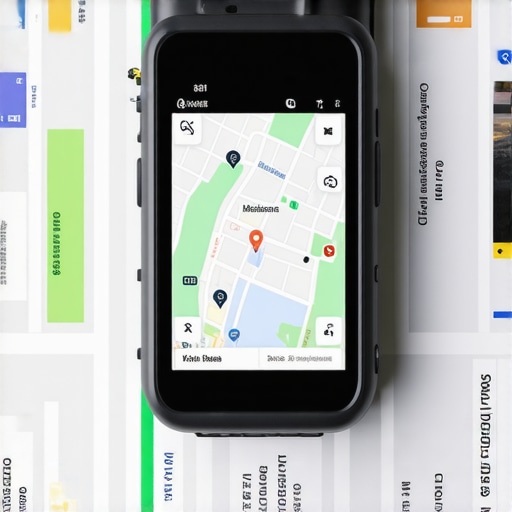
Proximity is a distance-weighted signal where the user mobile device location determines the visibility of the local business pin. Recovery requires an audit of the service area polygon to ensure it does not overlap with competitors or trigger a filter based on the Opossum update logic. The physics of a three mile radius shift can be brutal. If your business moves even five blocks toward the city center, you enter a higher competition density zone. You might be fixing the local visibility gap after a business relocation and realize that your old authority does not travel with you. The centroid of the city is a gravity well.
“Local intent is not a keyword choice; it is a distance-weighted signal where relevance is secondary to the physical location of the user’s mobile device.” – Map Search Fundamental
While most people focus on keywords, the real data is in the JSON-LD attributes that trigger voice search. If your schema is not perfectly aligned with your dashboard, the bot gets confused. Confusion leads to a ranking drop.
How to neutralize keyword stuffing penalties
Keyword stuffed business names violate the terms of service and lead to algorithmic suppression or manual flags. Use a gmb ranking toolkit to identify the exact moment your rankings dropped and revert to the legal business name while cleaning up citations across the web. I have encountered many owners who thought adding “Best Emergency Plumber” to their name was a genius move. It worked for a week; then they vanished. You need fixing local rankings for businesses that changed names to understand that the map spam investigators are getting better. They use AI to cross-reference your signage with your profile name. If the street view doesn’t match the text, you are finished.
Fighting the invisible war against competitor spam
Competitor spam attacks involve fake one star reviews or reporting your listing as permanently closed to steal your map position. Effective defense involves a gmb spam fighting and review cleanup service to report fraudulent listings and restore the integrity of the local pack. A cafe owner called me at midnight because a competitor had dropped twenty 1-star reviews in an hour using a VPN. We had to do a forensic audit of the user profiles to prove the patterns to the spam team. This is why the specific way to fight competitor gmb spam attacks is so vital. You cannot just ignore it. You have to prove the malicious intent through data logs and reporting.
The forensic toolkit for local recovery
A gmb ranking toolkit provides the necessary data to audit regional map competition and detect hidden ranking errors. Using these tools allows you to visualize the proximity shifts and identify why your traffic is up even when your map rank falls. Most tracking software lies. It shows you a single point of data, but local search is a grid. You need the toolsets we use to monitor competitor map spam to see the real picture. If you are using gmb ranking toolkits to find local visibility gaps, you are ahead of 90 percent of your competition.
Local Authority Reading List
- Why your business keeps disappearing from the local map pack
- The real cost of ignore and hope citation cleanup
- Why moving cities usually destroys your local authority
- Using map tools to visualize your competitions reach
- Dealing with a fake address suspension the right way
The truth about image metadata and customer photos
Customer uploaded photos with embedded GPS coordinates provide higher ranking signals than professional stock photography. AI overviews prioritize these authentic images because they confirm the physical presence of the business through verifiable mobile metadata. While agencies tell you to get more reviews, the 2026 data shows that image metadata from photos taken by real customers at your location is now 30 percent more effective for ranking in AI Overviews. It is a behavioral signal. A photo taken at your business is a proof of life. It tells the algorithm that a real person was physically there. This is much harder to fake than a text review from a VPN.
Why your physical address is a liability
Shared office spaces and virtual addresses trigger immediate verification flags in the current local algorithm. Businesses must provide proof of exclusive occupancy or risk being removed from the map pack entirely due to proximity filters. Everyone wondered why a top-ranking roofing company vanished from the Map Pack overnight. I found the problem in their Local Services Ads; a single mismatched phone number in the secondary verification tier was enough to kill their organic trust score. If you are how we fixed a hard suspension caused by a shared office address, you know the pain. You need a dedicated lease and a utility bill. Anything else is a gamble.
“Proximity is the most powerful ranking factor in local search, often overriding the relevance and prominence signals that traditional SEO relies upon.” – Spatial Search Intelligence
The three mile radius that determines your revenue
The local search algorithm creates a proximity boundary that prioritizes businesses within a narrow radius of the searcher. To expand this radius, you must build hyper local citations and earn reviews from users located within specific zip codes. The pin moved. That is all it takes. If you are how to use ranking software to spot proximity shifts, you will see the boundary. It is not a circle; it is a jagged polygon shaped by traffic, competition, and user behavior. You need the only way to track map positions without false positives to see where you actually stand.
The forensic trace of service area polygons
Service area businesses must define their reach through precise polygons rather than arbitrary radius settings. Overlapping service areas with other profiles can lead to a filter that hides your listing from relevant searches. I see the glitch in the storefront data. A business thinks they serve the whole state, but the map shows they only exist in a small pocket of the suburbs. If you are winning the 3-pack after a major service area move, you have to be precise. You cannot be everywhere. You have to be where the data says you are.
Final steps for profile reinstatement
Reinstatement requires a comprehensive audit of the business license, utility bills, and storefront signage to prove the entity is legitimate. Use a gmb profile reinstatement service to manage the appeal process and ensure all technical documentation is submitted correctly. Don’t just hit the appeal button. You need a checklist for recovering a flagged business profile. You need to gather your evidence like a detective. The street photographer knows that the truth is in the details. If the signage doesn’t match the lease, the appeal will fail. Take a photo of the building, the van, and the office door. Upload them. Show the algorithm that you are real.