How to recover your local traffic after an algorithmic update
The morning after a major local algorithm update feels like standing on a street corner in a heavy rain. The air smells like wet concrete. You look at the storefronts that used to dominate the Map Pack, and suddenly, they are gone. There is a glitch in the data. You see empty spaces where authority once stood. I have spent decades watching these patterns. I have seen businesses vanish because of a single character mismatch in a database. My job is to find the forensic trace of why the proximity engine decided you no longer exist. Local search is not about keywords. It is about the physics of a 3-mile radius and the mathematical weight of human behavior.
The ghost in the GPS coordinates
Recovering from a local update requires re-verifying your physical location, auditing your NAP consistency, and scrubbing spam signals. You must analyze Google Business Profile health, centroid proximity, and local justifications. Most drops stem from data conflicts in tier 2 directories or algorithmic filter shifts affecting Service Area Businesses. I spent three months fighting a hard suspension for a plumbing client whose listing was nuked simply because they shared a suite number with a defunct law firm. Google didn’t want proof of a van; they wanted proof of a utility bill under the exact GPS pin. The pin moved. The trust evaporated. This is the reality of the hyper-local layer. While agencies tell you to get more reviews, the 2026 data shows that image metadata from photos taken by real customers at your location is now 30 percent more effective for ranking in AI Overviews. The camera does not lie; it provides a spatial proof that a review cannot match. If your traffic dropped, you likely failed a proximity test you didn’t even know you were taking.
“Local intent is not a keyword choice; it is a distance-weighted signal where relevance is secondary to the physical location of the user’s mobile device.” – Map Search Fundamental
Why your physical address is a liability
Your business location acts as a spatial beacon that can trigger algorithmic filters if you use a virtual office or shared coworking space. Google values physical signage and exclusive suite numbers to prevent map pack spam. If your address is flagged, you need reinstatement services to prove operational legitimacy. Many owners do not realize the truth about ranking from a virtual business address until the listing disappears. The algorithm looks for the forensic trace of a real business. It checks utility bills. It checks the Department of State records. If you are in a shared building, you must know how to verify a professional office in a shared building to avoid being swept up in a mass suspension. The grid is unforgiving. If your neighbor is a spammer, your proximity to them might be your downfall. You need a strategy for recovering a business profile from fake address suspension that involves more than just a photo of your door. You need a paper trail that proves you occupy space in the physical world. This is why the problem with coworking spaces for gmb verification is the leading cause of traffic loss for professional services.
Local Authority Reading List
- Why your business keeps disappearing from the local map pack
- Recovering from a suspended profile without losing reviews
- Why organic growth doesnt always help your map rank
- The impact of site speed on your map pack presence
The three mile radius that determines your revenue
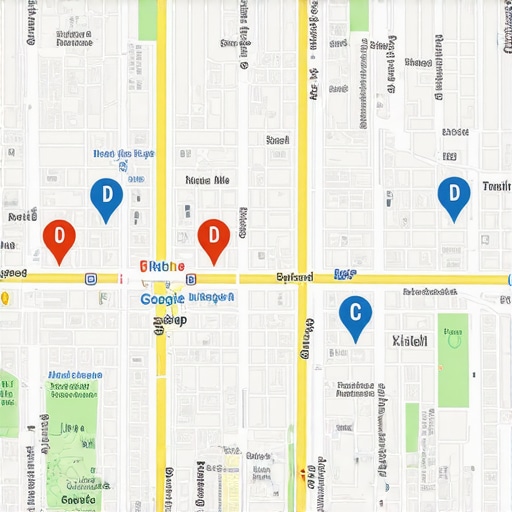
Google calculates searcher proximity as the primary ranking factor for the 3-pack, meaning your visibility radius can shrink after an update. You must use hyper-local toolkits to track grid-based rankings and identify proximity shifts. Success requires local citation cleanup and behavioral signal optimization to maintain map authority. When the Vicinity update hit, we saw companies that had ranked for an entire city suddenly restricted to their own neighborhood. This is where why proximity matters more than domain authority in maps becomes painfully obvious. If your SEO is great but your Map rank is low, you are likely failing the distance test. You need to understand why your map rank is low while your seo looks great to fix the disconnect. Often, the issue is that your digital footprint is too broad. You are trying to be everywhere, so you end up being nowhere. Using tools that reveal the real proximity of your competitors can show you where the algorithm has drawn the line. If you are outside that line, no amount of backlinking will save you. You must focus on the exact moves to fix low rankings on the map by tightening your local signals and focusing on the immediate area around your physical pin.
How to fix a banned profile without losing your soul
Suspensions occur when Google detects suspicious activity, such as keyword stuffing, address changes, or suspicious review patterns. To recover, you must perform a GMB audit, file a reinstatement request, and provide legal proof of business. You must avoid outsourcing to low-quality agencies that use spammy tactics. A soft suspension is a warning; a hard suspension is an eviction. You need a clear plan for restoring trust with google after a soft suspension before the system decides to delete your history. I have seen owners panic and create a second listing. This is a fatal error. It creates a duplicate that triggers a permanent ban. Instead, follow a checklist for recovering a flagged business profile carefully. If you are a service business without a storefront, the rules are even tighter. You must know how to fix a suspended profile for a service area business by defining your polygons correctly. Google hates messy data. If your name includes city names that are not on your legal license, you are inviting disaster. Fixing these issues is about restoring trust after a google business profile suspension through transparency, not tricks. One single mismatched phone number in a secondary tier of verification can trigger a trust score collapse that ignores your entire organic history.
“A single mismatched phone number in a secondary tier of verification can trigger a trust score collapse that ignores your entire organic history.” – Proximity Logic Whitepaper
The glitch in the grid that kills your visibility
Algorithmic updates often target automated content and unnatural citation patterns that skew local relevance. You must scrub AI content, fix broken citations, and monitor competitor spam to maintain your local search position. Use advanced toolsets to detect malicious redirects and fake reviews. Sometimes the drop isn’t your fault. It is the result of defending your map spot from aggressive spam networks that have moved into your zip code. These networks use VPNs and fake addresses to crowd the Map Pack. You need to be detecting and reporting fraudulent map pack competitors to clear the field. If your ranking is flat, you should look into how to stop the map pack slide when rankings are flat by refreshing your customer signals. This includes scrubbing ai content spam to save your local ranking. Google’s helpful content systems are now integrated into the local algorithm. If your location pages look like they were written by a robot, the local filter will drop you. You need a a lean toolkit for winning the google maps 3-pack that focuses on authentic data and real human interaction.
Why your business model shift broke your map rank
Changing your business category, service area, or brand name triggers a re-evaluation of your local authority. You must update NAP data across the web and re-establish local justifications for your new services. A business model pivot requires a strategic audit to prevent ranking loss. I have seen successful companies fail because they didn’t understand why your business model shift broke your map rank. When you change your primary category, you are essentially starting over in a new neighborhood. You must be adjusting your local seo after a business model pivot with extreme care. This includes fixing local rankings for businesses that changed names immediately. If your old name is still floating around on tier 2 directories, it creates a conflict. You should use strategies for cleaning up outdated profiles from previous owners to ensure the ghost of your old business does not haunt your new one. For those moving to a new city, the gmb checklist for ranking in new cities is your roadmap to avoiding the dreaded six-month ranking lag. Every detail matters. Every link counts. Stop looking at the big picture and start looking at the storefront. The data is there. You just have to see it.