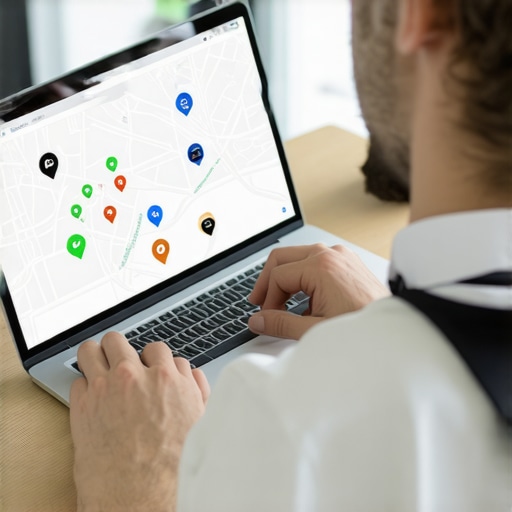
Strategies for cleaning up outdated profiles from previous owners
The smell of wet concrete and the flickering of an unmapped neon sign are the only constants in the hyper-local layer. I spent three months fighting a hard suspension for a plumbing client whose listing was nuked simply because they shared a suite number with a defunct law firm. Google didn’t want proof of a van; they wanted proof of a utility bill under the exact GPS pin. This wasn’t about a simple edit. It was a war of documentation against an automated system that saw two businesses in one spot and chose to delete both. The pin moved. The trust vanished. In this environment, a business listing is not a profile; it is a Proximity Beacon in a complex spatial database. When you take over a location, you are not just inheriting a lease. You are inheriting a decade of digital debris, fragmented NAP data, and the forensic trace of every mistake the previous owner ever made. If those ghosts are not purged, your rankings will remain stagnant regardless of your budget.
The ghost in the GPS coordinates
Outdated business profiles represent a lethal proximity signal conflict that confuses the Google Maps algorithm. When a new owner inherits a location, the digital footprint of the previous tenant often remains embedded in the local search index, triggering duplicate listing flags that suppress your visibility. The algorithm operates on the logic of centroid theory. It calculates the mathematical weight of every mention of that address across the web. If the previous tenant was a dry cleaner and you are a boutique, but the dry cleaner still has twenty live citations, Google sees a data conflict. This conflict reduces the confidence score of your profile. You cannot simply ignore it. You are [removing the ghost of old business listings](https://gmb4you.com/removing-the-ghost-of-old-business-listings) to clear the path for your own authority. The physics of the Map Pack dictates that trust is a finite resource. If that trust is split between two entities at one coordinate, neither will rank in the top three. This is why [hunting down old address data causing search confusion](https://gmb4you.com/hunting-down-old-address-data-causing-search-confusion) is the primary directive for any new local acquisition.
“Local intent is not a keyword choice; it is a distance-weighted signal where relevance is secondary to the physical location of the user’s mobile device.” – Map Search Fundamental
Why your physical address is a liability
Shared office spaces and virtual addresses often cause Google Business Profile suspensions because the GPS coordinates are over-saturated with competing NAP data. If the previous owner didn’t properly mark the business as closed, your new verified listing faces an uphill battle for trust signals. Google’s spam filters are tuned to detect ‘address rentals.’ When multiple businesses claim the same suite without clear physical separation, the system defaults to a ‘hard suspension.’ I have seen this happen to dental offices that moved into a space previously occupied by a high-volume lead-generation site. The old site had thousands of fake reviews and black-hat citations. The new dentist was flagged as a ‘successor’ to the spammer. This is why [dealing with a fake address suspension the right way](https://gmb4you.com/dealing-with-a-fake-address-suspension-the-right-way) requires more than just a photo of your front door. You need to prove the severance of the old entity. This is also [is your coworking space address triggering a gmb penalty](https://gmb4you.com/is-your-coworking-space-address-triggering-a-gmb-penalty) territory. If you are in a shared space, the ‘suite number’ is your only lifeline. Without a unique suite number that has been registered with the USPS, you are just another duplicate in a sea of data noise.
The forensic audit of a digital footprint
Duplicate Google Business Profiles are often created by third-party aggregators that pull old data from government records or utility companies. A gmb audit and ranking toolkit must include a deep scan of the primary data aggregators like Foursquare, Neustar, and Data Axle. When you are [cleaning up the local mess after a domain hack](https://gmb4you.com/cleaning-up-the-local-mess-after-a-domain-hack) or a business transition, you must look for ‘shadow profiles.’ These are listings that exist on fringe directories but are crawled by Google to verify your facts. If these profiles contain the previous owner’s phone number, your ‘Call’ button clicks might be attributed to a dead line. We use [our secret toolkit for auditing local competitors](https://gmb4you.com/our-secret-toolkit-for-auditing-local-competitors) to find these inconsistencies before the algorithm does. The process involves more than just a Google search. It involves checking the JSON-LD ‘LocalBusiness’ attributes on every page of your site. If your website schema doesn’t match your profile, or worse, if it matches the previous owner’s old site, you are toast. This is [why your gmb audit keeps showing false errors](https://gmb4you.com/why-your-gmb-audit-keeps-showing-false-errors); the tool is seeing two different realities and cannot decide which one is true.
Local Authority Reading List
- The simple audit for finding broken local citations
- The manual citation cleanup that actually fixes ranking drops
- Rebuilding a clean local profile from the ground up
- How to audit your gmb profile for hidden ranking errors
- Why citation consistency is more than just phone numbers
Restoring trust signals for local search
Trust signals are the currency of local SEO and are rebuilt by customer engagement, verified photos, and consistent NAP. When a profile has been banned or suspended due to a previous owner’s spam, you must initiate a manual reinstatement process. This involves [restoring trust after a google business profile suspension](https://gmb4you.com/restoring-trust-after-a-google-business-profile-suspension) by providing a video walk-through of the premises. But even after reinstatement, the rankings often lag. This is the ‘probation period’ where Google monitors your behavioral signals. They look for real mobile devices entering your store. They look for ‘Check-in’ signals and the math of local review sentiment. If you are [recovering local trust after a website security breach](https://gmb4you.com/recovering-local-trust-after-a-website-security-breach) or a messy ownership transfer, you need to flood the profile with high-quality, geo-tagged imagery. This imagery acts as a ‘Proof of Presence’ that overrides old data. We often find that [scrubbing ai content spam to save your local ranking](https://gmb4you.com/scrubbing-ai-content-spam-to-save-your-local-ranking) is necessary if the previous owner used bots to inflate their presence. Google despises artificiality. It wants the grit of a real business.
“Google Business Profile success is governed by the proximity of the searcher to the verified centroid, not the density of backlinks alone.” – Local Search Intelligence Report
The toolkit for map pack domination
GMB ranking toolkits allow local businesses to monitor proximity shifts and competitor spam attacks in real-time. There is a common debate regarding [gmb vs local listing tools comparison](https://gmb4you.com/why-your-map-ranking-software-is-showing-wrong-data). Most automated tools give you ‘false positives’ because they search from a fixed server location. To truly see the Map Pack, you need [software that actually tracks local map positions accurately](https://gmb4you.com/software-that-actually-tracks-local-map-positions-accurately) by spoofing GPS coordinates at a granular level. This allows you to see how you rank at the coffee shop across the street versus the park two miles away. Using [gmb ranking toolkits to find local visibility gaps](https://gmb4you.com/using-gmb-ranking-toolkits-to-find-local-visibility-gaps) helps you identify where the previous owner’s old citations are still outranking your new ones. If you are [fighting competitor gmb spam attacks](https://gmb4you.com/the-specific-way-to-fight-competitor-gmb-spam-attacks), you need a toolkit that can flag ‘keyword-stuffed’ names for immediate reporting. This is a battle of attrition. The business that maintains the cleanest data for the longest period wins the 3-pack.
The three mile radius that determines your revenue
Local search rankings are highly sensitive to distance, making proximity the most weighted factor in the Map Pack. If your profile is cluttered with outdated data, your ranking radius shrinks. Instead of appearing to customers five miles away, you might only show up for people in your parking lot. This is the ‘centroid collapse.’ When [why organic growth doesn’t always help your map rank](https://gmb4you.com/why-organic-growth-doesnt-always-help-your-map-rank) becomes the main question, the answer is usually found in the proximity math. Google prioritizes the ‘most relevant’ business that is ‘closest’ to the user. If your data is messy, Google doesn’t know where you are. You must be [fixing the local visibility gap after a business relocation](https://gmb4you.com/fixing-the-local-visibility-gap-after-a-business-relocation) or a purchase with extreme precision. The mathematical weight of a local review is multiplied by the distance of the reviewer from your business when they left the review. A review from a person three hundred miles away is worth almost nothing compared to a review from someone standing in your lobby. This is why [using ranking software to spot proximity shifts](https://gmb4you.com/how-to-use-ranking-software-to-spot-proximity-shifts) is the only way to stay ahead. The map is alive. It moves every time a competitor updates their hours or a new citation is indexed. You are either the authority, or you are a ghost in the machine.