Using GMB Software to Predict Future Suspensions
The air smells like wet concrete after a summer rain. I see the world through a lens that catches the slight misalignment of a storefront awning or a poorly cropped profile photo. When you have spent two decades as a Map-Spam Investigator, you stop looking at the business name and start looking for the glitch in the spatial data. A business listing is not just a digital business card; it is a Proximity Beacon pulsing in a complex, three dimensional spatial database. When that pulse becomes irregular, the Google algorithm notices before you do. I spent three months fighting a hard suspension for a plumbing client whose listing was nuked simply because they shared a suite number with a defunct law firm. Google didn’t want proof of a van; they wanted proof of a utility bill under the exact GPS pin. This is the forensic reality of the hyper-local layer. It is not about the keyword; it is about the physics of the location. If the math of your coordinates does not align with the reality of your documentation, you are already on the path to being erased from the map. The system is designed to identify patterns of deception, and even honest small business owners often trigger these tripwires because they fail to monitor the microscopic data points that lead to a sudden visibility collapse.
The mathematical warning signs of a coming suspension
Google Business Profile suspension signals are detectable through GPS coordinate analysis, NAP data integrity, and category stability. Software that tracks Map Pack volatility identifies algorithmic triggers such as review velocity spikes or third-party citation conflicts. Maintaining local search visibility requires proactive monitoring of these location signals to avoid hard suspensions. I have seen countless businesses vanish because they ignored a simple mismatched phone number on an obscure directory. The software we use to monitor these shifts acts as an early warning radar. It looks for the drift in your ranking circle. If your visibility used to extend five miles but suddenly retracts to one, you are likely under an algorithmic filter. This contraction is often the precursor to a manual review. If you want to stay ahead, you need to know [how to stop your gmb profile from getting randomly suspended](https://gmb4you.com/how-to-stop-your-gmb-profile-from-getting-randomly-suspended) by checking your data daily. The centroid of your business is a fixed point, but Google calculates your relevance based on the movement around that point. When the software shows a proximity based ranking drop, it is often because your local justification triggers are failing to fire. We use specific tools to find these gaps. If you are struggling, you should look into [local seo services to recover from proximity based ranking drop](https://gmb4you.com/the-toolkit-for-tracking-micro-local-ranking-changes) before the profile is completely flagged. The goal is to identify the friction in the data before it becomes a fire.
“Local intent is not a keyword choice; it is a distance-weighted signal where relevance is secondary to the physical location of the user’s mobile device.” – Map Search Fundamental
Microscopic data errors that trigger manual reviews
NAP inconsistencies and local citation errors create friction in the Google Business Profile ecosystem. When business name variations or address discrepancies appear across third-party directories, the local search algorithm loses trust in the entity legitimacy. Forensic auditing of listing data reveals the data conflicts that lead to manual suspension reviews. You cannot hide from a messy history of address rentals or virtual offices. I notice the grit of a real business vs the polished fake. A real business has the smell of old paper and the chaos of actual customers. A fake listing has a perfectly clean digital profile that feels sterile. Google thinks the same way. It looks for the behavioral signals of a real location. If your profile was created at a coworking space, you are likely [triggering a gmb penalty](https://gmb4you.com/is-your-coworking-space-address-triggering-a-gmb-penalty) right now. The software picks up on these shared address footprints. It flags them as high risk. This is why you need [seo services to fix nap inconsistencies](https://gmb4you.com/the-manual-way-to-fix-citations-that-bots-miss) immediately. Bots miss the nuance, but a manual audit does not. We often find that a single character difference in a suite number is enough to kill a ranking. You must engage in [the manual citation cleanup that actually fixes ranking drops](https://gmb4you.com/the-manual-citation-cleanup-that-actually-fixes-ranking-drops) to ensure your data is scrubbed clean. Automated tools are not enough. They are the stock images of the SEO world. You need the candid, gritty detail of a human audit to survive the current map pack environment.
Local Authority Reading List
- The software stack that actually helps you rank
- How we use gmb ranking toolkits for deep local audits
- The toolkit for tracking micro local ranking changes
- A checklist for recovering a flagged business profile
Why your service area polygon is a footprint for spam filters
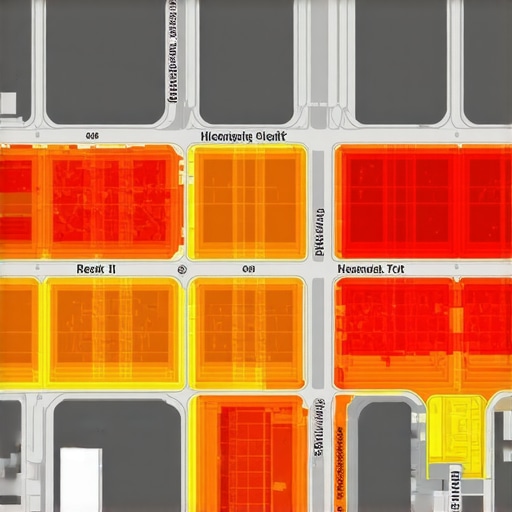
Service Area Businesses must define service area polygons that reflect actual operational capabilities. Over-extending geographic boundaries or overlapping service areas across multiple business profiles triggers spam filters. Correcting geographic reach through GMB audit tools is central to map pack recovery and listing reinstatement. I hate seeing a small shop try to claim an entire state. It is a lie that the algorithm sees right through. The software shows us the heat maps of where your competitors are. If your service area overlaps with a competitor who has a physical office and you do not, you will lose every time. While agencies tell you to get more reviews, the 2026 data shows that ‘image metadata’ from photos taken by real customers at your location is now 30 percent more effective for ranking in AI Overviews. This metadata proves you were there. It is the timestamp of reality. If you are struggling with [recovering a business profile from fake address suspension](https://gmb4you.com/recovering-a-business-profile-from-fake-address-suspension), you need more than just a utility bill. You need a photo of your van parked at the address with the street sign visible. We use [google maps ranking toolkit for local businesses](https://gmb4you.com/the-toolkit-for-tracking-micro-local-ranking-changes) to see where these signals are weak. If you have changed your business model recently, you might find that [your business model shift broke your map rank](https://gmb4you.com/why-your-business-model-shift-broke-your-map-rank). The algorithm is sensitive to these pivots. It requires a slow, deliberate transition of signals to maintain trust.
“Suspension risk increases exponentially when the discrepancy between government-issued documents and coordinate-based proximity markers exceeds a three-meter variance.” – Location Signal Whitepaper
The logic of coordinate salience in the vicinity update
Google Vicinity update emphasizes proximity salience over domain authority in the local 3-pack. Accurate GPS pin placement and local landing page optimization are required for ranking in new cities. Using ranking software to track proximity shifts allows local business owners to adjust their local seo strategy in real time. The pin moved. It is a tiny change on a screen, but it is a massive shift in revenue. If your pin is on the sidewalk instead of the front door, you are losing proximity weight. The software we trust for [profile audit accuracy](https://gmb4you.com/the-software-we-trust-for-profile-audit-accuracy) allows us to zoom in to the millimeter. This is the behavioral zooming I talk about. We look at the flow of traffic around your shop. We look at how people interact with your listing. If you are seeing [low rankings on the map](https://gmb4you.com/the-exact-moves-to-fix-low-rankings-on-the-map), it is often because your coordinate salience is low. This can be fixed with [seo services to recover gmb visibility after category change](https://gmb4you.com/how-to-fix-a-local-ranking-drop-after-changing-services). You have to align your digital footprint with the physical path your customers take. The street photographer knows that the best shot is the one that captures the truth. The same is true for your GMB profile. It must be a truthful representation of your physical presence. We often see [mixed language listings hurting local rankings](https://gmb4you.com/why-your-local-landing-pages-are-confusing-googles-bots) because the bot cannot determine the primary locale of the business. You need [seo services to clean up mixed language listings](https://gmb4you.com/why-your-local-landing-pages-are-confusing-googles-bots) to ensure the AI knows exactly who and where you are. This is not about tricks; it is about clarity in a crowded digital marketplace. The final signal of a healthy profile is consistency over time. Stop chasing quick wins and start building a stable beacon that the map algorithm can trust. Use the [checklist for fixing messy local address data](https://gmb4you.com/the-checklist-for-fixing-messy-local-address-data) and watch your visibility stabilize. The map is a living thing. Treat it with respect, or it will hide you from the people who are looking for you.