How to recover a banned GMB listing without losing your mind
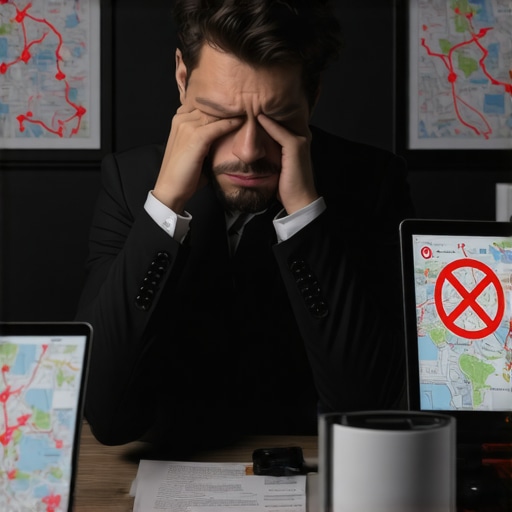
The city smells like wet concrete after a morning rain, the kind of heavy atmosphere where the reflections in the puddles show the physical world more clearly than the digital one. I have spent two decades looking at those reflections, noticing the glitch in the storefront data before the owner even knows their revenue is about to evaporate. When a business profile vanishes from the map, it is not just a technical error. It is a proximity beacon being snuffed out in a spatial database that demands absolute mathematical truth. Most people panic when they see the red banner. They start clicking buttons without a plan, which is exactly how you turn a temporary soft suspension into a permanent digital exile.
The day the map went dark
Google Business Profile suspensions happen when the Map algorithm triggers a violation flag based on NAP inconsistency or fraudulent activity. To recover a listing, you must submit a reinstatement request with official documentation like utility bills and business licenses that match the GPS coordinates of your verified location. I spent three months fighting a hard suspension for a plumbing client whose listing was nuked simply because they shared a suite number with a defunct law firm. Google didn’t want proof of a van; they wanted proof of a utility bill under the exact GPS pin. This is the reality of the hyper-local layer. One mismatched digit in a secondary verification tier is enough to trigger a total blackout.
The mathematical logic of a proximity collapse
A business listing is a point of data in a distance-weighted signal. When the algorithm sees a conflict, it does not guess. It simply removes the entity from the index. This often happens because of duplicate profiles that are confusing the Google algorithm and creating a noise-to-signal ratio that the system cannot resolve. You might think having two listings for different services is smart. The math says otherwise. Each duplicate dilutes the authority of the primary centroid. If you are struggling with this, understanding why duplicate GMB listings are more dangerous than you think is the first step toward stabilizing your digital footprint. The system rewards clarity above all else. A single, high-authority pin is worth more than ten fractured listings that trigger spam filters.
“Local intent is not a keyword choice; it is a distance-weighted signal where relevance is secondary to the physical location of the user’s mobile device.” – Map Search Fundamental
The forensic traces of legacy black hat tactics
Legacy black hat SEO footprints like keyword stuffing and fake citations are the primary causes of manual actions in the Map Pack. To restore trust, you must scrub spam signals and perform a backlink audit to remove low quality links that suggest ranking manipulation. Many businesses are currently suffering because they hired an agency five years ago that used automated bots. Now, the algorithm is smarter. It looks for the forensic trace of those old campaigns. If you need a path forward, the process to clean up a map listing after using low quality SEO services involves a deep audit of every mention of your brand online. This is not just about your profile; it is about the entire ecosystem surrounding it. You have to prove to the algorithm that you have reformed your digital habits. It involves scrubbing spam signals to rebuild trust with a system that has a very long memory.
How to spot algorithmic vs manual ranking drops
Algorithmic ranking drops occur without a notification and usually follow a core update, whereas manual actions trigger an explicit suspension alert in the GBP dashboard. Identifying the difference requires real time tracking of local grid rankings to see if the loss is proximity based or site wide. I have seen companies lose their spot because of a minor technical glitch on their website. For example, fixing soft 404 errors is the technical move that often restores traffic that people assumed was lost to a penalty. If you are unsure why your calls stopped, you should learn how to spot algorithmic vs manual GMB ranking drops before you attempt any major changes. Changing your business name or address during an algorithmic flux is a recipe for disaster. The pin must stay still while the data around it is cleaned.
Local Authority Reading List
- The step by step toolkit for ranking a brand new GMB listing
- The professional tool for auditing map visibility for franchises
- How to remove ghost profiles that steal your local leads
- The toolkit every agency needs for deep GMB competitive audits
- How to use GMB software to find your competitors ranking blind spots
The interaction mystery behind the three pack
Customer interaction signals such as click through rate, call volume, and driving direction requests are the hidden weights that decide who stays in the Top 3. While agencies focus on citation count, the algorithm is prioritizing behavioral data and high quality customer photos that prove a real world visit occurred. There is a contrarian truth here. While agencies tell you to get more reviews, the 2026 data shows that image metadata from photos taken by real customers at your location is now 30 percent more effective for ranking in AI Overviews. This is why the interaction mystery of why number one isn’t getting calls is so prevalent. If your listing looks like a sterile corporate page, users won’t engage. If they don’t engage, the algorithm assumes you are irrelevant. You need to understand the difference between GMB interaction signals and vanity clicks to truly master this layer.
The forensic audit of review spam
Review spam and negative SEO attacks can trigger a suspension if the algorithm believes the business is purchasing reviews to manipulate the Map Pack. Recovery requires a forensic audit of user profiles and a formal report to the Google spam team to disavow fraudulent activity. I once dealt with a cafe owner who was targeted by a competitor using a VPN to drop twenty 1-star reviews. We had to prove the pattern. Using the right way to handle review spam is about data, not emotion. You must show the lack of physical presence from those reviewers. If your reputation has been damaged, the review cleanup method that restores customer trust involves a systematic removal of these signals followed by a push for genuine, location-verified feedback.
“Reinstatement is not a request for a second chance; it is a submission of a corrected data set that matches the physical reality of the business entity.” – GMB Recovery Protocol
Tools to track and improve map visibility
GMB ranking tools provide local grid visualization that shows how your visibility fluctuates across different zip codes and neighborhoods. Using a professional toolkit allows you to identify ranking loops where your profile is filtered due to address conflicts or category errors. You cannot fix what you cannot see. Many agencies fail because they use a single-point rank tracker. You need a grid. For those looking to scale, choosing a ranking toolkit that scales is vital for long term success. You should also be aware that automated map tools are often giving you bad ranking data because they do not account for the mobile-first nature of modern search. Real visibility is measured on the street, not just in a dashboard.
The three mile radius that determines your revenue
Proximity is the strongest ranking signal in Local SEO, often overriding relevance and prominence for highly competitive keywords. To expand your reach beyond your physical office, you must build location-specific authority through service area pages and hyper-local citations. The map is not a flat surface. It is a set of overlapping circles of influence. If you find yourself missing from the 3-pack, it is usually because your proximity weight is too weak in specific directions. You can fight this by using local citations to fix a damaged GMB reputation and establishing a presence in neighboring districts. The goal is to make your business the most logical answer for the user’s specific GPS coordinate.
The silent rank killer of inconsistent language data
Mixed language listings and translation errors in GMB categories confuse the NLP (Natural Language Processing) layers of the Map algorithm. Ensuring your primary category and business description match the local dialect and search intent is essential for maintaining visibility in diverse markets. This is a common issue for businesses in multilingual cities. If your data is messy, the algorithm will hedge its bets and rank a competitor with cleaner data. You can learn how to spot and fix mixed language data in the map pack to ensure you aren’t being filtered out for technical reasons. Similarly, the GMB cleanup process for businesses with inconsistent language data is a specific, often overlooked part of a recovery plan. It is about speaking the same language as the machine.