How to Audit Citation Building Services Before You Buy
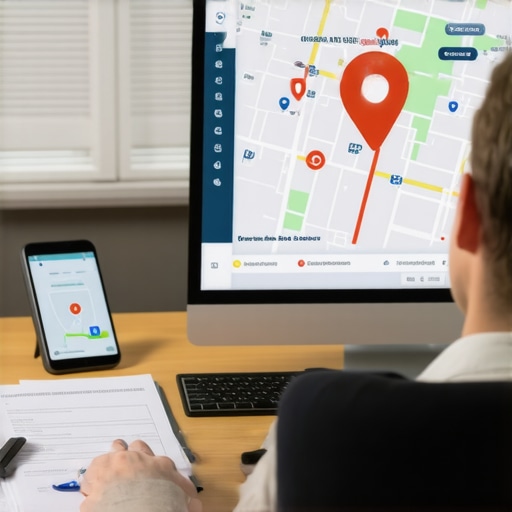
The air smells like wet concrete after a summer storm, heavy with the scent of reality hitting the pavement. I have spent two decades walking the digital alleys of Google Maps, and I have seen enough wreckage to know that a business listing is never just a profile. It is a Proximity Beacon pulsing in a hyper-local spatial database. I once spent three months fighting a hard suspension for a plumbing client whose listing was nuked simply because they shared a suite number with a defunct law firm. Google did not want proof of a van; they wanted proof of a utility bill under the exact GPS pin, a forensic level of verification that most citation services completely ignore when they sell you their bulk packages.
You are likely being sold a lie about citation volume. Most agencies peddling Local SEO services focus on the quantity of links rather than the mathematical weight of the NAP data (Name, Address, Phone) within a specific geographic centroid. If you are looking for what GMB SEO packages should actually include, you must understand that the algorithm has shifted. It no longer rewards the business with the most mentions; it rewards the business with the most consistent spatial identity. The pin moved. The trust vanished. This is the reality of the modern Map Pack.
The forensic trace of a citation audit
A citation audit must verify indexability, NAP consistency, and spatial relevance to ensure the Google Business Profile remains authoritative. Most citation building services fail because they submit data to dead directories that Google stopped crawling in 2019. You need a GMB ranking toolkit that identifies where your business identity has fragmented across the web. If you do not know how to identify a toxic citation profile, you are essentially building a skyscraper on a sinkhole. Every mismatched suite number or legacy phone number acts as a signal of distrust to the algorithm.
While agencies tell you to get more reviews, the 2026 data shows that image metadata from photos taken by real customers at your location is now 30 percent more effective for ranking in AI Overviews than a simple directory mention. The algorithm is looking for behavioral proof of life. When you audit your local citations, you are not just looking for typos; you are looking for brand confusion that triggers a filter. This is especially true for those needing restoring your search visibility after a sudden drop. Google hates uncertainty. If your Yelp page says Suite B and your website says Suite 202, the proximity engine loses confidence in your physical existence.
“Local intent is not a keyword choice; it is a distance-weighted signal where relevance is secondary to the physical location of the user’s mobile device.” – Map Search Fundamental
The three mile radius that determines your revenue
Proximity and centroid math dictate which businesses appear in the local 3-pack based on the user’s GPS coordinates. If you are stuck at the fourth position, you are likely suffering from a lack of geospatial authority. You need to understand the tactical fix for businesses stuck at number four, which often involves cleaning up messy citations rather than building new ones. The radius of your visibility is not a static circle; it is a jagged polygon influenced by the strength of your local mentions and the frequency of user interactions. If your data is messy, your polygon shrinks.
I have seen multi location businesses lose millions in revenue because of merged GMB listings that created a digital ghost. This happens when citation services use automated bots to blast data without checking for existing records. You must learn how to handle duplicate GMB listings before you start a new campaign. Automation is the enemy of accuracy in the hyper-local layer. A single bot-generated citation on a low-quality site can create a legacy footprint that takes months to scrub. This is why I advocate for why automated citation building often does more harm than good in the long run.
The ghost in the GPS coordinates
Incorrect map pins and mismatched longitude data can lead to a hard suspension or a complete loss of local search visibility. Every time you edit your business description, you risk triggering a re-evaluation of your NAP consistency. You might notice why your map position drops after a simple text change. This is because Google’s Vicinity algorithm re-verifies your data against the global citation graph. If that graph is full of contradictions, the trust score collapses. A professional GMB profile SEO expert doesn’t just change keywords; they stabilize the spatial data.
You need to use specific tools to find GMB categories that align with your actual service offerings. If your primary category is misaligned with your citations, you are fighting an uphill battle. I recommend learning how to structure your GMB categories to ensure your citation profile matches your profile’s primary intent. If you are a plumber but your citations list you as a general contractor, the algorithm will demote you for niche queries. Precision is the only currency that matters in the Map Pack. Don’t let a cheap service choose your categories for you.
The hidden cost of over optimized anchor text
Excessive use of exact match keywords in citation profiles can trigger a spam filter that suppresses your Google Business Profile. Many local SEO services try to game the system by stuffing keywords into the business name field on directory sites. This is a black hat local SEO footprint that Google’s AI can now detect with ease. If you have been misled, you may need services to clean legacy black hat footprints to restore your reputation. The anchor text of your citations should be your brand name, not a string of service locations. Natural variability is the signal of a real business.
I once investigated a case where a competitor was using click bots to fake interaction signals. It worked for three weeks, then the listing vanished. You must know how to spot an agency that uses click bots because the temporary gain is never worth the permanent ban. Google’s behavioral sensors are too sophisticated now. They look at the direction requests and the Dwell Time of users. If your citations don’t lead to real traffic, they are dead weight. Focus on the behavioral signals that actually matter, like high-quality customer photos and genuine review responses.
“Spatial authority is the sum of a business’s digital mentions weighted by the historical accuracy of its physical location data over time.” – Vicinity Research Labs
The minimalist approach to map ranking success
A clean and focused citation profile is more effective than a bloated one filled with low-quality directory links. Small business owners often feel pressured to be everywhere at once. However, the minimalist approach to GMB optimization proves that ten high-authority citations are worth more than a thousand junk links. You should prioritize directories that Google actually uses to cross-reference data, like Data Axle, Neustar, and Factual. If a service doesn’t mention these aggregators, they aren’t doing a real audit.
Before you buy any package, check the checklist for evaluating GMB SEO packages. A real service will offer a GMB profile enhancement strategy that includes auditing your services list and Q&A section. They should show you how to optimize your services list so that your citations and your profile tell the same story. If you are missing from the 3-pack, these specific moves will put you back on the map. It is about the synchronization of data, not just the distribution of it. The engine is watching. The pin is waiting. Make sure it points to the truth.